PAK187/9 (39.2/50 ov, target 242)
 ENG241
 IND-W328/6
 ZIM-W181/6 (42.1/50 ov, target 329)
 NGA
 UGA
 MEX-W
 ARG-W
 CRY0
 NEW0
 HUL1
 BRE0
 LIV2
 BHA0
 MAN0
 BOU2
 CEL
 BET
 AUX
 MNS
 ANG
 LOR
 OLM
 HAC
 REN
 STR
 TOU
 TRY
 SUN
 LEE
 SCF
 MUN
 ATH4
 GET0
 INT2
 FIO1
 CHU2
 PFC3
 GMB112/9
 LES109 (19.5/20 ov, target 113)
 DEN
 PNG
 LIMWn
 NW-W
 NCWmn
 FsWm
 BOL137/9 (20 ov)
 TITNS137/8
 NWEST22/3 (3.1/20 ov, target 181)
 NCAPE180/3
 MIS
 VAG104/3 (13/20 ov)
 NZ-A317
 IND-A113 & 106/2 (36 ov)
 SYL280/2 (84 ov)
 KHU
 BRB
 MOW
 TOK
 SIKM
 NAGA
 JHK
 DELHI
 ODSA
 SVCS
 CGR
 AP
 BRODA
 J & K
 MOZ110/7 (19/20 ov, target 110)
 ZMB109/9
 UAE244/8
 NED245/7 (43.5/50 ov, target 245)
 ATA3
 FRO2
 GEN1
 VEN0
 MON0
 LILL1
 KER0
 MCFC0
 TSG0
 B040
 NEC1
 GRO2
 PSV1
 FEY1
 Motherwell0
 Hearts1
 Atlético1
 Deportivo0
 Lazio2
 Parma1
 Lens2
 Paris FC1
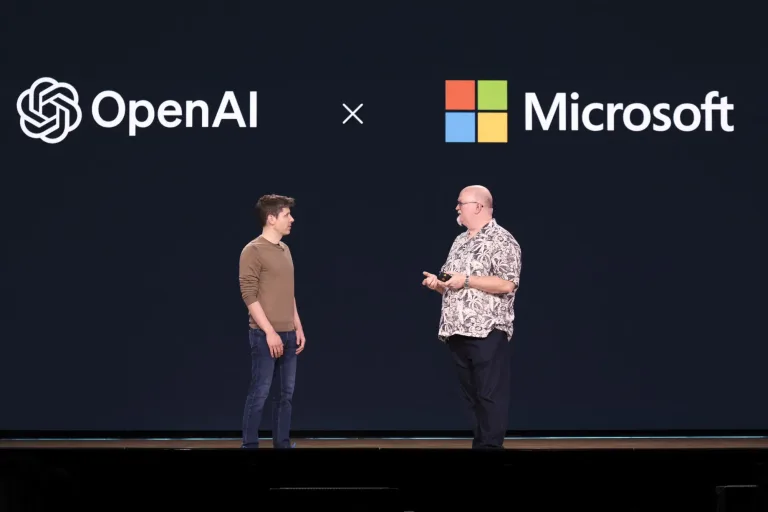
The exclusive partnership between OpenAI and Microsoft, a cornerstone of the AI industry since 2019, officially concluded on April 27, 2026. This significant shift, announced via OpenAI’s official blog and press release, isn’t just a corporate restructuring; it fundamentally alters the competitive dynamics for smaller AI startups and the broader innovation ecosystem.
It opens the door for a more democratised AI development landscape, potentially levelling the playing field for emerging companies. OpenAI, in particular, deserves more attention than the headline suggests.
Key Takeaways:
OpenAI and Microsoft’s exclusive partnership, established in 2019, officially ended on April 27, 2026.
Microsoft had invested over $13 billion in OpenAI during the exclusive period.
OpenAI’s latest GPT-5 model, released in March 2026, was developed independently after the partnership’s conclusion.
Microsoft will continue to integrate OpenAI’s technology but without exclusive rights, MIT Technology Review confirms.
OpenAI: What Does the End of the OpenAI-Microsoft Exclusive Partnership Mean?
The announcement on April 27, 2026, marks a pivotal moment for OpenAI. For years, Microsoft’s substantial investment of over $13 billion provided OpenAI with the immense computing power and financial backing necessary to develop its groundbreaking models.
This symbiotic relationship propelled both entities to the forefront of the AI race. However, the exclusivity meant that other cloud providers and major tech players had limited direct access to OpenAI’s cutting-edge innovations, often relying on Microsoft’s Azure AI services as an intermediary. Open ai, specifically, plays a bigger role than most coverage suggests.
Now, OpenAI is free to forge new alliances, promising a future where its technology is more widely accessible. This move signals a strategic shift towards broader collaboration, potentially accelerating AI development across the industry. We’ve seen similar shifts in other tech sectors, where early exclusive deals eventually give way to more open ecosystems, fostering greater competition and innovation (for more context, see our article on OpenAI CEO Sam Altman’s economic implications).
Broader Cloud Collaborations and Industry Impact
With the exclusive chains officially off, OpenAI is now actively pursuing partnerships with multiple cloud providers. This isn’t just about diversifying its infrastructure; it’s a strategic play to reduce reliance on a single vendor and potentially optimize for different workloads and geographic regions.
For smaller AI startups, this is a significant development. Previously, the high barrier to entry, often linked to the cost and exclusivity of top-tier AI models, limited their growth. The picture for open ai is more nuanced than headlines indicate.
Now, these startups could gain more direct access to OpenAI’s models, fostering a wave of innovation previously unimaginable. Not everyone agrees — critics argue that while the exclusivity ends, the sheer cost of utilizing advanced models like GPT-5 might still be prohibitive for many.
But the potential for increased competition among cloud providers for OpenAI’s business could drive down costs, making advanced AI more attainable for a wider array of developers.
OpenAI’s Independence: How It Changes the AI Landscape
The development of OpenAI’s GPT-5 model, released in March 2026, serves as a testament to the organization‘s evolving independence. This advanced model was developed entirely outside the exclusive framework, highlighting OpenAI’s capacity for innovation even without a single dominant partner.
Microsoft will, of course, continue to use OpenAI’s technology, but the crucial distinction is the loss of exclusive rights. This means that while Microsoft remains a key partner, it now competes with other cloud providers for OpenAI’s business.
FAQs
Why did OpenAI end its exclusive partnership with Microsoft?
OpenAI ended its exclusive partnership with Microsoft to explore broader collaborations and expand its technology’s accessibility beyond a single corporate partner, aiming for wider innovation and adoption.
How will this change affect OpenAI’s product availability?
With the end of exclusivity, OpenAI’s products and services may become available through additional platforms and partners, potentially increasing access and integration options for users and developers.
Will Microsoft still have access to OpenAI’s technology?
Yes, Microsoft will continue to collaborate with OpenAI and integrate its technology, but it will no longer have exclusive rights, allowing OpenAI to work with other companies as well.