NAM321/6 (50 ov)
 IRE
 GMB
 ZMB
 NGA
 LES
 CAG
 BOL
 COMO
 SAS
 FCA
 FCU
 KOE
 S04
 M05
 SVW
 RBL
 ELV
 MOZ19
 UGA23/0 (0.5/20 ov, target 20)
 NZ180/5
 IND181/6 (19.5/20 ov, target 181)
 Ipswich1
 Nottm Forest1
 Alavés1
 Málaga1
 WA105/3 (18.5/50 ov, target 372)
 NSW371/8
 DEN
 KUW
 KENYA
 QAT
 SWD-W
 EPR-W
 TTN-W
 WPR-W
 BOR
 WAR15/1 (2.5/20 ov)
 LIONS
 Limpo21/1 (2.5/20 ov)
 NZ-A135/3 (41 ov)
 IND-A113
 DHA293/3 (84.1 ov)
 RAJ
 MYMS
 CHATT
 RAN320/5 (80 ov)
 BAR
 MEX-W
 ARG-W
 UAE
 NED
 PAK
 ENG
 IND-W
 ZIM-W
 AFG170/3 (34.3/50 ov, target 170)
 ZIM169
 SCP
 HSV
 ARS
 EVE
 Torino3
 Monza2
 Brest1
 Nice2
 Stuttgart2
 Gladbach3
 Al Ahli4
 Al Khaleej1

CEO Sam Altman has laid out a compelling, albeit challenging, vision for the future of artificial intelligence, forecasting significant economic shifts driven by AI adoption. Speaking on April 26, 2026, Altman emphasised AI’s potential to reshape global economies, boost productivity, and automate a substantial portion of the workforce.
He also announced OpenAI‘s commitment to investing $1 billion annually in AI safety and economic impact research starting in 2027, underscoring the company’s proactive approach to the profound societal implications of its technology. No official product specifications or launch details were part of his remarks.
Sam Altman’s Economic Forecast: A 14% GDP Surge by 2030
Sam Altman, the driving force behind it, painted a picture of unprecedented economic growth fueled by artificial intelligence. According to OpenAI’s internal economic models, AI has the potential to increase global Gross Domestic Product (GDP) by an astonishing 14% by the year 2030. This projection isn’t just about incremental gains; Altman suggested that AI-driven productivity improvements could inject a staggering $7 trillion into the global economy within the same timeframe.
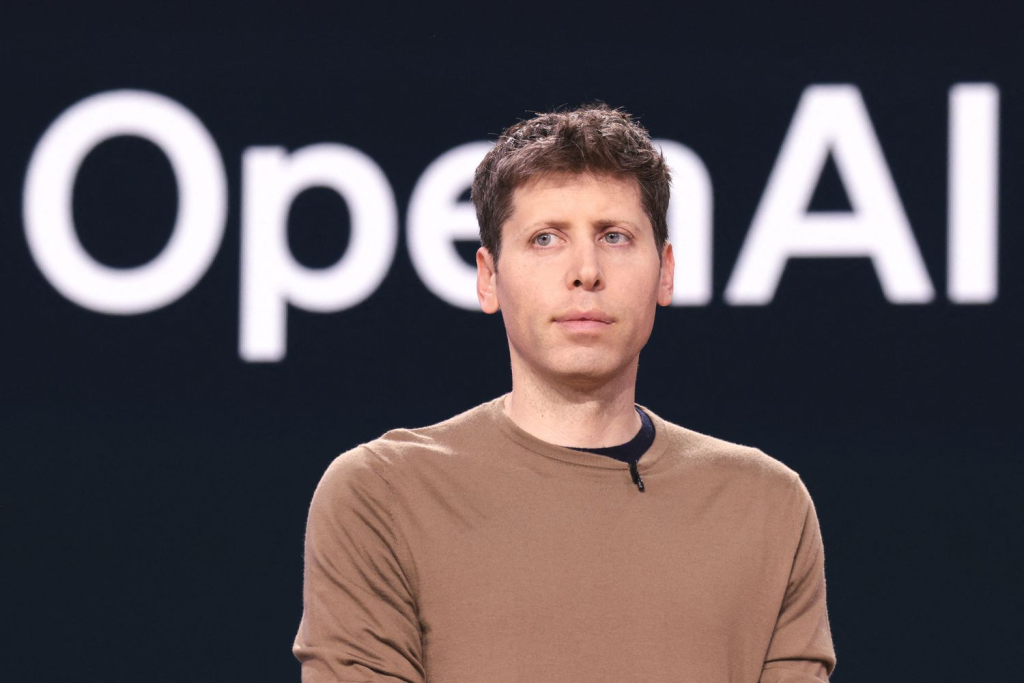
This ambitious outlook positions OpenAI not merely as a technological advancement but as a fundamental economic engine, capable of transforming industries and creating new avenues for wealth generation. The sheer scale of these figures suggests a paradigm shift in how economies will function, demanding a reevaluation of traditional economic models and growth strategies. This is a bold claim, and the specifics of how this value will be distributed remain a critical question for policymakers and businesses alike.
The Looming Impact on Labor Markets: 30% Automation Within a Decade
While the economic growth projections are substantial, Altman did not shy away from the significant labour market disruptions AI is expected to bring. He cautioned that AI could automate up to 30% of current jobs within the next decade. This figure highlights a critical tension: the immense productivity gains promised by AI may come at the cost of widespread job displacement across various sectors. The implications are far-reaching, potentially leading to increased unemployment, wage stagnation for certain skill sets, and a widening gap between those who can adapt to an AI-driven economy and those who cannot. This forecast underscores the urgent need for proactive strategies in workforce retraining, education reform, and the development of social safety nets to mitigate the negative consequences of this technological transition. Not everyone agrees — critics argue that historical technological shifts have always created new jobs to replace old ones. But the speed and scope of AI’s learning capabilities suggest this transition could be fundamentally different.
OpenAI’s $1 Billion Annual Commitment to AI Safety and Research
In a move to address the profound economic and societal questions raised by AI, announced a significant commitment: an annual investment of $1 billion dedicated to AI safety and economic impact research, commencing in 2027. This substantial financial backing signals OpenAI’s recognition of the dual nature of AI – its immense potential for progress and its inherent risks. The focus on safety research aims to ensure that AI development proceeds responsibly, mitigating potential harms. Simultaneously, the investment in economic impact studies will provide crucial data and analysis to help governments, businesses, and individuals navigate the complex transition ahead. This forward-thinking approach is essential, as it acknowledges that the benefits of AI can only be fully realized if its development is guided by a strong ethical framework and a deep understanding of its socio-economic consequences. This is a critical step, as the pace of AI advancement often outstrips our ability to fully comprehend its long-term effects.