MEX-W
 ARG-W
 CRY0
 NEW1
 HUL1
 BRE0
 LIV2
 BHA0
 MAN0
 BOU2
 ATA3
 FRO3
 GEN1
 VEN0
 MON0
 LILL1
 LEC
 JUV
 RSO
 LEV
 UDI
 MIL
 BAR
 RMA
 Mohun Bagan
 Chennaiyin
 PSG
 Lyon
 Sevilla
 Osasuna
 NED
 OMA
 NGA148
 UGA147/9 (20 ov, target 149)
 ATH4
 GET0
 INT2
 FIO1
 CHU2
 PFC3
 LIMWn
 NW-W
 NCWmn
 FsWm
 BOL137/9 (20 ov)
 TITNS137/8
 NWEST22/3 (3.1/20 ov, target 181)
 NCAPE180/3
 MIS124/4 (15/20 ov, target 170)
 VAG169/4
 NZ-A317
 IND-A113 & 106/2 (36 ov)
 SYL280/2 (84 ov)
 KHU
 MYMS465/7d
 CHATT134/2 (40 ov)
 DHA521
 RAJ103/6 (26 ov)
 RAN402
 BAR179/3 (56.1 ov)
 BRB
 MOW
 TOK
 SIKM
 NAGA
 JHK
 DELHI
 ODSA
 SVCS
 CGR
 AP
 GMB112/9
 LES109 (19.5/20 ov, target 113)
 MOZ110/7 (19/20 ov, target 110)
 ZMB109/9
 IND-W328/6
 ZIM-W207 (48.5/50 ov, target 329)
 PAK243/9 (47.1/50 ov, target 242)
 ENG241
 UAE244/8
 KER0
 MCFC0
 TSG0
 B040
 NEC2
 GRO2
 PSV1
 FEY1
 Motherwell0
 Hearts1
 CDN
 SCB
 Atlético1
 Deportivo0
 Lazio2
 Parma1
 Lens2
 Paris FC1

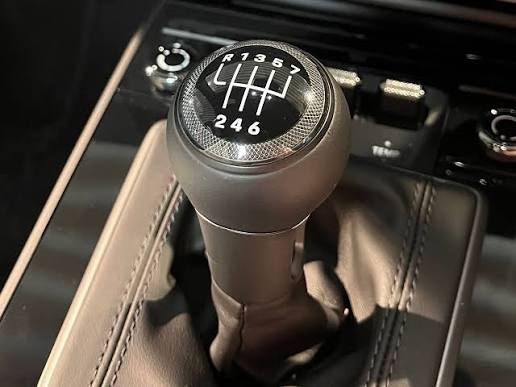
The current automotive landscape presents a clear paradox where everyone wants one, but nobody buys. Understanding this tension requires looking past manufacturer claims toward actual consumer behavior. The survival of the three-pedal interface hinges on whether emotional engagement can outweigh logistical convenience.
Why Are Buyers Abandoning Stick Shiftes Now?
Urban congestion and stop-and-go traffic have transformed daily commuting into a test of patience rather than driving skill. Automatic transmissions handle clutch engagement far more smoothly during gridlock, reducing fatigue for city dwellers. Manufacturers respond to volume trends by phasing out three-pedal configurations across mainstream segments. The shift away from manual gearboxes reflects practical road conditions rather than a decline in enthusiast passion.
Luxury brands that once offered pedal options now reserve them for track-focused models, signaling a clear corporate strategy. Fleet operators prioritize low maintenance costs and predictable fuel efficiency, leaving individual buyers to navigate a shrinking selection. Even performance divisions quietly drop standard manuals to meet emissions targets without sacrificing acceleration figures. This evolution mirrors broader technological adoption patterns seen across consumer electronics. Just as Samay Raina Finally Answers complex audience questions through digital platforms, automakers adapt their engineering roadmaps to match real-world utility demands.
Does Driving Engagement Really Matter For Everyone On Daily Commutes?
Enthusiasts argue that mechanical connection defines the true driving experience, yet most commuters spend hours trapped in traffic queues. Real-world utility rarely aligns with track-day fantasies when grocery runs dominate the calendar. Modern automated systems execute shifts faster than human reflexes while maintaining consistent throttle application.
“Consumer surveys consistently show that comfort features outweigh gearbox type when families evaluate purchase decisions,” notes recent industry analysis.
Buyers increasingly view vehicles as mobile offices rather than rolling entertainment systems. Tech integrations like adaptive cruise control and lane keep assist operate independently of pedal configuration, making the cabin experience largely identical regardless of transmission choice. Even sports car manufacturers now offer paddle-shift units that replicate traditional downshifts without requiring physical coordination. The psychological thrill of rev-matching fades quickly when navigating school zones and parking garages. Much like how Apple AirPods prioritize seamless connectivity over wired fidelity, drivers now expect frictionless transitions between highway cruising and urban crawling.
Can Track Day Culture Preserve The Three-Pedal Option For Everyone?
Niche communities still celebrate mechanical purity through organized track events and vintage racing circuits. These gatherings prove that dedicated drivers actively seek out manual controls when given the opportunity. However, grassroots enthusiasm cannot offset mass-market production economics. Enthusiast clubs provide vital support networks, but they lack the purchasing power to sustain factory tooling investments.
Engineers must justify casting new crankshafts and synchronizer rings against massive upfront capital requirements. Limited edition variants occasionally appear as halo products, yet they rarely trickle down to volume models. Regulatory pressures further complicate niche manufacturing, as emissions testing protocols favor standardized calibration profiles. Preservation efforts remain culturally significant even if commercial viability stays marginal. Similar to how Traitors 2 Winners demonstrate enduring appeal for competitive formats, manual transmissions survive through passionate subcultures rather than mainstream demand.
Will Hybrid Systems Change The Clutch Debate Forever?
Electrified powertrains introduce torque-fill mechanisms that eliminate traditional hesitation points during acceleration. Hybrid architectures often pair electric motors with single-speed reducers, bypassing multi-gear complexity entirely. Some plug-in hybrids still offer simulated shift pulses to maintain driver involvement, though these rely on software algorithms rather than mechanical linkages.
Hybridization fundamentally alters power delivery curves, making conventional clutch operation increasingly redundant for everyday propulsion. Manufacturers optimize battery management systems to recover energy during deceleration, removing the need for manual gear selection in regen-heavy scenarios. Future software-defined vehicles may allow users to program artificial shifter feedback through infotainment screens instead of physical levers.
Adaptable platforms honoring both digital automation and analog craftsmanship will define tomorrow’s cockpit.
Related Articles
- Apple AirPods 5 Launched in India at ₹14,900: ANC for Everyone, and…
- LE SSERAFIM’s “Made My Night”: The K-Pop Comeback Everyone’s Buzzing About
- Modern Warfare 4 Beta: Your Ticket to the Battlefield Before Everyone Else
Was this article helpful?
Your feedback directly improves future articles on this site.