The Honda UC3 electric scooter patented in India has put the country’s largest two-wheeler maker back in the spotlight, reports the outlet. A patent filing alone doesn’t guarantee a showroom debut, but it raises four questions every scooter buyer should ask. What exactly is the Honda UC3?
Why patent it here if launch isn’t planned? How do the 122 km range and 80 km/h top speed stack up? And does it threaten the Activa’s dominance?
What Exactly Is the Honda UC3?
The UC3 is reportedly Honda’s global electric scooter, already on sale in Thailand and Vietnam.
Vietnam reportedly gets the scooter via CBU imports, though CKD assembly is expected to begin soon. What makes it distinctive is the battery. Unlike the Activa e, which reportedly uses a swappable pack, the UC3 reportedly runs on a fixed battery.
It’s also reportedly Honda’s first electric scooter to adopt LFP chemistry, a choice that prioritises longevity and thermal stability over energy density. That packaging difference explains why the UC3 is a separate project rather than a rebadge.
The design language, too, is reportedly more modern than anything Honda currently sells in India.
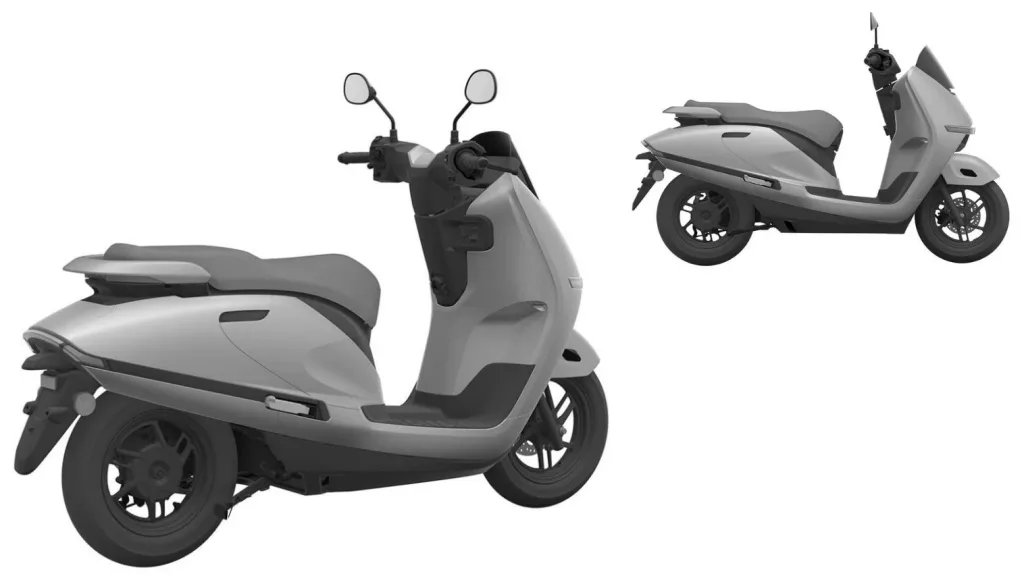
Why File a Patent Without a Confirmed Launch?
Here’s the thing: Honda reportedly patents dozens of two-wheelers in India purely as IP protection exercises. Many never reach production. The UC3 patent follows that pattern, so excitement should stay measured. India is the world’s largest two-wheeler market, which is exactly why Honda files early.
Securing design and mechanical rights reportedly prevents rivals from copying the LFP platform before a potential local rollout. It also keeps the door open for a future launch without revealing strategy. Patent filings are cheap insurance; a factory retooling is not.
Worth noting: Honda has not confirmed any UC3 production line in India. The filing signals intent to protect, not necessarily intent to sell — at least not yet.
How Do the 122 km Range and 80 km/h Speed Compare?
The reported figures are competitive, not class-leading. A 122 km maximum range on a single charge puts the UC3 in the same conversation as the Ola S1 Air and TVS iQube, though real-world range will likely sit closer to 90–100 km.
The 80 km/h top speed is adequate for city commutes but short of the 95–100 km/h some rivals claim. LFP chemistry is reportedly the sleeper advantage here. It typically delivers 2,000-plus charge cycles, meaning the battery should outlast the scooter’s first owner.
Will It Actually Launch in India?
That’s the key question. Honda’s Indian EV strategy reportedly currently hinges on the Activa e with its Battery-as-a-Service model. Launching the UC3 would reportedly create two competing electric platforms — fixed and swappable — which complicates dealer training and parts inventory.
The most likely path: Honda reportedly watches Activa e sales data through 2027. If demand for fixed-battery scooters emerges in the premium segment, the UC3 patent gives it a ready-made answer. If not, the filing simply sits in the portfolio. The bottom line: the UC3 electric scooter patented in India is a strategic placeholder, not a launch promise. The 122 km range and 80 km/h speed make it a solid product on paper. But until Honda confirms local production and pricing, treat this as groundwork — not a countdown. Watch for CKD announcements or dealer pilot programmes; those, not patents, signal a real debut.
Related Articles
- Mahindra Thar Electric SUV: India’s Iconic Off-Roader Goes Electric
- Burchda Y3 AWD Electric Bike 2026: Peak Power & Range
- India
FAQs
Is the Honda UC3 confirmed for India?
No. Honda has only filed a patent as of August 2026; no launch date, pricing, or production plan has been announced.
What battery does the UC3 use?
It reportedly uses a fixed LFP (lithium iron phosphate) battery, reportedly a first for Honda’s electric scooter line, prioritising cycle life over swappability.
How does the UC3 differ from the Activa e?
The Activa e reportedly uses a swappable battery through Honda’s Battery-as-a-Service model, while the UC3 has a fixed pack — targeting a different buyer.
Was this article helpful?
Your feedback directly improves future articles on this site.