LAZ2
 PAR0
 RCL1
 PAR1
 MEX-W
 ARG-W
 ATM1
 DEP0
 ADO1
 HEE2
 CLB2
 TOR0
 GVFC0
 FCP0
 Internacional2
 Botafogo0
 UAE
 NED
 PAK
 ENG
 IND-W
 ZIM-W
 GMB
 LES
 MOZ
 ZMB
 Inter Milan
 Fiorentina
 Churchill
 Punjab FC
 NGA
 UGA
 RIY2
 TAA1
 CHE0
 TOT2
 VAL1
 VIL2
 DOR1
 SGE0
 NZ-A135/3 (41 ov)
 IND-A113
 SYL
 KHU
 MYMS299/4 (87 ov)
 CHATT
 DHA293/3 (84.1 ov)
 RAJ
 RAN320/5 (80 ov)
 BAR
 DEN
 PNG
 NAM321/6
 IRE290 (47.3/50 ov, target 322)
 NZ180/5
 IND181/6 (19.5/20 ov, target 181)
 Mirassol1
 São Paulo1
 Vitória1
 Athletico-PR1
 Athletic
 Getafe
 C Palace
 Newcastle
 Hull
 Brentford
 Liverpool
 Brighton
 Man United
 Bournemouth
 Atalanta
 Frosinone
 NAP3
 ROMA3
 KHO0
 ETT3
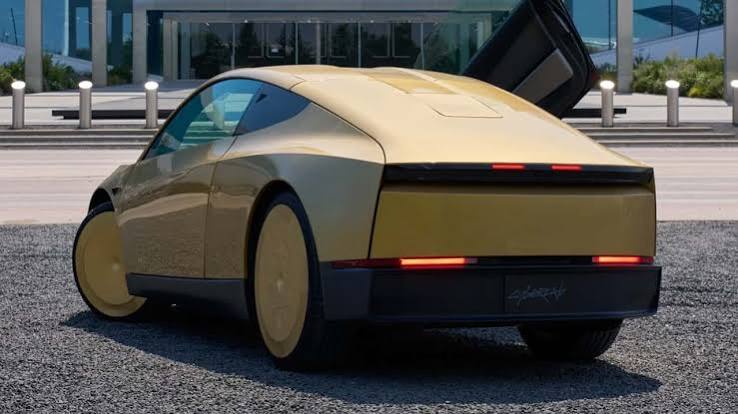
What happens when Tesla embeds Starlink into the Cybercab roof?
Tesla just gave its Robotaxi story a mechanical twist. The company debuted a factory-style version of the Cybercab concept with an integrated Starlink antenna embedded directly into the roof structure, a detail highlighted in a report by Motor1. Autonomous rides live and die on connectivity and manufacturing discipline. Elon Musk has previously framed the Cybercab timeline as “before 2027,” and Tesla has signalled a ride-cost target of under $0.20 per mile, though those points are unconfirmed in the specific framing of this rollout. But the roof integration is the real tell: the vehicle isn’t treating internet like a software-only problem. It’s treating it like a built-in requirement.
So the question isn’t just “does it have Starlink?” It’s “what does the roof integration change for daily autonomous operations?”
Key Details: How does the Starlink-in-roof setup work on the Cybercab?
According to Motor1, Tesla’s factory-style Cybercab version shows the Starlink antenna integrated into the roof itself, not bolted on as an afterthought. That matters because roofline hardware is typically where manufacturers can keep antennas stable, reduce cable clutter, and standardize assembly. Motor1 also notes that the highlighted Cybercab manufacturing approach resembles Tesla’s Gigafactory production-line techniques, which implies Tesla is trying to move from concept tooling to repeatable build processes.
Tesla Cybercab Robotaxi:
High-speed connectivity is only useful if it’s consistently available—embedding the antenna into the vehicle structure aims to make that reliability part of the baseline build, not a variable.
It’s worth noting: the claim that Starlink integration provides high-speed, low-latency connectivity for autonomy is unconfirmed, but it aligns with how satellite internet systems are generally marketed for low-delay data paths. That leads to the next question—what does Tesla want the Cybercab to do without a human driver in the loop? Stay tuned for more on robotaxi just put starlink inside its roof.
Context: Why does Tesla insist on running without a steering wheel or pedals?
Tesla’s autonomy pitch for the Cybercab is tightly coupled to the idea that the vehicle should operate without traditional driver controls. The concept discussed alongside the Starlink roof integration is designed to run without a steering wheel or pedals, relying entirely on Tesla’s Full Self-Driving (FSD) software—but this is also unconfirmed in the details around the factory-style version. The operational implication is clear: if there’s no steering wheel or pedals, the system must handle edge cases—like sudden route changes, connectivity fluctuations, and sensor-to-cloud coordination—through software and data flow.
Here’s a concrete example. Imagine a Robotaxi rerouting around a blocked lane while passengers stay seated. If the route plan depends on fast data exchange, then satellite connectivity becomes more than “nice to have.” That’s why roof-level antenna packaging can be seen as part of autonomy reliability engineering, even before we get into full deployment.
But the business stake is even bigger: Tesla’s cost target.
What’s Next: Can Tesla reach a sub-$0.20 per mile ride economy?
Tesla’s stated ambition includes offering Cybercab rides for an estimated cost of under $0.20 per mile—but that figure is unconfirmed in the specifics of this Cybercab rollout. Still, the internal logic is understandable. Lower cost per mile pushes Tesla toward three levers: higher utilization, reduced ope
From an India-and-world perspective, that cost narrative will also be measured against how charging, fleet operations, and regulatory frameworks mature. If autonomy rides scale, then infrastructure economics (and how vehicles communicate with it) could become as important as battery chemistry.
Looking ahead, the next milestone isn’t just “more prototypes”—it’s proving that roof-embedded connectivity and factory-style build discipline translate into predictable service performance at scale.
Related Articles
FAQs
1) What does “Starlink inside the Cybercab roof” actually mean?
It means Tesla showed a Cybercab variant where an antenna associated with SpaceX’s Starlink system is embedded into the roof structure, as described by Motor1. The practical goal is to make connectivity part of the standard vehicle build, improving consistency versus adding external hardware later. The exact performance outcome (speed/latency) connected to autonomy is unconfirmed in the details available here, but the engineering intent is clear: tighter integration for reliable data links.
2) Is Tesla’s Cybercab actually targeting production before 2027?
Elon Musk has previously stated a goal that the Cybercab is targeted for production before 2027, but that specific timeline support is unconfirmed in the context of this factory-style reveal. For readers, the key is to watch for official production milestones, homologation steps, and fleet-readiness announcements rather than relying on concept-stage timelines.
3) Will the Cybercab run without a steering wheel and pedals?
The design described with this rollout is that the autonomous vehicle is intended to operate without a steering wheel or pedals, relying on Full Self-Driving (FSD) software—but that detail is unconfirmed. In autonomy rollouts globally, removing driver controls usually comes only after software maturity and regulatory approvals are aligned.
4) Could the Cybercab truly cost under $0.20 per mile?
Tesla’s estimated ride-cost target of under $0.20 per mile is unconfirmed. It’s a meaningful benchmark, but the real test will be fleet economics: utilization rates, maintenance cycles, dispatch efficiency, and—crucially—whether connectivity and autonomy work reliably enough to reduce human support.
Tesla cybercab robotaxi: Bottom line
Tesla’s Robotaxi pitch just got a hardware upgrade: Starlink baked into the Cybercab roof suggests
Was this article helpful?
Your feedback directly improves future articles on this site.