LAZ2
 PAR0
 RCL1
 PAR1
 MEX-W
 ARG-W
 ATM1
 DEP0
 ADO1
 HEE2
 CLB2
 TOR0
 GVFC0
 FCP0
 Internacional2
 Botafogo0
 UAE
 NED
 PAK
 ENG
 IND-W
 ZIM-W
 GMB
 LES
 MOZ
 ZMB
 Inter Milan
 Fiorentina
 Churchill
 Punjab FC
 NGA
 UGA
 RIY2
 TAA1
 CHE0
 TOT2
 VAL1
 VIL2
 DOR1
 SGE0
 NZ-A135/3 (41 ov)
 IND-A113
 SYL
 KHU
 MYMS299/4 (87 ov)
 CHATT
 DHA293/3 (84.1 ov)
 RAJ
 RAN320/5 (80 ov)
 BAR
 DEN
 PNG
 NAM321/6
 IRE290 (47.3/50 ov, target 322)
 NZ180/5
 IND181/6 (19.5/20 ov, target 181)
 Mirassol1
 São Paulo1
 Vitória1
 Athletico-PR1
 Athletic
 Getafe
 C Palace
 Newcastle
 Hull
 Brentford
 Liverpool
 Brighton
 Man United
 Bournemouth
 Atalanta
 Frosinone
 NAP3
 ROMA3
 KHO0
 ETT3

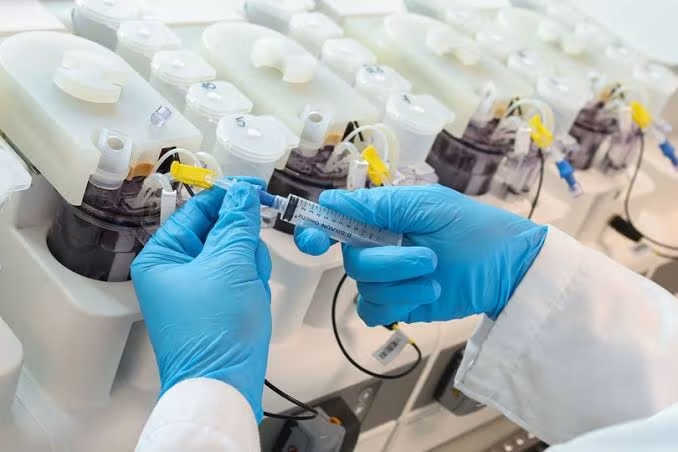
A biosecurity lab is a specialized facility built to monitor and reduce emerging biological threats. The UK government has announced a $134 million investment to establish a dedicated biosecurity lab, signaling a major shift in how national governments address AI risks. The funding matters as frontier models advance rapidly.
How will the laboratory operate?
The facility will operate as an independent nonprofit, with strict boundaries separating it from direct government control. It will work closely with academic institutions and public health agencies to share threat intelligence without exposing proprietary algorithms.
Sensitive genomic datasets will stay on air-gapped networks, keeping confidential medical records off the public internet. Administrative teams will oversee grants to university partners and centrally monitor compliance standards. The model recalls Cloudflare’s move into secure workspace architecture, where isolated environments protect sensitive data. Staff will alternate between defensive simulation exercises and offensive vulnerability assessments to test detection pipelines. Annual audits will check that computational outputs meet international biosafety guidelines.
Why does this initiative exist now?
Generative models have advanced quickly, lowering the technical barriers to genetic engineering experiments. Frontier systems can now draft complex protein sequences faster than traditional wet-lab researchers can synthesize them, raising urgent safety concerns.
Recent incidents involving AI-generated viral constructs have shown how quickly theoretical capabilities can become physical realities. The same architectures could also help medical scientists shorten vaccine development cycles for previously unknown zoonotic diseases. Officials caution that unrestricted access to high-parameter models might let amateur groups design novel toxins without institutional safeguards. The lab will build automated screening filters to flag dangerous sequence combinations before they leave developer terminals.
“AI systems are creating unprecedented opportunities for scientific discovery, but they’re also creating new biological risks,” stated the UK government in its official briefing.
Regulations will develop alongside detection capabilities to prevent malicious use.
What hardware and timeline should we expect?
The government hasn’t publicly disclosed procurement details for the supercomputing infrastructure. Officials haven’t shared specific processor models, memory configurations, or storage arrays for the computing cluster. Government procurement officers often wait to announce hardware until delivery contracts are signed and tax implications have been calculated. Commercial software licensing agreements may shape the initial rollout more than construction schedules. Early phases will focus on algorithmic benchmarking rather than full-scale pathogen simulation. Analysts expect production-ready workstations within eighteen months, though customs clearance could affect installation dates.
Component pricing tiers are also expected to remain confidential during the bidding process. The UK’s approach shows how public funding can direct commercial AI capabilities toward defensive scientific work. As frontier models continue to scale, building a biosecurity lab early could provide critical infrastructure to monitor future biological vulnerabilities. Global health organizations should watch as computational containment strategies develop into standard practices. Read more at Engadget. What is the primary purpose of the UK’s investment in the AI biosecurity lab? The UK government’s $134 million investment aims to advance research into biological threats and the misuse of advanced machine learning models. The initiative is intended to direct commercial AI capabilities toward defensive scientific applications and establish critical infrastructure for monitoring future biological vulnerabilities. ### How will the deployment of the biosecurity lab be prioritized? The initial rollout will focus on algorithmic benchmarking before full-scale pathogen simulation. Analysts expect production-ready workstations within eighteen months, although installation timing will depend on customs clearance and the terms of commercial software licensing agreements.
FAQs
What exactly is the UK funding?
The UK government has set aside $134 million to support research into biological threats and the misuse of advanced machine learning models. This funding will support research into those risks. The initiative brings together the Department for Science, Innovation and Technology and other partners.
Industry leaders, including OpenAI, Anthropic, and Google DeepSeek, have pledged technical support. They aim to ensure the facility can use the most advanced language-processing architectures available. Engadget describes the partnership as an unusual meeting of public health goals and commercial model developers. Most of the funding will go toward hiring staff, acquiring datasets, and securing servers—not developing consumer-facing applications. Researchers will map mutation patterns and simulate transmission routes across diverse populations.
Was this article helpful?
Your feedback directly improves future articles on this site.