SAS1
 FIO1
 GEN4
 ALA0
 ITT0
 AlN0
 ALG0
 QAD0
 ATA
 PAR
 LOR
 BRE
 NEW
 EVE
 DEP
 OSA
 WI-A
 LIONS
 Galatasaray
 Stuttgart
 Shakhtar
 Sporting
 Atlético
 Bayern
 NED183/3 (36/50 ov, target 183)
 OMA182
 Athletic2
 Real Sociedad1
 Juventus2
 Napoli0
 Marseille2
 Toulouse0
 NZ-A424
 IND-A346 & 32/0 (11 ov)
 QLD280
 VIC307 & 136/6 (66 ov)
 SYL218 & 218
 CHATT210 & 126/1 (37 ov, target 227)
 MYMS108 & 315/9 (91 ov) (f/o)
 KHU288
 DHA
 BAR266/8 (70 ov)
 RAN256
 RAJ231 & 110/3 (27 ov)
 ASSAM135
 KNTKA180/2 (36 ov)
 MEGHA
 NAGA244/8 (67 ov)
 TPURA219/7 (74.3 ov)
 SAU
 BENG143
 MAHA21/2 (8 ov)
 ODSA
 JHK37/3 (25 ov)
 CHD
 TN320/4 (86 ov)
 NZ
 IND
 UAE
 TOK
 MOW
 BIK
 JAB
 LUL
 POA
 DOLPH
 WPR
 CD
 AUCK
 AFG81/3 (8.1/20 ov, target 80)
 ZIM79
 NAM131/5 (21.2/50 ov, target 130)
 IRE129
 MS-W109 (18.1 ov)
 PS-W124/9
 KAL0
 IRAK0
 VLL3
 LEG1
 SON0
 KBH1
 GAIS0
 AIK0
 MJA0
 KFF0
 RAF0
 CAP0
 CHA0
 NCHI0
 ADQ0
 BRN0
 Barcelona
 Aston Villa
 Elche0
 Valencia1
 Lecce1
 Genoa2
 Liverpool0
 Arsenal1
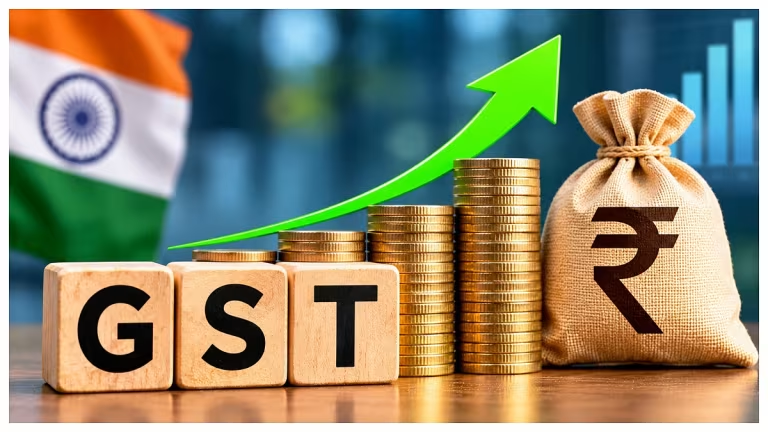
India’s GST collections reportedly climbed 23% to ₹2.3 lakh crore in October 2026, according to The Times of India. GST collections are the reported monthly gross receipts from India’s goods and services tax. Economic performance reports released Monday, November 2, 2026, highlighted the figure. It hasn’t been officially confirmed.

GST Collection Overview: Record GST Collections
The reported October total puts gross receipts at ₹2.3 lakh crore. The 23% rise is the central comparison in the coverage, but the supplied information doesn’t name the comparison month or give its collection total. Readers get a headline growth rate, but not enough figures to calculate the rupee increase or check the month-on-month movement.
October collection figures and comparison to previous months
The collection figure and growth rate work together: one shows the reported scale, while the other describes the reported change. But the available details don’t say whether the 23% comparison is year-on-year or month-on-month. That distinction matters. The two comparisons cover different periods and can tell different stories about tax receipts.
The report gives no figures for earlier months. So it can’t establish whether October reversed a fall, extended a run of gains, or set a new record for the total itself. It calls the 23% rise a record increase, but offers no historical series to verify that description.
The supplied figures are marked unconfirmed, so treat the ₹2.3 lakh crore amount as a reported snapshot, not an independently verified final release. Historical context takes more than one monthly headline. Comparing years requires consistent October totals, while comparing months requires the preceding collections and the same calculation basis. Without those figures, October signals a large reported increase, but can’t show on its own whether the change reflects a lasting trend.
What Drove the Reported 23% GST Rise?
The reported 23% rise doesn’t reveal what drove the increase. The supplied figures come with no sector-level breakdown, tax-component split, or explanation of the causes. So it’s too early to credit particular industries, household spending, imports, or compliance changes for the reported rise.
No Sector Breakdown for the Reported GST Rise
The available information names no leading sector and gives no contribution figures. Analysts can examine GST receipts by sector and tax component, but a national gross total alone can’t show which businesses or transactions added most to the monthly collection.
That breakdown is necessary to identify winners or judge whether growth was broad-based. The same limitation applies to economic recovery after the pandemic. A single October figure can’t show how much came from post-pandemic recovery. The ₹2.3 lakh crore figure is a macroeconomic signal, not a substitute for sector-level data or an official final release.
FAQs
Is the ₹2.3 lakh crore GST collection figure confirmed?
No. The supplied figures are marked unconfirmed, so treat the amount as a reported figure, not an independently verified final release.
Was the 23% GST rise year-on-year or month-on-month?
The available details don’t specify. The report gives the growth rate, but not the comparison month or its collection total.
What drove the reported GST increase in October 2026?
The supplied information doesn’t identify a cause. The figures come with no sector-level breakdown, tax-component split, or explanation.
Read Next
- OpenAI Pledges to Buy Google AI Chips in First Move Away From Google, Nvidia, and Reliance
- GTA 6 Romance Mechanics Let Players Break Up Jason and Lucia
- Diljit Dosanjh Graffiti Found at Delhi Metro Stations, Three Arrested
Was this article helpful?
Your feedback directly improves future articles on this site.