SAS0
 FIO0
 ALS0
 AHL0
 WAS4
 AQAJ3
 TRA1
 NEF1
 GEN1
 ALA0
 ATA
 PAR
 LOR
 BRE
 NEW
 EVE
 DEP
 OSA
 WI-A
 LIONS
 Galatasaray
 Stuttgart
 Shakhtar
 Sporting
 Atlético
 Bayern
 NED183/3 (36/50 ov, target 183)
 OMA182
 Athletic2
 Real Sociedad1
 Juventus2
 Napoli0
 Marseille2
 Toulouse0
 NZ-A424
 IND-A346 & 32/0 (11 ov)
 QLD280
 VIC307 & 136/6 (66 ov)
 SYL218 & 218
 CHATT210 & 126/1 (37 ov, target 227)
 MYMS108 & 315/9 (91 ov) (f/o)
 KHU288
 DHA
 BAR266/8 (70 ov)
 RAN256
 RAJ231 & 110/3 (27 ov)
 ASSAM135
 KNTKA180/2 (36 ov)
 MEGHA
 NAGA244/8 (67 ov)
 TPURA219/7 (74.3 ov)
 SAU
 BENG143
 MAHA21/2 (8 ov)
 ODSA
 JHK37/3 (25 ov)
 CHD
 TN320/4 (86 ov)
 NZ
 IND
 UAE
 TOK
 MOW
 BIK
 JAB
 LUL
 POA
 DOLPH
 WPR
 CD
 AUCK
 AFG81/3 (8.1/20 ov, target 80)
 ZIM79
 NAM131/5 (21.2/50 ov, target 130)
 IRE129
 MS-W109 (18.1 ov)
 PS-W124/9
 ATRO2
 VOL0
 ALLB1
 EST0
 SHO1
 MGR0
 KAL0
 IRAK0
 VLL1
 LEG0
 Barcelona
 Aston Villa
 Elche0
 Valencia1
 Lecce1
 Genoa2
 Liverpool0
 Arsenal1

The Trump Stevens invitation was Donald Trump’s July 28, 2024, appeal to Democratic Representative Haley Stevens at a campaign rally in Grand Rapids, Michigan. He publicly asked a sitting lawmaker to change party affiliation. The moment stood out because the request contrasted with Stevens’ established Democratic identity.
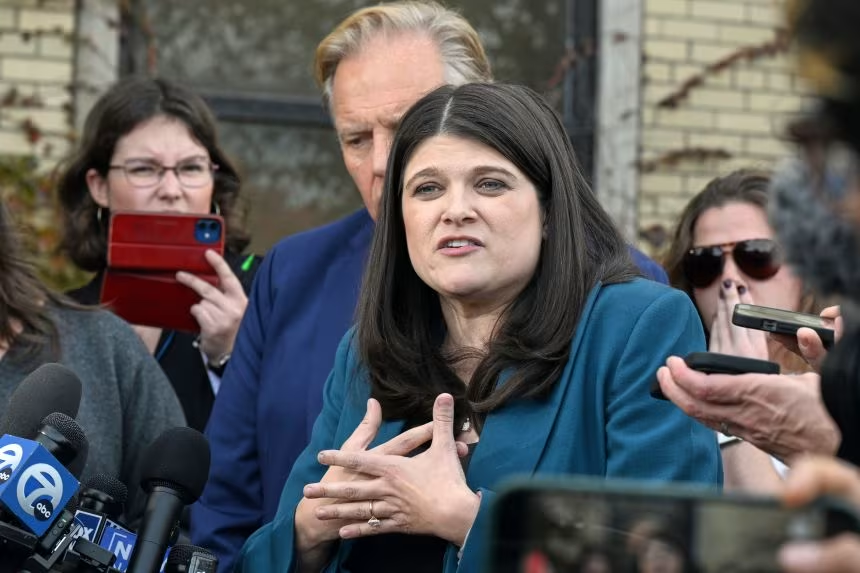
Trump’s Invitation to Haley Stevens
Trump’s invitation to Stevens: Context and significance
Trump made the appeal at a Grand Rapids campaign rally, while he was the Republican nominee for the 2024 presidential election. Rather than a private political exchange, the request played out before a campaign audience. Al Jazeera covered the invitation.
The invitation was a political gesture, not evidence that Stevens changed parties. Stevens first won election to the United States House of Representatives in November 2018, representing Michigan’s 11th congressional district. The available facts don’t establish why Trump singled her out, so any claim about his motive would go beyond what’s known. A party switch can affect a lawmaker’s ties to voters, colleagues and campaign supporters. But the invitation alone didn’t change Stevens’ party affiliation or congressional position. The available information also doesn’t verify reports that she rejected the request in an official statement; that response shouldn’t be treated as confirmed.
Historical trends of party-switching in Michigan
The verified facts don’t identify earlier Michigan party switches or their election results. That leaves little basis for claims about historical trends: one high-profile invitation can’t establish a broader pattern in the state.
Stevens has served as a Democrat since her 2018 election, which provides context but doesn’t tell us how Michigan voters might react to a hypothetical switch. Party affiliation can signal a lawmaker’s political priorities to constituents. Still, changing a party label doesn’t by itself prove that policy positions or voter loyalties have shifted. Without verified examples or polling tied to this episode, claims that the invitation reflects a wider Michigan realignment would be premature.
Potential Election Implications of Trump’s Appeal
Stevens’ response and potential motivations
Trump’s request doesn’t reveal what Stevens will do politically. The supplied facts don’t confirm her response, explain her motivations or indicate that she considered changing parties. Treating an unverified statement as settled could turn a campaign moment into a false account of her position.
Her electoral standing also depends on factors not established here, including voter views, campaign decisions and the issues shaping the district’s next contest. The invitation may draw attention to her political identity, but attention alone doesn’t show a career benefit or cost. For now, the clearest verified point is this: Stevens entered Congress as a Democrat, and Trump publicly asked her to join the Republicans.
Impact on Democratic Party dynamics in Michigan
The episode may give both parties a reason to discuss candidate loyalty and political identity in Michigan. Democrats may face questions about how the party supports its elected representatives. For Republicans, it offers a visible example of Trump speaking directly to a Democratic lawmaker.
Neither possibility proves that voters or party members changed their views. The Trump Stevens invitation may become a campaign talking point, but its electoral impact remains unestablished. The facts available for this article include no verified polling, district-level reaction or follow-up action. Future reporting may clarify whether Stevens responded publicly and whether the exchange affects campaigning. Until then, the invitation is best understood as a political appeal, not a party realignment.
FAQs
What prompted Trump’s invitation to Stevens?
Trump made the invitation at a July 28, 2024, campaign rally in Grand Rapids. The available facts don’t explain his specific motivation.
How has party-switching affected previous elections?
The verified information provided for this article doesn’t identify earlier Michigan party switches or their election results. So, no historical electoral effect can be established here.
What are the potential consequences for Stevens’ career?
A party switch could affect her political relationships and electoral positioning. But no verified evidence shows that Stevens changed parties or that the invitation altered her career.
How might this influence voter sentiment in Michigan?
It could prompt discussion of party identity, but no verified polling or voter-reaction data shows an effect on Michigan voters. The invitation’s political significance remains uncertain unless verified follow-up shows that it changed Stevens’ choices or shaped the campaign conversation. Source: Aljazeera trump stevens invitation
Read Next
- OpenAI Pledges to Buy Google AI Chips in First Move Away From Google, Nvidia, and Reliance
- GTA 6 Romance Mechanics Let Players Break Up Jason and Lucia
- Diljit Dosanjh Graffiti Found at Delhi Metro Stations, Three Arrested
Was this article helpful?
Your feedback directly improves future articles on this site.