Qualcomm first teased the Snapdragon C back in May, but the chip’s actual specifications stayed vague — until now. The company has finally detailed the silicon behind its push into $300 laptops, and it’s making bold claims against Intel’s budget-segment chip in the process.
What’s Inside the Snapdragon C
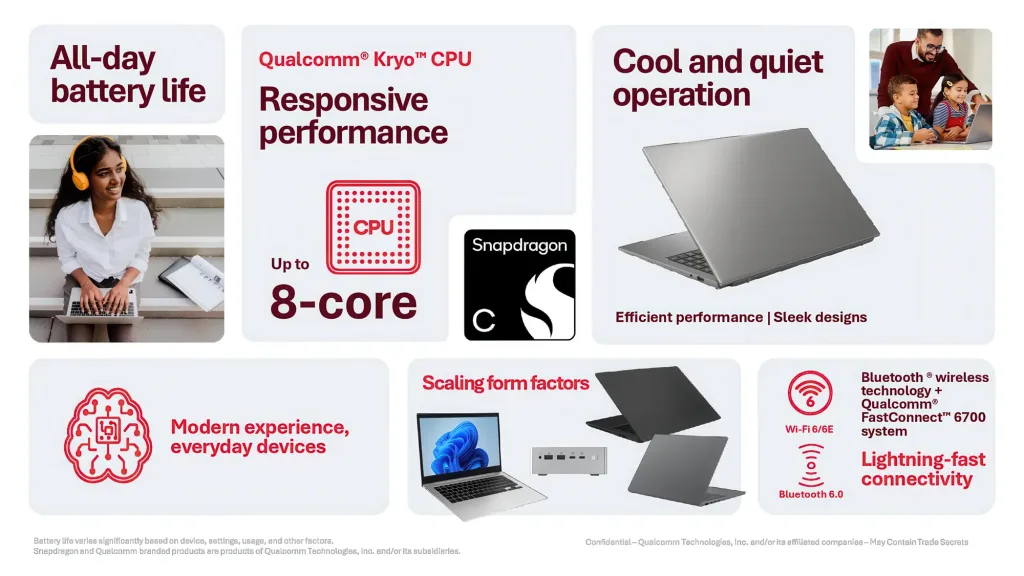
The chip is an 8-core Qualcomm Kryo CPU, built on the same mobile-derived architecture that’s powered Qualcomm’s phone chips for years — a deliberate choice over the custom Oryon cores used in the premium Snapdragon X series. It’s a clear signal of intent: this isn’t a stripped-down flagship chip, it’s mobile-grade efficiency purpose-built for the entry-level PC market.
| Specification | Detail |
|---|---|
| CPU | 8-core Qualcomm Kryo |
| Single-core max frequency | 3 GHz |
| Multi-core max frequency | 2 GHz |
| Cache | 2MB total |
| GPU | Integrated Adreno, up to 900 MHz |
| NPU | Qualcomm Hexagon (TOPS undisclosed) |
| Target price | Laptops starting around $300 |
For more on how chipmakers are targeting different price tiers this year, check our laptop and PC hardware coverage.

The Battery Life Claims
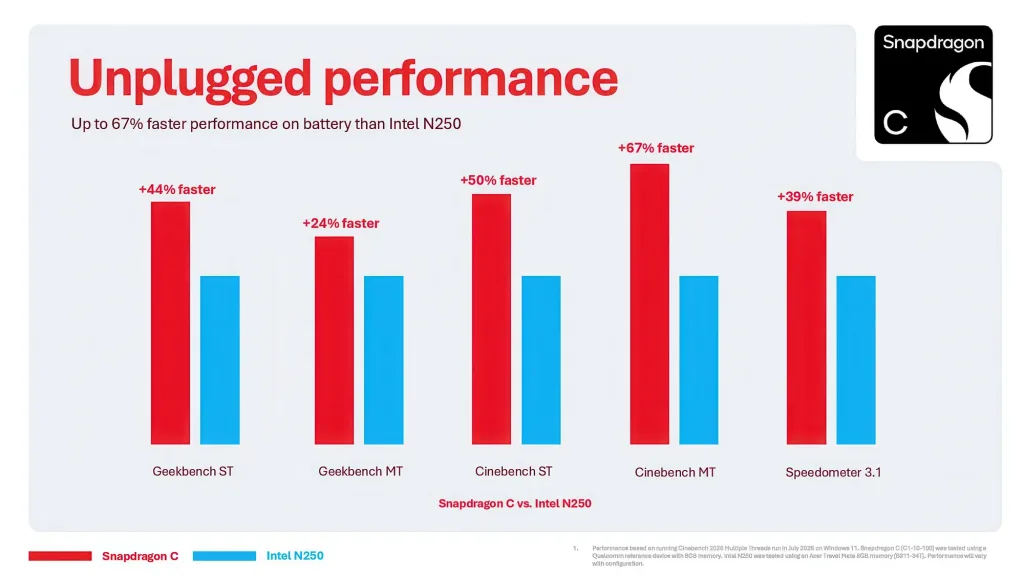
Qualcomm’s real pitch here isn’t raw speed — it’s efficiency. Testing the Snapdragon C (in an 8GB reference design) against an Acer TravelMate running Intel’s N250 with the same 8GB of RAM, Qualcomm claims:
| Test | Snapdragon C Advantage |
|---|---|
| Netflix streaming (Edge) | 106% better battery efficiency |
| Web browsing | 68% better battery efficiency |
| Microsoft Teams video call | 74% better battery efficiency |
| Overall battery performance | 67% faster than Intel N250 |
| Multi-threaded efficiency | Up to 2.1x better |
Notably, Qualcomm has only shared battery-based comparisons so far — how the chip performs while plugged into AC power remains unclear, which is worth keeping in mind before assuming these gains carry over to raw performance benchmarks.


No Copilot+ Features Here
One important caveat: the Snapdragon C’s NPU doesn’t meet Microsoft’s 40 TOPS threshold for Copilot+ PC certification, meaning features like Recall and Cocreator won’t be available on these devices. Qualcomm has been upfront about this, positioning the Snapdragon C as a chip for simple, everyday tasks rather than on-device AI workloads. Full technical details are available via Qualcomm’s official Snapdragon C page.
Who’s Building These Laptops
Qualcomm has confirmed partnerships with HP, Acer, Asus, and Lenovo. Acer has already shown off the first device — the Aspire Go 15, packing 8GB of RAM, 512GB of storage, and a 15.6-inch FHD display — though pricing and release timing remain unconfirmed for now.

Timing Amid a Memory Crunch
This launch lands at an unusual moment: DRAM and NAND prices are climbing industry-wide, making even entry-level laptops more expensive to build. Qualcomm targeting the sub-$300 segment despite that pressure suggests real confidence in the Kryo-based platform’s cost efficiency — something we’ve also seen play out across budget smartphone pricing this year.
What’s Next
With OEM partners lined up and Acer’s device already teased, expect Snapdragon C laptops to start reaching shelves later in 2026. Keep following our laptop launches section for pricing and availability as these devices go official.