Mohun Bagan
 Chennaiyin
 PSG
 Lyon
 Sevilla
 Osasuna
 NED
 OMA
 NZ
 IND
 NAM
 IRE
 PAK
 SL
 SA
 AUS
 BAR1
 RMA2
 UDI0
 MIL2
 RSO2
 LEV1
 LEC0
 JUV2
 BRB10/1 (1.3/20 ov)
 MOW
 NZ-A317
 IND-A113 & 220/2 (59 ov)
 SYL280/2 (84 ov)
 KHU
 MYMS465/7d
 CHATT134/2 (40 ov)
 DHA521
 RAJ103/6 (26 ov)
 RAN402
 BAR179/3 (56.1 ov)
 LUL
 SPR
 TOK
 MIS
 MEX-W51 (12.5/20 ov, target 187)
 ARG-W186/7
 NGA148
 UGA147/9 (20 ov, target 149)
 GMB112/9
 LES109 (19.5/20 ov, target 113)
 MOZ110/7 (19/20 ov, target 110)
 ZMB109/9
 IND-W328/6
 ZIM-W207 (48.5/50 ov, target 329)
 ENG241
 LAFC
 LA
 Neftchi Fergana
 Al Ittihad
 Besiktas
 Istanbul BB
 Caykur Rizespor
 Trabzonspor
 Al Ahli
 Al-Gharafa
 SUN0
 LEE0
 SCF1
 MUN3

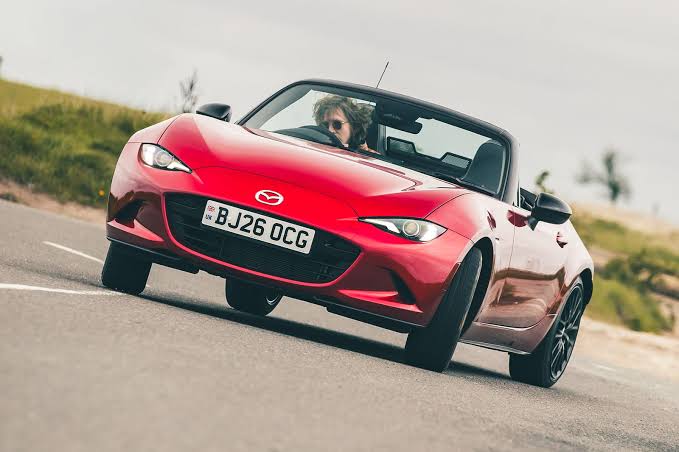
Mazda claims its MX-5 roadster sips fuel like a city hatchback while delivering genuine sports car thrills — and after weighing the reported figures against owner accounts, the claim largely holds up. The question we set out to answer is simple: does the world’s best-selling two-seater actually earn its reputation for thriftiness, or is the efficiency story more marketing than mechanics?
What Mazda Promises
The MX-5’s official numbers vary by market and transmission, but the 2.0-litre Skyactiv-G petrol engine has been rated at roughly 6.9 L/100 km combined in some regions, with manual versions typically a shade thirstier than the automatic.
In imperial terms, that lands in the mid-30s mpg range — respectable for any petrol car, remarkable for a rear-wheel-drive roadster. Here’s the thing: these figures were never achieved through hybrid trickery or forced induction.
Mazda’s approach is old-school engineering — a kerb weight hovering near one tonne, a small-displacement naturally aspirated engine, and gearing tuned for efficiency rather than outright acceleration. The car’s efficiency is a byproduct of its lightness, not a bolt-on feature.
Real-World Performance vs the Sticker
Official test cycles are famously optimistic, and the MX-5 is no exception. Owner-reported consumption across enthusiast forums and long-term reviews typically settles in the 7.5–8.5 L/100 km band for mixed driving — a gap of 10 to 20 percent versus the brochure, which is normal for petrol cars without electrification. Where the MX-5 genuinely impresses is highway cruising. At a steady 100 km/h, the little roadster can reportedly dip close to 6 L/100 km, thanks to its low drag and relaxed gearing. City driving tells the opposite story: short shifts, idle time, and the engine’s need for revs push consumption past 9 L/100 km in dense traffic.
Worth noting: the MX-5’s small 45-litre fuel tank means real-world range sits around 500–550 km on a mixed run. That’s adequate for weekend touring, though drivers crossing India’s expressways or America’s vast interstate stretches will plan fuel stops more carefully than in a family sedan. It is also worth zooming out. In a market shifting rapidly toward electrification — where efficiency conversations increasingly revolve around kWh rather than litres — comparisons get interesting. Buyers weighing a roadster against an EV might read our Tesla Model 3 Ownership guide for the counterpoint, or consider how Tesla Model Y: Power export features are redefining what efficiency means. Even the Tesla Model Y Juniper and the delayed Lucid Cosmos Delay to late 2027 show how the efficiency race has moved to the electric segment entirely.
The Verdict
Does the Mazda MX-5’s fuel efficiency claim survive scrutiny? Yes, with honest caveats. The car is genuinely economical for its class, and no rival roadster under ₹30 lakh equivalent does better without resorting to a turbocharged or hybridised powertrain.
The gap between official and real-world figures is real but modest, and the car’s mechanical simplicity means those numbers stay consistent over years of ownership. For buyers who want sports car character without sports car running costs, the MX-5 remains the benchmark.
The smarter play for Mazda’s next generation would be electrification — but for now, the humble roadster’s honesty is its own reward.
Related Articles
- How Tesla Model S Battery Management Affects Long Term Range Efficiency
- Ford Mustang Mach-E vs Tesla Model 3: Range and efficiency
- Tesla Model 3 and Chevrolet Bolt: A Five-Year Ownership Cost Analysis
FAQs
What is the real-world fuel efficiency of the Mazda MX-5?
Mixed driving typically returns 7.5–8.5 L/100 km based on owner reports, against official figures of roughly 6.9 L/100 km in some markets. Is the MX-5 more efficient with the automatic or manual gearbox?
The automatic has generally been rated slightly more efficient on paper, though the difference in real-world use is small and driving style matters more. How far can the MX-5 travel on one tank? With its 45-litre tank, expect roughly 500–550 km of mixed driving before refuelling. Does the MX-5 cost more to run than a hot hatch? No — its light weight and small engine keep fuel costs comparable to, or better than, most turbocharged hot hatches.
Was this article helpful?
Your feedback directly improves future articles on this site.