SA280/6 (68.2 ov)
 AUS
AUS AFG19/3 (3.3/20 ov)
 ZIM
ZIM SAS
SAS LAZ
LAZ ROMA
ROMA CAG
CAG TOR
TOR COMO
COMO BAN
BAN WI
WI IND-W
IND-W ZIM-W
ZIM-W GOA
GOA SC Delhi
 Milan
Milan Bologna
 Parma
Parma Udinese
 ABH0
ABH0 ALF1
ALF1 PAK110
 SL114/2 (18.1/50 ov, target 111)
 NAM316/7
 IRE253 (44.5/50 ov, target 317)
 NZ198/3
 IND199/4 (13.2 ov)
 JER
JER KUW
KUW JAB112/8 (18.2/20 ov, target 133)
 KAY132/9
 SIKM184
 NAGA187 & 46/4 (34 ov)
 JHK131/4 (47 ov)
 DELHI515/5d
 ODSA194
 SVCS13/0 (5 ov)
 BRODA616
 J & K6/0 (4 ov)
 CHD685/5d
 HP49/0 (14 ov)
 CGR216/8 (95 ov)
 AP231
AP231 HYD193/2 (54 ov)
 PNJB431
 KNTKA297/7 (95 ov)
 TPURA194
 AUCK
AUCK CANT
CANT CD
CD ND
ND DEN
DEN QAT
QAT KENYA
KENYA POA
POA SPR
SPR BRB
BRB VAG
VAG NED371/5
 OMA265 (49.3/50 ov, target 372)
 BIK149 (19.3/20 ov, target 158)
 CHR157/3
 PNG155
 Venezia
 Inter Milan
 Genoa
Genoa Juventus
 Sevilla2
 Osasuna0
 PSG2
PSG2 Lyon0
Lyon0 Mohun Bagan1
 Chennaiyin0
 BEI2
BEI2 JHM2
JHM2 RCH0
RCH0 KRE0
KRE0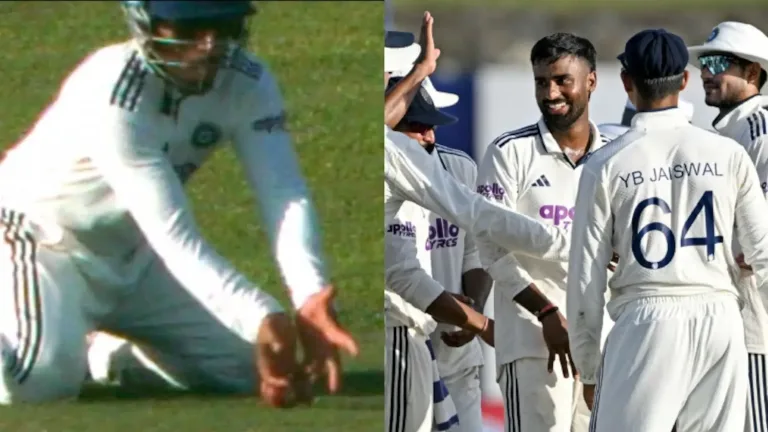
A 22nd-over call in Sri Lanka’s chase at Galle changed the room temperature instantly as the Dhruv Jurel catch was disputed for whether the ball had touched the ground before the fingers closed. The incident came on Tuesday, August 18, 2026, during the first Test between India and Sri Lanka at the Galle International Stadium, and it quickly snowballed into a full-blown “clean catch or not?” debate.
Overview: What Happened, Where, and When
Worth noting: the controversy erupted in the first Test on Day 4, with Sri Lanka chasing 373 in the fourth innings. The disputed dismissal arrived in Sri Lanka’s second innings, in the 22nd over, when Manav Suthar induced an edge from Lahiru Udara and the ball was taken by Dhruv Jurel.
Third umpire Raveendra Wimalasiri then checked multiple replays and ruled the catch out, leaving viewers split on whether it was completely above the turf. This matters now because India’s fielding standards and umpiring clarity are tested most sharply in exactly these “half-an-inch” moments. ESPN match coverage and analysis discussions also show how quickly technology-assisted decisions can ignite controversy when broadcast angles look too close to call—especially in a stadium where the boundary rope and grass lines can visually confuse frame-by-frame judgment.
Key Details: The Catch, The Replay, The Argument
Here’s the thing: Russel Arnold challenged the third-umpire conclusion, arguing that the replay indicated the ball was pushed along the ground and that the front of the ball appeared to be touching the turf. His core point was about the sequence—whether the ball made contact with the playing surface at any stage as Jurel completed the catch.
That said, the decision itself was reached after third umpire Raveendra Wimalasiri reviewed “multiple replays” and ruled in favour of India, with the dismissal confirmed after he found that Jurel’s fingers were underneath the ball. The catch, therefore, was certified as legitimate under the rules for a completed catch, even though close-up angles created doubt for some viewers. The match impact is clear too: the dismissal was Sri Lanka’s fourth wicket, and Udara walked back to the pavilion with visible frustration reported by multiple accounts. Social media reaction split cleanly—some fans and commentators called the catch not clean, while others accepted the third umpire’s call as correct. For wider coverage, see ESPN.
| Moment | Over / Innings | Players Involved | Outcome |
|---|---|---|---|
| Disputed caught dismissal | 22nd over, Sri Lanka 2nd innings | Suthar → Udara, caught by Dhruv Jurel | Out, after third umpire review |
| Third-umpire ruling | Replay checks by Raveendra Wimalasiri | Dhruv Jurel’s hand position | Ruled fingers underneath the ball |
| Momentum shift | 4th innings chase of 373 | Sri Lanka batting | It became Sri Lanka’s 4th wicket |
| Arnold’s critique | Post-decision analysis | Russel Arnold | Claimed ball touched/touched-looking ground |
Context: Why Galle Replays Triggered Debate
Galle’s lighting and the way grass texture sits under fast-moving hands can magnify judgment errors when replay angles feel too tight. For more detail, see BBC Sport.
Here’s the thing: when the ball appears close to the turf during the downward motion of fingers, viewers start building a different narrative from the officiating one—“contact first, catch second”—even if the ruling finds otherwise.
That controversy has a wider purpose inside elite cricket: it tests how consistent the “contact and completion” interpretation is across broadcast camera positions. For India, every such wicket feeds the pressure calculus of a chase; for Sri Lanka, it adds emotional fuel while also affecting batting rhythm.
Lahiru Udara’s disappointment, as captured in multiple match write-ups, underlined how quickly these calls can swing perceptions from technical to personal.
If you want a quick mental model, the debate boiled down to one question: did the ball stay entirely off the ground through the catch completion process, or did it graze the turf as it traveled into Jurel’s hands?
That is exactly what third umpires try to resolve with frame-by-frame review, and exactly why Russel Arnold’s “ball on the ground” claim struck a nerve.
What’s Next: How Teams May Respond After the Call
For Sri Lanka, the practical next step is recalibration, not retaliation. A fourth-wicket loss in a chase of 373 forces the middle order to manage risk more tightly, especially after a wicket that some viewers felt was debatable. Worth noting: players don’t change their methods because of a single replay, but their shot-selection instincts often do harden—less experimentation, more “play the ball clean” intent.
For India, the bigger takeaway is process confidence. The third umpire’s confirmation with “multiple replays” gives the team the green light to trust that the decision-making chain holds even when the TV picture creates doubt. That said, such moments can become a reference point for future dismissal checks, so captains and coaches typically ask for clarity on what matters most: the moment of contact, hand position, and ball trajectory relative to the ground.
Closing thought: When replays look “touch-and-go,” the decision doesn’t just take a wicket—it rewrites how fans judge every future catch.
Related Articles
- Padikkal comes in as India bat in Galle 50th Test: Nuwantha debuts
- SL vs IND 2026: KL Rahul 77 retires hurt in Galle Test
- Labuschagnes Test: 42-Innings Drought Puts Him On Edge
Was this article helpful?
Your feedback directly improves future articles on this site.