NAP2
 ROMA0
 CHE0
 TOT0
 VAL1
 VIL0
 DOR0
 SGE0
 Samsunspor1
 Amed SFK2
 WIL0
 CAM3
 ALV0
 FCA0
 RIY
 TAA
 LAZ
 PAR
 RCL
 PAR
 MEX-W
 ARG-W
 ATM
 DEP
 UAE
 NED
 PAK
 ENG
 IND-W
 ZIM-W
 KHO0
 ETT3
 RAC2
 ESP1
 ARS2
 EVE0
 KNGHT126/6
 MPUMA2/0 (0.5/20 ov, target 127)
 NZ-A135/3 (41 ov)
 IND-A113
 SYL
 KHU
 MYMS299/4 (87 ov)
 CHATT
 DHA293/3 (84.1 ov)
 RAJ
 RAN320/5 (80 ov)
 BAR
 GMB
 LES
 MOZ
 ZMB
 NGA
 UGA
 NAM321/6
 IRE290 (47.3/50 ov, target 322)
 NZ180/5
 IND181/6 (19.5 ov)
 BHA1
 WHU0
 Inter Milan
 Fiorentina
 Churchill
 Punjab FC
 Athletic
 Getafe
 C Palace
 Newcastle
 COV0
 FUL1
 OFC0
 NEU0
 NEOM2
 ABH0

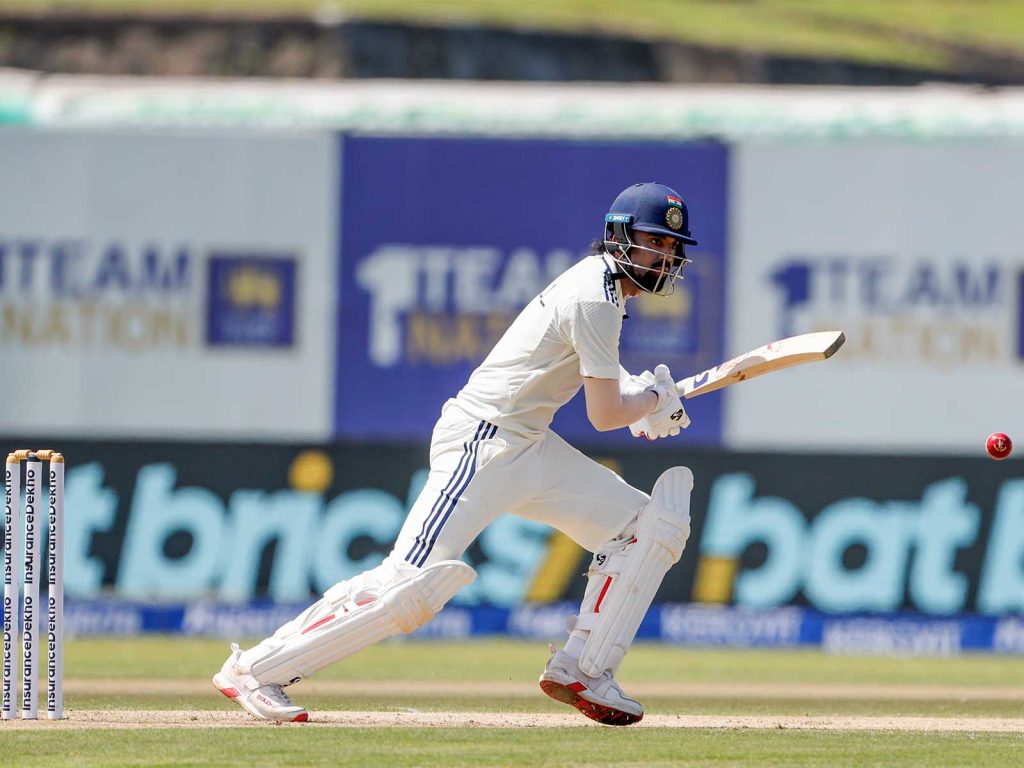
KL Rahul retired hurt on 77 off 162 balls in the first Test against Sri Lanka at Galle International Stadium on 15 August 2026—and the most important detail is that his injury happened mid-innings, before the third session fully swung momentum for India.
Comparison: What Rahul’s 77 tells us about India’s day
Rahul’s knock at Galle didn’t just carry runs—it carried a match rhythm. He struck nine boundaries and one six and reached his 21st Test half-century before being forced off due to cramps, walking off at the start of the final session on day one. The sequence matters: the cramps surfaced in his right forearm during the 51st over before tea, he received treatment from the physio on the field, and then he couldn’t resume once play restarted after tea. Under the laws, that “retired hurt” status is critical—he left without being dismissed, which means he can potentially return to bat later in the same innings if he recovers.
Worth noting: the live checkpoint around the innings progression showed India at 197/1 after 53.0 overs, with Rahul on 77 (162) and Devdutt Padikkal on 84 (122) at the crease. That snapshot underlines a broader point—India weren’t merely surviving; Rahul was actively batting through the humid Galle conditions and sustaining a platform even after the early loss of Yashasvi Jaiswal (32).
Rahul’s exit also reshaped the partnership story. With Rahul out of the equation, Padikkal stayed at the crease and India’s batting continued to move forward through the last phase of day one. In fact, the reports around the innings timeline describe a 150-run stand between Rahul and Padikkal before the cramps forced Rahul away.
Rahul’s cramps were severe enough to end his innings after tea, but the “retired hurt” classification keeps India’s tactical options open if he recovers in time to return.
Analysis: The cramps timeline vs India’s batting pressure
The injury timeline is the clearest “over-by-over” turning point here. Rahul’s right forearm cramps first appeared in the 51st over, before tea—exactly when a Test innings often becomes about building control for the next session. By the time India returned from the break, the discomfort had crossed a threshold: he was unable to continue after tea and left the ground without dismissal. That’s different from a bowled or lbw outcome because it changes what India can plan for psychologically and tactically.
There’s also a momentum angle. Rahul was steering India through an innings where an early wicket had already been taken: Jaiswal’s dismissal for 32 had forced a recalibration. From there, Rahul and Padikkal’s alliance gave India a stable base, and the fact Rahul reached his 21st Test half-century with nine boundaries and one six suggests he wasn’t just surviving—he was scoring in a way that pressured Sri Lanka’s bowlers rather than hanging back.
Worth noting: when India were 6/0 after 3 overs earlier in the innings, Rahul was listed not out on 0 off 6 in a live snapshot. That contrast—starting quietly, then accumulating 77 off 162 before leaving due to cramps—signals that this was an innings built over time, not a flash.
Recommendation: What India should do with Rahul’s potential return
If Rahul recovers, India can benefit immediately from continuity—especially in a Test where settling the top order and protecting the middle phase often matters more than chasing a brief acceleration. The key is preparation: because Rahul is not out after retiring hurt, India needs a plan that covers both outcomes—his return to bat or a batting reshuffle for the remainder of the innings.
Here’s the thing: Padikkal’s presence at the crease at the time of Rahul’s retirement is a stabilizer. The live checkpoint had Padikkal on 84 (122) at 197/1 after 53.0 overs, meaning India already had a partner who could shoulder the scoring rate while also giving the incoming batsman (if any) time to find rhythm. With India carrying that context, selection doesn’t need to panic—tempo can be managed by session-based batting rather than short-term risk.
That said, the medical uncertainty has one clear priority: Rahul’s workload and forearm condition. India’s camp will likely treat this like a recovery-first scenario rather than pushing through pain, because cramps in a key batting limb can worsen quickly in Test cricket, especially in the Galle humidity.
Related Articles
- Jose Hazlewood becomes ninth Australian to 300 Test wickets in 2026
- AUS vs BAN 2026: Steve Smith 71 and “Technology saved me” moment
- Smith was ready to walk off before DRS flat line in Darwin 2026
FAQs
What does “retired hurt” mean for KL Rahul in this Test?
Rahul retired hurt on 77 off 162 and left the field without being dismissed. Under Test laws, a player who retires hurt may return to bat later in the same innings if he recovers.
When did Rahul’s cramps start?
The cramps first appeared in his right forearm during the 51st over, before the tea interval. He received physio treatment on the field then, but he couldn’t continue after tea.
Did Rahul complete his half-century before leaving?
Yes. Rahul’s knock included nine boundaries and one six, and he brought up his 21st Test half-century before retiring hurt.
How did India’s situation look when Rahul left?
At a live checkpoint, India were 197/1 after 53.0 overs, with Rahul on 77 (162) and Devdutt Padikkal on 84 (122) at the crease.
Closing takeaway: Rahul’s injury ended a well-set innings at 77, but “retired hurt” keeps the door open—India’s next move should be recovery-led, not rush-led. KL Rahul 77 retires hurt
Was this article helpful?
Your feedback directly improves future articles on this site.