UAE65/2 (16.2/50 ov)
 NED
 PAK
 ENG
 IND-W
 ZIM-W
 GMB
 LES
 MOZ
 ZMB
 Inter Milan
 Fiorentina
 Churchill
 Punjab FC
 NGA
 UGA
 Athletic
 Getafe
 MEX-W23 (9.3/20 ov, target 189)
 ARG-W188/5
 ATM1
 DEP0
 LAZ2
 PAR1
 RCL2
 PAR1
 NZ-A317
 IND-A113 & 106/2 (36 ov)
 SYL
 KHU
 MYMS299/4 (87 ov)
 CHATT
 DHA293/3 (84.1 ov)
 RAJ
 RAN320/5 (80 ov)
 BAR
 DEN
 PNG
 KENYA
 JER
 NAM321/6
 IRE290 (47.3/50 ov, target 322)
 C Palace
 Newcastle
 Hull
 Brentford
 Liverpool
 Brighton
 Man United
 Bournemouth
 Atalanta
 Frosinone
 RIY2
 TAA1
 CHE0
 TOT2
 VAL1
 VIL2
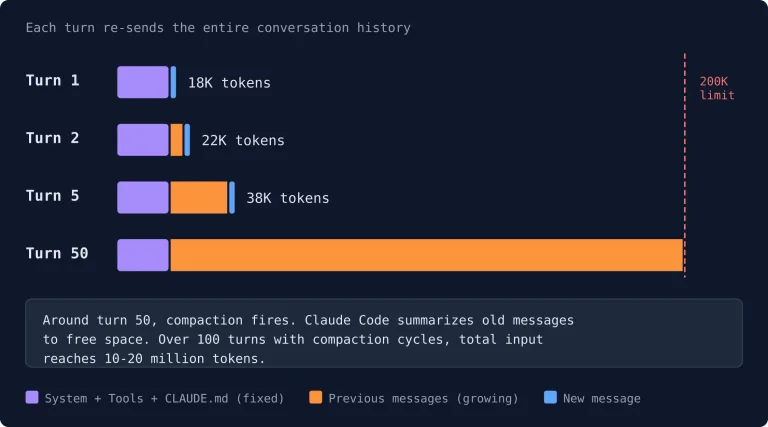
Every millisecond a transformer model spends recalculating static system prompts is just wasted money on unnecessary state preservation.
On August 22, 2024, Anthropic rolled out prompt caching for its Claude 3.5 models. This new feature lets developers reuse cached context across API calls, which can really cut down on redundant token processing costs. Developers who have to manage large context windows have faced hefty input bills for every request. Anthropic tackled this issue by allowing API calls to reference stored prefixes directly.
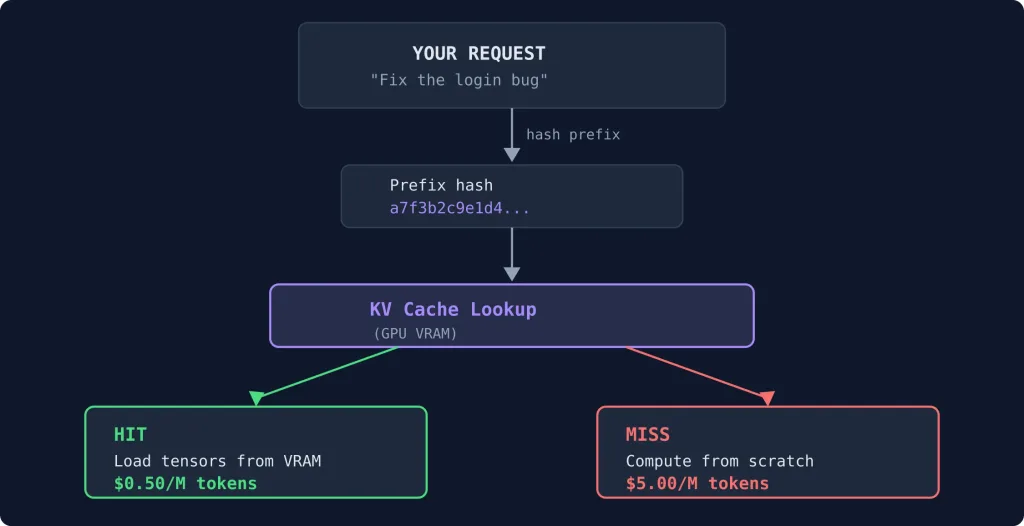
90% discount off standard input token costs
When it comes to billing, cached tokens come at a lower rate compared to standard input tokens. Anthropic’s pricing shows cached token reads at a 90% discount off standard input token costs.
Behind the scenes, Anthropic set specific structural limits to balance memory overhead and read latency across server clusters. For its API, cache storage has a minimum cacheable block size of 1,024 tokens. If your payloads fall below this threshold, they’ll process through standard pipelines without any cache retention.
Managing long documents means you need to align your strategies with these API rules. Cached prefixes have a time-to-live (TTL) of 5 minutes on Anthropic’s standard API. After that, the cache expires and needs to be rewritten. However, if you send another query within those 5 minutes, the TTL timer resets, keeping the prefix active during user sessions.
For enterprise architectures aiming for complex automation, it’s crucial to consider write overhead when figuring out operational margins. Cache write operations add a 25% surcharge on top of standard input token pricing, reflecting the costs of storing the prefix. You’ll hit this surcharge only once for the initial generation, but subsequent cache reads will make up for that cost within the first few API turns.
To optimize workloads, structure your payloads to maximize reuse across different tasks. The caching system supports up to 4 cache breakpoints per API request for the Claude 3.5 and Claude 3 models. Developers can anchor system instructions, core reference libraries, and conversational history at separate breakpoints, helping to improve token economy.
Anthropic’s official docs state that system prompts, tool definitions, and long document contexts are the primary recommended use cases for optimizing prompt caching. Industry analysts often compare these tools against recent transformer efficiency papers to see how they stack up in terms of real-world token savings. Teams creating automated coding assistants or legal document parsers really benefit from locking static codebase references into active memory blocks.
Token economics will play a big role in which enterprise software architectures thrive as we move toward autonomous multi-agent workflows. As API providers work on improving cache persistence and TTL limits, raw compute efficiency will become even more important than just the number of parameters.
Claude’s prompt caching framework shows that how you design your infrastructure is just as crucial as model intelligence when it comes to scaling generative artificial intelligence.
FAQs
What’s the minimum token count required for caching?
Cache storage on Anthropic’s API requires a minimum cacheable block size of 1,024 tokens. Payloads below this limit will process through standard input channels.
How long does an active cache last?
Cached prefixes have a time-to-live (TTL) of 5 minutes on the standard API before they expire and need a new write operation.
How many cache breakpoints can I use per request?
The system supports up to 4 cache breakpoints per API request for the compatible Claude 3 and 3.5 model families.
What are the primary recommended use cases for prompt caching?
Anthropic suggests using prompt caching for system prompts, complex tool definitions, and extensive document contexts processed across multiple API turns.