MEX-W
 ARG-W
 ARS2
 EVE0
 COV0
 FUL1
 OFC0
 NEU0
 NEOM2
 ABH0
 RAC0
 ESP1
 KHO0
 ETT0
 BLK2
 WXM0
 NAP
 ROMA
 CHE
 TOT
 VAL
 VIL
 DOR
 SGE
 RIY
 TAA
 LAZ
 PAR
 RCL
 PAR
 FCA1
 FCU1
 KOE0
 S040
 M052
 SVW3
 RBL4
 ELV0
 KNGHT74/1 (12.1/20 ov)
 MPUMA
 NZ-A135/3 (41 ov)
 IND-A113
 SYL
 KHU
 MYMS299/4 (87 ov)
 CHATT
 DHA293/3 (84.1 ov)
 RAJ
 RAN320/5 (80 ov)
 BAR
 UAE
 NED
 PAK
 ENG
 IND-W
 ZIM-W
 GMB
 LES
 MOZ
 ZMB
 NGA
 UGA
 NAM321/6
 IRE290 (47.3/50 ov, target 322)
 NZ180/5
 IND181/6 (19.5 ov)
 CAR1
 BIR0
 LCN4
 BUR1
 PNE1
 WBA1
 QPR4
 SWA0
 STK0
 BRC0
 ATM
 DEP
 SCP1
 HSV0
 CAG0
 BOL2

usmnt 2026 — Gregg Berhalter has officially rolled out his 26-man USMNT squad for the 2026 World Cup, featuring key players like Tyler Adams and Antonee Robinson. This roster, revealed on Wednesday, May 27, 2026, highlights Berhalter’s intent to blend high-energy pressing with solid defense as the United States gears up to host the global event.
Including Adams, known for his midfield discipline, alongside the dynamic Robinson on the left, showcases the tactical identity Berhalter wants to establish. This squad aims for a calculated strategy in tournament play, focusing more on positional versatility and tactical discipline rather than just star power.
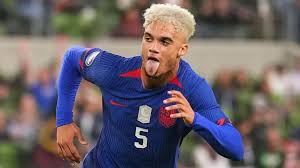
Usmnt 2026: Tactical Depth and Key Roster Selections
Tyler Adams’ inclusion is arguably the most crucial part of this setup. His knack for anchoring the midfield and controlling transition tempo will lay the groundwork for the high-press strategy.
Next to him, Antonee Robinson’s role as an overlapping or inverted fullback helps the USMNT maintain width while reinforcing the defensive line against top counter-attacking teams.
| Player Name | Primary Position | Tactical Role |
|---|---|---|
| Tyler Adams | Defensive Midfield | Ball-winning anchor |
| Antonee Robinson | Left Back | Width provider/overlap |
| Christian Pulisic | Forward | Creative playmaker |
| Timothy Weah | Winger | Transition threat |
| Cameron Carter-Vickers | Center Back | Defensive organizer |
Some critics aren’t thrilled with the final defensive lineup. They argue that leaving out certain backup center-backs may make the squad less effective in physical aerial battles, as highlighted by recent coverage from ESPN.
That said, recent analysis from the qualification cycle indicates that the current pairing of Carter-Vickers and his teammates boasts higher PPDA efficiency, effectively cutting off opponent build-up play before it reaches the final third.
Usmnt 2026: Strategic Outlook for the 2026 Tournament
On May 27, 2026, Gregg Berhalter finalized the 26-man roster. With the pressure of a home World Cup looming, Berhalter chose a squad that’s spent the last 18 months honing a 4-3-3 formation that shifts to a 3-2-5 during attacks.
This adaptability is key for breaking down low-block defenses, a challenge the team has faced in several recent friendlies.
The training camp at the national team facility will zero in on set-piece variations and late-game defensive adjustments. With the tournament kicking off in just a few weeks, every detail matters.
The technical staff has emphasized continuity, trusting the core group that successfully navigated the demanding qualifying campaign to shine when it matters most, as noted in recent reports from BBC Sport.
Still, competition is tough. While the USMNT has the tactical tools, they’re missing a traditional, clinical number nine, which has raised some eyebrows.
To address this, Berhalter will likely opt for a false-nine rotation, leveraging the inverted movements of the wingers to carve out space in the box. The journey to the knockout rounds starts now, and this 26-man squad is under immense pressure to deliver.
FAQs
How does the inclusion of Tyler Adams change the midfield shape?
Adams serves as the primary ball-winner, enabling the more creative central midfielders to advance higher up the pitch without weakening the defensive shield.
Will Antonee Robinson start every match?
If he stays fit and keeps up with his recovery schedule, Robinson is expected to be a starter for the duration of the tournament.
How does this USMNT squad compare to previous iterations?
This roster is more tactically disciplined than past squads, focusing on a high-press, possession-heavy style that reduces defensive transitions.
Will Tyler Adams serve as the captain for the USMNT during the 2026 World Cup?
Gregg Berhalter has confirmed that Tyler Adams will keep his leadership role, acting as the primary captain throughout the 2026 World Cup.
Does Antonee Robinson hold a guaranteed starting position in the USMNT defensive lineup?
Antonee Robinson is anticipated to be the starting left-back, as Gregg Berhalter sees him as a vital element in both tactical transitions and defensive stability.