SCP1
 ACV1
 Mohun Bagan
 Chennaiyin
 PSG
 Lyon
 Sevilla
 Osasuna
 NED
 OMA
 NZ
 IND
 NAM
 IRE
 PAK
 SL
 SA
 AUS
 BAR1
 RMA2
 UDI0
 MIL2
 RSO2
 LEV1
 LEC0
 JUV2
 LIMWn
 NW-W
 NCWmn
 FsWm
 NZ-A317
 IND-A113 & 146/2 (44 ov)
 SYL280/2 (84 ov)
 KHU
 MYMS465/7d
 CHATT134/2 (40 ov)
 DHA521
 RAJ103/6 (26 ov)
 RAN402
 BAR179/3 (56.1 ov)
 BRB
 MOW
 LUL
 SPR
 TOK
 MEX-W51 (12.5/20 ov, target 187)
 ARG-W186/7
 NGA148
 UGA147/9 (20 ov, target 149)
 GMB112/9
 LES109 (19.5/20 ov, target 113)
 MOZ110/7 (19/20 ov, target 110)
 ZMB109/9
 IND-W328/6
 ZIM-W207 (48.5/50 ov, target 329)
 ENG241
 LAFC
 LA
 Neftchi Fergana
 Al Ittihad
 Besiktas
 Istanbul BB
 Caykur Rizespor
 Trabzonspor
 Al Ahli
 Al-Gharafa
 SUN0
 LEE0
 SCF1
 MUN3

Picture a gamer sitting on a couch, thumb resting on a controller, trying to queue units simultaneously. The real-time strategy genre has long treated gamepads like unwanted guests at a keyboard-only banquet. According to recent discussions, Creative Assembly believes they have finally dismantled that barrier.
The studio’s developer recently noted that playing Total War: Warhammer 40,000 with a controller really does work, marking a significant shift for console strategy enthusiasts. While broader implementation details remain tied to official launch windows, the core input framework has reportedly reached a functional baseline.
Here is how the team navigated the mechanical complexity.
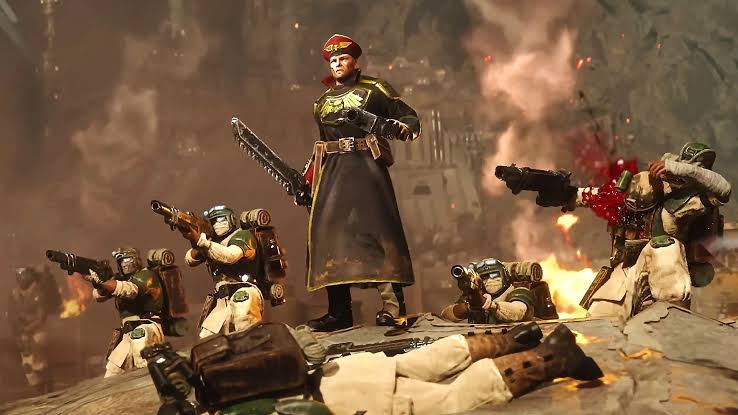
Why Do Controller Interfaces Struggle With Complex Strategy Games?
Traditional real-time strategy titles demand rapid cursor movement, simultaneous unit selection, and hotkey navigation that simply outpace analog sticks. Developers historically dismissed console play because radial menus and button combinations created severe input lag during frantic army engagements.
When the genre transitioned to modern hardware, studios prioritized visual fidelity over accessible control schemes, leaving handheld players behind. That said, ignoring half the market became financially unsustainable as digital storefronts expanded globally. The industry needed a mechanical workaround before abandoning the living room entirely.
This evolution mirrors the ongoing discourse surrounding fan expectations for Warhammer 40,000 adaptations, where community feedback heavily influences technical roadmaps. We will now examine how one major studio rebuilt the entire command hierarchy from the ground up.
How Did Creative Assembly Solve The Input Bottleneck?
The development team approached the problem by treating the gamepad strictly as an accessibility tool rather than a compromised alternative. Instead of forcing mouse precision onto joysticks, they restructured UI navigation to rely on contextual highlighting and predictive targeting systems.
The studio’s battle product owner explicitly stated that they think the current build represents a fundamentally stable foundation after they landed in a really solid spot. By streamlining command inputs and reducing manual overhead, the studio successfully lowered cognitive load during large-scale battles.
Players can now execute complex maneuvers without drowning in menu paralysis. This streamlined approach directly influences how upcoming cross-platform projects will handle similar architectural challenges.
What Does This Mean For Future Console Strategy Releases?
Successful console adaptation removes the traditional friction that previously discouraged casual audiences from exploring grand tactical campaigns. Publishers now recognize that standardized input mapping allows seamless progression across devices. We expect other developers to adopt similar input optimization approaches when porting heavy simulation titles to console hardware.
Worth noting that communities discussing these changes online often compare them to regressive design choices from previous generations. If execution remains consistent, console strategy gaming will finally achieve mainstream parity. Studios building new tactical engines must prioritize these input optimizations to capture casual audiences effectively.
The persistent belief that gamepads cannot handle intricate military simulations within the Total War: Warhammer 40,000 series has finally been dismantled by proven engineering solutions. Creative Assembly proved that thoughtful interface redesign beats raw hardware limitations every time.
Anyone planning to dive into future campaigns should expect significantly improved peripheral compatibility moving forward. The broader ecosystem now benefits from established quality-of-life standards that elevate competitive play across all devices. As more publishers embrace this methodology, the divide between desktop purists and console veterans will continue shrinking.
The future of tactical gaming rests firmly on adaptable input frameworks. Controllers no longer feel like an afterthought. More on Total War Warhammer as the story develops.
Related Articles
- Henry Cavill's Warhammer 40,000 Adaptation Enlists Mike Flanagan
- Spyro Community Day 2026 Just Gave Fans Their First Real Look At "A Realm Beyond"
FAQs
What did the Total War: Warhammer 40,000 developer say about the game’s current state?
The developer confirmed that Total War: Warhammer 40,000 really does work in their game, expressing strong confidence in the project. He stated that the team has landed in a really solid spot with the title, suggesting that the core mechanics and systems are functioning as intended. This public endorsement from the development team indicates that significant progress has been made on bringing the Warhammer 40,000 universe into the Total War franchise.
Why is the developer’s confidence about Total War: Warhammer 40,000 significant for fans?
The developer’s confidence matters because Total War: Warhammer 40,000 represents a major undertaking, blending the iconic Warhammer 40,000 setting with the established Total War gameplay formula. His assurance that the game really does work signals to fans that Creative Assembly has successfully overcome the technical and design challenges of adapting this beloved sci-fi universe. Players interested in the Total War Warhammer experience can take this statement as a positive
Was this article helpful?
Your feedback directly improves future articles on this site.