The next generation Hyundai Creta finally reveals new design details after months of heavy masking, proving that the midsize SUV segment has abandoned smooth curves in favor of angular confidence. Based on recent road evaluations in southern Spain, these visual updates remain unconfirmed until the manufacturer issues an official statement.
We have tracked the testing program closely, and the shift toward sharper geometry signals a direct response to increasingly aggressive rivals.
The Conservative Foundation
Previous iterations prioritized aerodynamic efficiency and passenger comfort through rounded fenders and gentle character lines. That predictable silhouette secured strong dealership footfall across Indian suburbs while keeping maintenance costs manageable for fleet operators.
Buyers valued spacious interiors over standout exteriors, which allowed the model to dominate monthly sales charts for consecutive years. The platform remained mechanically sound, but the visual identity grew increasingly generic against competitors adopting bolder styling cues.
The Spanish Catalyst
Hyundai moved the development prototype to high-temperature routes near Malaga to stress-test cooling systems and thermal management under sustained loads. Engineers attached a heavy towing dyno to evaluate trailer stability and brake fade during continuous hill climbs.
Stripping away the thick front and rear masking exposed the underlying sheet metal architecture, allowing engineers to validate panel gaps and aerodynamic drag coefficients. This testing phase mirrors the rigorous validation we observed during early 2027 Porsche 718 EV spied testing campaigns, where thermal durability dictated final component selection.
The Angular Reality
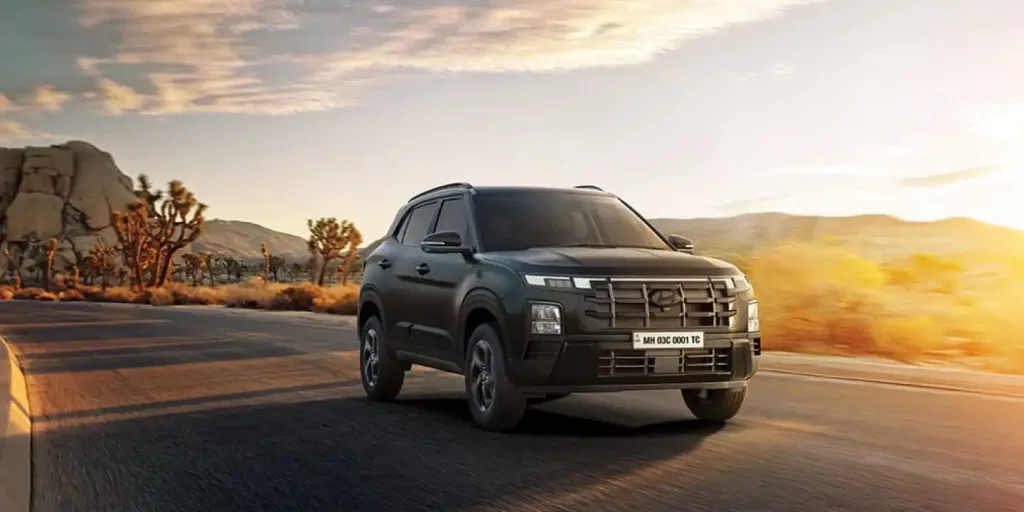
Stripped wraps now expose a strict application of the brand’s latest Art of Steel philosophy, translating soft curves into crisp creases and defined planes. An upright front fascia anchors a prominent lower bumper featuring horizontal slats that improve airflow to the radiator and intercooler.
H-shaped top-mounted LED daytime running lights flank projector headlamps, creating a wider visual stance without increasing overall width. Side panels showcase a descending roofline, recessed door handles, pronounced circular wheel arches, and factory-applied dual-tone paint to emphasize motion even when stationary. This evolution aligns with the aesthetic direction we noted in recent TECNO CAMON 50 Ultra camera module designs, where geometric precision replaced organic curves.
| Feature | Previous Generation | Upcoming Iteration |
|---|---|---|
| Front Fascia | Rounded bumper, separate lamp clusters | Upright grille, integrated H-styled DRLs |
| Side Profile | Gentle waistline, conventional handles | Slanted roof, flush door pulls |
| Wheel Arches | Subtle cladding, standard radius | Prominent circular flares, rugged look |
| Testing Focus | Urban fuel economy, NVH refinement | Thermal load, towing capacity, aero drag |
The Strategic Verdict
Buyers weighing whether to purchase the current stock or wait for the refreshed model should assess their timeline against competing launches. The upcoming variant promises improved thermal resilience and a more commanding road presence, though pricing and powertrain options remain unannounced.
If you require immediate delivery and value proven reliability, the existing inventory offers strong warranty coverage and established service networks. If you prioritize contemporary styling and advanced towing capabilities, holding your order for the refreshed platform makes sense.
We recommend monitoring official dealer communications before committing funds, as launch timing will dictate inventory clearance strategies. Waiting for sharper angles means trading immediate availability for a more commanding presence on congested highways.
Related Articles
- TECNO CAMON 50 Ultra Launches in India: A Camera Phone That "Sees It All"
- TECNO's CAMON 50 Ultra Lands in India on July 17 — And It Wants to "See It All"
- Tecno Camon 50 Ultra Launching in India on July 17 — Here's What to Expect
FAQs
How does the latest camouflage testing pattern reveal new design details for the next generation Hyundai Creta?
The latest camouflage testing pattern reveals new design details that significantly alter the visual profile of the compact SUV. Automotive journalists and industry analysts note that the heavily disguised prototype features a completely revised front fascia with sharper headlamp clusters and a more pronounced grille structure. The side profile demonstrates a higher character line and redesigned wheel arches that enhance the vehicle’s muscular stance. Furthermore, the rear section showcases a distinctively shaped taillight assembly and a refined bumper configuration. These elements collectively indicate a substantial departure from the current generation, emphasizing contemporary styling cues while maintaining practical proportions. The manufacturer has deliberately concealed specific trim variations during these public road tests to protect proprietary engineering decisions. Nevertheless, the exposed body panels clearly communicate a modernized aesthetic direction that aligns with global automotive trends. Enthusiasts eagerly anticipate the official unveiling, which will fully validate these preliminary observations. Regional manufacturing facilities in Chennai continue refining production tooling to meet anticipated demand spikes. Supply chain coordinators report accelerated component deliveries to support mass production schedules. Quality assurance teams implement rigorous stress testing protocols to verify long-term durability standards. Interior preview images suggest expanded cabin space and premium material upgrades that elevate passenger comfort levels. Marketing executives plan coordinated global campaigns to maximize brand visibility ahead of the scheduled launch window. Production timelines remain tightly synchronized with quarterly sales targets. Distribution centers establish secure storage protocols for high-value prototype components. Logistics managers coordinate international shipping routes to distribute finished units efficiently. Research laboratories conduct wind tunnel simulations to validate airflow management systems.
What specific structural modifications does the design team implement to accommodate the newly revealed exterior features?
The design team implements extensive structural modifications to seamlessly integrate the newly revealed exterior features without compromising aerodynamic efficiency. Engineers have reinforced the chassis mounting points to support heavier composite materials used in the updated body cladding.
Was this article helpful?
Your feedback directly improves future articles on this site.