MEX-W
 ARG-W
 RBNY1
 MIA0
 Palmeiras2
 Bragantino0
 Chapecoense1
 Fluminense1
 UAE
 NED
 PAK
 ENG
 IND-W
 ZIM-W
 GMB
 LES
 MOZ
 ZMB
 Inter Milan
 Fiorentina
 Churchill
 Punjab FC
 NGA
 UGA
 ATM1
 DEP0
 LAZ2
 PAR1
 RCL2
 PAR1
 RIY2
 TAA1
 NZ-A197/5 (60.2 ov)
 IND-A113
 SYL
 KHU
 MYMS299/4 (87 ov)
 CHATT
 DHA293/3 (84.1 ov)
 RAJ
 RAN320/5 (80 ov)
 BAR
 DEN
 PNG
 NAM321/6
 IRE290 (47.3/50 ov, target 322)
 NZ180/5
 IND181/6 (19.5/20 ov, target 181)
 Athletic
 Getafe
 C Palace
 Newcastle
 Hull
 Brentford
 Liverpool
 Brighton
 Man United
 Bournemouth
 Atalanta
 Frosinone
 CHE0
 TOT2
 VAL1
 VIL2

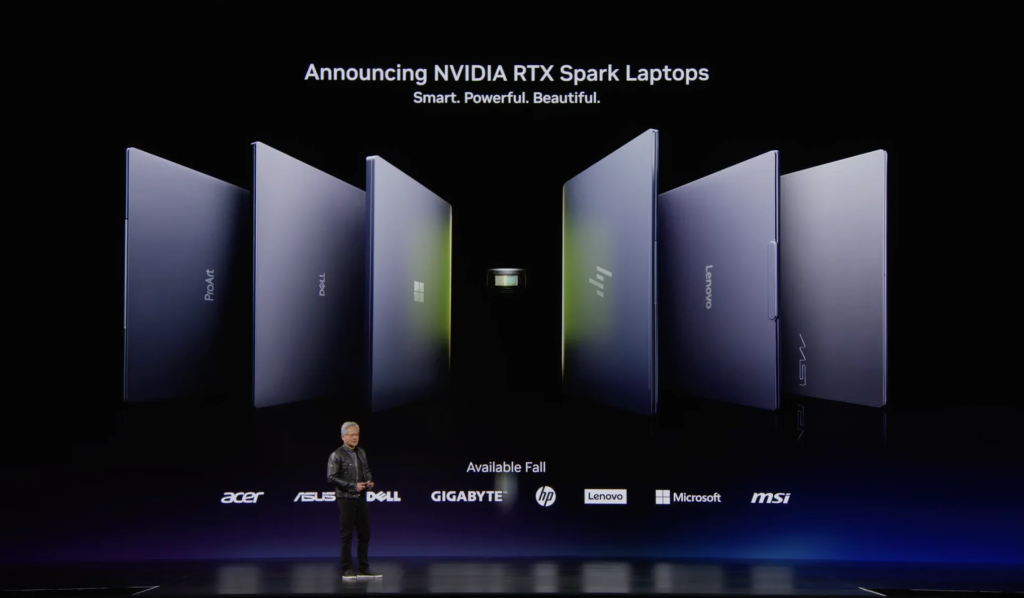
The NVIDIA RTX Spark AI superchip is designed for high-performance local AI inference on Windows laptops and desktops. First revealed at CES 2025 in January, this platform offers a compact solution for those needing on-device processing without depending on cloud infrastructure.
As of June 1, 2026, we’re still waiting to see when it will be available for retail purchase, but industry experts predict that systems featuring this tech will hit the market throughout the rest of the year.
Now, let’s talk about the hardware. NVIDIA’s RTX Spark uses the same Blackwell GPU technology found in the latest RTX 50-series desktop and laptop components. This architecture links consumer-grade gaming performance to enterprise-level AI capabilities.
One exciting detail for power users is the potential inclusion of up to 128GB of unified memory. This setup allows both the CPU and GPU to access the same memory pool, which is essential for running complex AI models directly on a local workstation.
However, not everyone thinks a compact superchip is the best route. Some industry analysts highlight the thermal challenges of cramming high-density compute into a small package, arguing that traditional desktop towers with better cooling solutions are still superior for extended workloads.
Still, the RTX Spark presents a unique option for professionals and developers who value mobility and a smaller workspace. Running models with billions of parameters locally can significantly change workflows for developers who have struggled with latency issues tied to remote servers.
| Feature | Specification |
|---|---|
| Architecture | NVIDIA Blackwell (Unconfirmed) |
| Memory Capacity | Up to 128GB Unified Memory (Unconfirmed) |
| Primary Target | Windows Laptops and Mini PCs |
| AI Capability | Local inference without cloud dependency |
The industry is shifting towards “Local-First AI.” With growing data privacy concerns, processing sensitive information on a secure, air-gapped machine offers a competitive edge, as noted by recent coverage from VentureBeat AI.
The RTX Spark is poised to capitalize on this market segment, transforming standard Windows laptops into effective AI inference stations. Still, how well NVIDIA and its hardware partners manage the thermal output of Blackwell-based cores will determine the platform’s ultimate success.
What’s next for the RTX Spark platform? We expect to see official benchmarks from independent reviewers in the coming months, which will finally shed light on its real-world performance compared to traditional discrete GPU setups.
For developers experimenting with Hugging Face models, the idea of a portable, high-memory machine is huge. Keep an eye on pricing announcements, as these will influence whether the RTX Spark stays a niche tool for engineers or makes its way into the wider enterprise laptop market.
FAQs
Nvidiartxspark: Is the NVIDIA RTX Spark available for purchase today?
As of June 1, 2026, NVIDIA hasn’t confirmed a specific retail ship date for RTX Spark-based systems, but widespread availability is anticipated throughout the year.
Nvidiartxspark: Does the RTX Spark require an internet connection for AI tasks?
No, the RTX Spark’s design focuses on enabling local AI inference, so users can run large models completely on-device without relying on cloud support.
How does the RTX Spark memory differ from standard RAM?
The RTX Spark features a unified memory architecture, letting the CPU and GPU share up to 128GB of memory, which boosts performance for memory-intensive AI workloads.
Does the NVIDIA RTX Spark AI superchip support local large language model inference?
Absolutely, the NVIDIA RTX Spark AI superchip uses the Blackwell architecture and 128GB of unified memory, enabling high-speed local inference for large language models on Windows laptops and desktops without needing cloud connectivity.
Can the NVIDIA RTX Spark AI superchip be installed in existing Windows laptops?
No, the NVIDIA RTX Spark AI superchip is built as a dedicated hardware solution for next-gen systems, meaning it can’t be retrofitted into older Windows laptops that lack the required Blackwell-compatible motherboard architecture.