NED
NED OMA
OMA NZ
NZ IND
IND NAM
NAM IRE
IRE PAK
PAK SL
SL SA
SA AUS
AUS Abha
Abha Al Faisaly
 AFG
AFG ZIM
ZIM Sassuolo
 Lazio
Lazio SEV2
SEV2 OSA0
OSA0 PSG2
PSG2 LYON0
LYON0 MBSG1
MBSG1 CFC0
CFC0 Barcelona1
 Real Madrid2
 NZ-A317 & 158/7 (46 ov, target 313)
 IND-A113 & 516
 SYL575/4 (167.3 ov)
 KHU
KHU MYMS465/7d
 CHATT424/6 (121 ov)
 DHA521
 RAJ162 & 215/5 (59.1 ov) (f/o)
 RAN402 & 5/0 (2.3 ov)
 BAR443/9d
 SIKM30/1 (15 ov)
 NAGA187
 JHK
JHK DELHI312/5 (91 ov)
 ODSA194
 SVCS13/0 (5 ov)
 BRODA259/6 (86 ov)
 J & K
J & K CHD363/2 (87 ov)
 HP
HP CGR35/1 (14 ov)
 AP231
AP231 HYD
HYD PNJB289/6 (90 ov)
 BAN
BAN WI
WI IND-W
IND-W ZIM-W
ZIM-W BRB149/5 (16.2/20 ov, target 148)
 MIS147
 MOW107/9
 TOK111/5 (18.4/20 ov, target 108)
 LUL88/3 (9.5/20 ov, target 88)
 SPR87
SPR87 AS Roma
 Cagliari
 Torino
 Como
Como GOA
GOA SC Delhi
 Daejeon
 Vissel Kobe
 Darul Ta'zim
 Port FC
 Kyoto Sanga
 Newcastle Jets
 Udinese0
 Milan2
 Real Sociedad2
 Levante1
Network security in America just got a serious policy overhaul. The US government is moving to restrict foreign-made network equipment — particularly routers — from operating in sensitive domestic infrastructure. The concern is straightforward: devices manufactured in adversarial nations could contain hidden backdoors, giving foreign intelligence agencies a silent foothold inside American networks.
The Story So Far
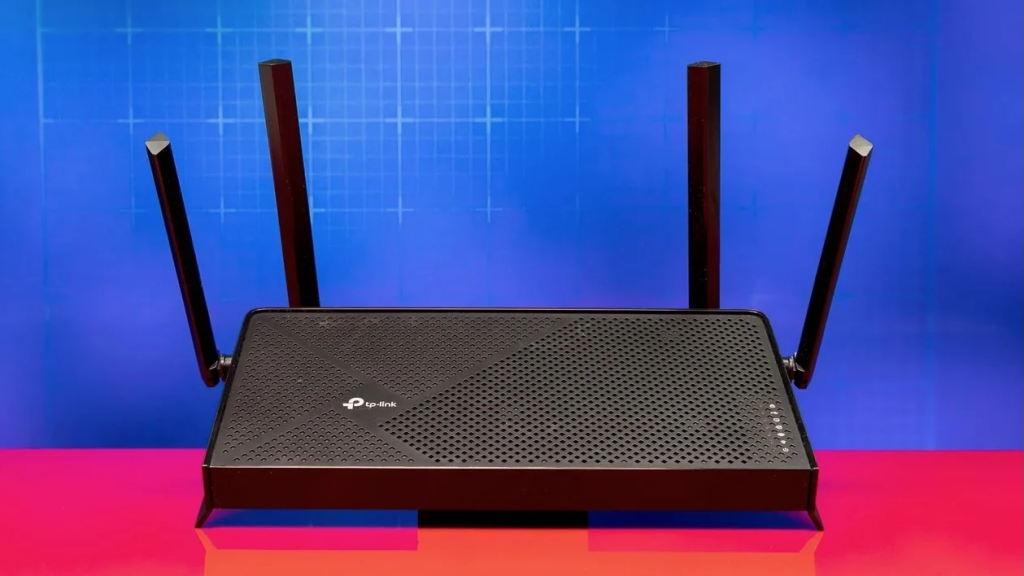
The US government’s push to restrict foreign-made routers reflects years of escalating network security policy. Regulators have increasingly flagged Chinese-manufactured equipment — brands like TP-Link and Huawei — as potential espionage vectors.
Both the Federal Communications Commission (FCC) and Commerce Department have tightened procurement rules, building on earlier bans of Huawei and ZTE equipment from federal networks. As Wired reported, the latest measures extend scrutiny beyond federal agencies to broader critical infrastructure.
The Bigger Picture: Why Network Security Policy Is Shifting
This isn’t just a procurement headache. The real question is: how deep does the exposure go?
Millions of American homes and businesses run on routers assembled in China. A compromised router sits at the entry point of every data packet — emails, financial transactions, healthcare records. That’s a structural network security vulnerability, not a theoretical one.
Our adaptive cloud security coverage has tracked how supply chain risks are reshaping enterprise defense strategies globally. Here’s the thing: enforcement remains uneven. Consumer-grade devices largely fall outside current restrictions, leaving a massive attack surface unaddressed.
Facts & Figures
Several key details are driving this policy shift:
- TP-Link controls roughly 65% of the US home router market
- The FCC’s Covered List already bans federal procurement of equipment from 5 Chinese firms
- A Commerce Department investigation into TP-Link started in late 2024
- Huawei and ZTE have been effectively banned from US federal networks since 2019
- A report on Indian security trends shows similar hardware-level concerns are emerging across Asian markets
The financial stakes are enormous. Replacing consumer and enterprise routers at scale could cost the industry billions of dollars in transition costs alone.
What People Are Saying
Security researchers don’t mince words. The concern isn’t hypothetical — documented cases of router-level firmware manipulation by state-linked actors already exist.
Meanwhile, DOGE operative security controversies have amplified public distrust of government data handling, making the router ban both politically charged and technically necessary. Industry groups warn that rushed implementation could disrupt supply chains without a clear domestic alternative ready.
What to Watch Next
The Commerce Department’s TP-Link investigation should wrap up by mid-2026. Congress is also weighing legislation that’d require network security audits for any router sold in the US consumer market.
Keep an eye on FCC rulemaking updates and whether allies — the EU especially — follow suit with similar restrictions. These decisions will shape global hardware procurement for years to come.
People Also Ask
Q: What is the US foreign router ban?
The US government is restricting foreign-made network equipment — especially Chinese-manufactured routers — from federal networks and critical infrastructure due to espionage and backdoor risks.
Q: Which companies are affected by network security restrictions?
TP-Link, Huawei, and ZTE are the most prominently flagged brands. Huawei and ZTE faced federal procurement bans since 2019; TP-Link is currently under Commerce Department investigation.
Q: Does the ban affect home routers?
Current restrictions primarily target federal and critical infrastructure procurement. Consumer-grade routers aren’t formally banned yet, though that could change pending new FCC rulemaking.
Q: Why does network security matter for routers specifically?
Routers handle all incoming and outgoing data traffic. A compromised router gives an attacker complete visibility into network activity — making it the highest-value hardware target in any environment.