NZ
 IND
 NAM
 IRE
 MOZ
 UGA
 Aston Villa
 Man City
 Rayo
 Elche
 GMB
 ZMB
 NGA
 LES
 Cagliari
 Bologna
 IPS1
 NFO1
 ALA1
 MCF1
 TOR3
 MON2
 BRE1
 NICE2
 TAS67/4 (15.4/50 ov, target 305)
 VIC304/7
 NZ-A135/3 (41 ov)
 IND-A113
 DHA
 RAJ
 MYMS
 CHATT
 RAN
 BAR
 SYL
 KHU
 UAE
 NED
 PAK
 ENG
 IND-W
 ZIM-W
 AFG170/3 (34.3/50 ov, target 170)
 ZIM169
 DOLPH56/0 (3.5/8 ov, target 56)
 SWD51/4 (8/8 ov)
 WSW1
 BRI1
 Como
 Sassuolo
 Augsburg
 Union Berlin
 Cologne
 Schalke
 Mainz
 Bremen
 RB Leipzig
 Elversberg
 VFB2
 BMG3
 AHL4
 KHA1

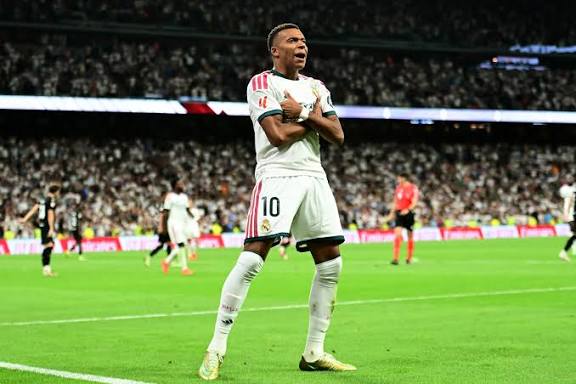
Have you ever wondered why Kylian Mbappe looks so dangerous in transition, even when his team spends long stretches without the ball? The answer lies in a pressing structure that turns defensive work into attacking ammunition.
Understanding this blueprint matters because it explains how Mbappe’s goal threat scales with the system around him — not just his individual speed.
The Pressing Trigger Problem
The core issue is timing. Mbappe does not press like a traditional centre-forward who hunts the ball for 90 minutes. Instead, his pressing structure operates on selective triggers. When opposition centre-backs receive with their body shape open, when a full-back takes a heavy touch, or when a No.
6 turns into pressure — that is when Mbappe engages. The rest of the time, he conserves energy, holds his width, and reads the next vertical lane. This matters because counter-attacks need three things: a turnover in a dangerous zone, a runner already positioned to attack space, and a carrier with a passing angle. Mbappe’s pressing structure supplies the first two. By pressing only on clear cues, he avoids the fatigue that dulls transition runs in the closing stages. He arrives fresh, already oriented toward the opponent’s goal. Full coverage via BBC Sport.
Why the System Fits His Profile
Mbappe’s physical profile is wasted if he spends it chasing shadows. The pressing structure protects that resource. His acceleration over the first 30 metres is widely regarded as elite, and counter-attacks live in exactly that distance band. By pressing selectively, he keeps those gears in reserve for the moments that shape matches, according to coverage from The Guardian’s tactical analysts.
There is also a positional logic. Mbappe often starts from the left half-space rather than a wide touchline. That starting position means his pressing lane funnels opposition play toward the touchline, where the sideline acts as an extra defender after a turnover. The counter-attack then runs diagonally across the pitch, into his preferred shooting foot and away from congestion.
Solution A: Sustained High Block
One option is a high block that forces turnovers closer to the opponent’s goal. The trade-off: this demands coordinated pressing from the entire front line, and any lapse exposes the defensive midfield. For Mbappe, the upside is shorter counter-attack distances and more entries into the final third.
The downside is structural risk if the press is broken by a single line-breaking pass.
Related Articles
FAQs
How does Kylian Mbappe’s pressing trigger his team’s counter-attacks?
Kylian Mbappe initiates counter-attacks by applying aggressive, targeted pressure on opposition defenders immediately after possession loss. His pressing forces turnovers in advanced areas, allowing the team to transition quickly into attacking positions with numerical superiority ahead of the ball.
What tactical structure supports Kylian Mbappe’s counter-attacking system?
The tactical structure relies on a compact mid-block with two defensive midfielders shielding the center, while the wide players maintain high positions to stretch the pitch. This setup ensures that when Mbappe wins the ball or receives a vertical pass, supporting runners are already in position to launch rapid transitions into the final third.
Was this article helpful?
Your feedback directly improves future articles on this site.