NZ113/3 (14.4 ov)
 IND
 NAM321/6
 IRE208/5 (37.3/50 ov, target 322)
 MEX-W
 ARG-W
 ARS
 EVE
 COV
 FUL
 OFC
 NEU
 NEOM
 ABH
 RAC
 ESP
 KHO
 ETT
 NAP
 ROMA
 MOZ19
 UGA23/0 (0.5/20 ov, target 20)
 Ipswich1
 Nottm Forest1
 Alavés1
 Málaga1
 Torino3
 Monza2
 KENYA
 QAT
 SWD-W
 EPR-W
 TTN-W
 WPR-W
 BOR135/3 (18/20 ov, target 137)
 WAR136/8
 NZ-A135/3 (41 ov)
 IND-A113
 DHA293/3 (84.1 ov)
 RAJ
 MYMS299/4 (87 ov)
 CHATT
 RAN320/5 (80 ov)
 BAR
 SYL
 KHU
 UAE
 NED
 PAK
 ENG
 IND-W
 ZIM-W
 GMB
 LES
 ZMB
 NGA
 AFG170/3 (34.3/50 ov, target 170)
 ZIM169
 CHE
 TOT
 Brest1
 Nice2
 Stuttgart2
 Gladbach3
 Al Ahli4
 Al Khaleej1

Perplexity AI announced in May 2025 that its enterprise search retrieval engine outputs context exclusively in structured Markdown, signalling a shift in how search systems prepare information for AI models. The reason is practical: Markdown gives models readable structure without the heavy markup found in html or the nesting required by json.
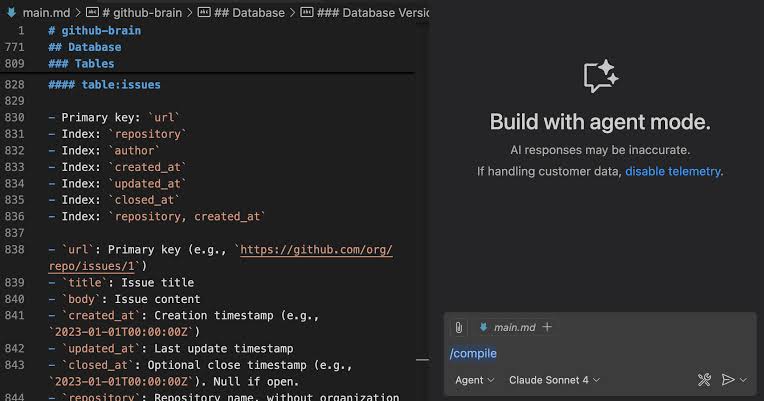
The Markdown AI Data Pipeline
Search systems have traditionally returned html pages, json objects, or both. html preserves layout but carries navigation menus, styling instructions, scripts, and other material that an AI model does not need. JSON is precise for software, yet deeply nested records can consume tokens and force a model to interpret structure before it reaches the actual content. Markdown sits between those formats.
Headings, lists, tables, links, and code blocks remain visible as semantic signals, while the syntax stays comparatively compact. This makes Markdown increasingly attractive across the infrastructure used to move search results into model context. The format also matches the way AI applications present answers. A model can ingest a Markdown heading and later generate a Markdown heading without an additional conversion layer. That shared input-output format reduces friction for developers building retrieval-augmented generation systems, agent tools, and document pipelines. Markdown was created in 2004 by John Gruber and Aaron Swartz. By 2024, LangChain and LlamaIndex had added native Markdown parsers to their core ingestion modules, giving developers direct support for a format that already appears throughout documentation, README files, technical blogs, forums, and knowledge bases. For more detail, see VentureBeat AI.
Why Markdown Can Reduce Processing Overhead
Token efficiency is the strongest engineering argument for Markdown AI workflows. A raw HTML page can include repeated tags and presentation metadata around every meaningful paragraph, while Markdown usually expresses the same hierarchy with short markers such as #, -, and backticks.
OpenAI’s GPT-4o application programming interface (API) is reported to process Markdown-formatted search snippets up to 30% faster than raw HTML parsing because of reduced token overhead. That figure is marked unconfirmed, so it should be treated as a reported performance claim rather than a universal benchmark. The trade-off is that Markdown is not a complete document model. It does not preserve every visual detail, interactive state, accessibility attribute, or complex layout from a webpage. Teams that need exact rendering, structured transactions, or strict field validation may still prefer HTML, JSON, or a combination of formats.
| Format | Strength | Downside |
|---|---|---|
| Markdown | Compact, readable structure | Loses detailed presentation metadata |
| HTML | Preserves page structure and layout | Adds token-heavy markup and noise |
| JSON | Precise machine-readable fields | Nested data can be expensive to interpret |
Markdown AI Adoption And Standardisation
The format’s growing use is not simply a preference for cleaner text. Large language models have encountered enormous volumes of Markdown during training, including software documentation and public knowledge repositories. That familiarity helps models recognise headings, lists, tables, and code fences as meaningful boundaries. The CommonMark specification provides a shared syntax baseline, and that baseline was utilized by 99% of modern AI web-scraping agents as of 2026, according to the supplied developer metrics.
Another September 2026 metric places Markdown as the primary plaintext interchange format in more than 85% of large language model (LLM) agentic data pipelines; this figure remains marked unconfirmed and needs independent verification. This adoption creates a clear choice for engineering teams. HTML remains the better source when visual fidelity and page semantics matter, while JSON remains stronger for APIs with strict schemas. Markdown is the practical default when the destination is a language model and the data mainly consists of text, hierarchy, links, and code. Developers working on model-facing storage can also compare this approach with broader discussions about data handling systems, where format consistency affects retrieval and downstream processing.
What Comes Next For Search Data
Search providers are likely to expose multiple representations rather than eliminate HTML or JSON. A single retrieval service could preserve the original page for browsers, return JSON for applications, and generate Markdown for model context. The main challenge will be preserving citations, tables, permissions, and dynamic content during conversion.
A compact format is useful only when it retains the facts an agent needs and makes their origin clear. If a pipeline primarily feeds an AI model, choose Markdown first and validate the conversion quality. If it serves transactional software or pixel-accurate interfaces, retain JSON or HTML and generate Markdown as a separate model-facing layer. The next search advantage may come less from collecting more pages and more from delivering cleaner context in the format models already understand.
FAQs
Why is Markdown useful for AI models?
Markdown provides headings, lists, tables, links, and code blocks in a compact format that models can interpret without extensive presentation markup.
Is Markdown replacing JSON?
No. JSON remains better for strict schemas and transactional data, while Markdown is better suited to text-heavy context sent to language models.
Who created Markdown?
John Gruber and Aaron Swartz created Markdown in 2004.
Does Markdown always improve model performance?
No. The reported GPT-4o improvement of up to 30% over raw HTML parsing is unconfirmed and should not be treated as a universal result. Source: Thenextweb
Was this article helpful?
Your feedback directly improves future articles on this site.