
 NZ
 IND
 NAM
 IRE
 MOZ
 UGA
 Aston Villa
 Man City
 Rayo
 Elche
 GMB
 ZMB
 NGA
 LES
 Cagliari
 Bologna
 IPS1
 NFO1
 ALA1
 MCF1
 TOR3
 MON2
 BRE1
 NICE2
 TAS67/4 (15.4/50 ov, target 305)
 VIC304/7
 NZ-A133/1 (39.2 ov)
 IND-A113
 DHA
 RAJ
 MYMS
 CHATT
 RAN
 BAR
 SYL
 KHU
 UAE
 NED
 PAK
 ENG
 IND-W
 ZIM-W
 AFG170/3 (34.3/50 ov, target 170)
 ZIM169
 DOLPH56/0 (3.5/8 ov, target 56)
 SWD51/4 (8/8 ov)
 WSW1
 BRI1
 Como
 Sassuolo
 Augsburg
 Union Berlin
 Cologne
 Schalke
 Mainz
 Bremen
 RB Leipzig
 Elversberg
 VFB2
 BMG3
 AHL4
 KHA1
On September 25, 2026, AI News reportedly highlighted a critical shift in enterprise software development: harness control is now a direct financial lever. Companies treating agent orchestration as a neutral engineering layer are facing uncontrolled operational expenditures.
The central details stem from unconfirmed reports, while the underlying research paper was reportedly submitted to arXiv on September 24, 2026. Its argument is direct: companies cannot manage AI expenditure properly if they treat the harness running an agent as a neutral layer.
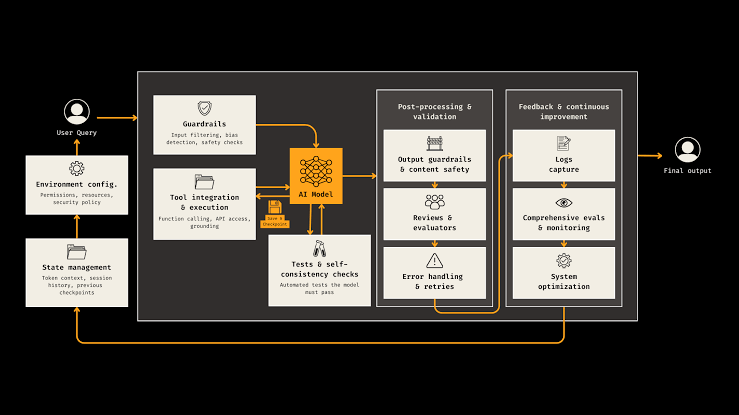
Why coding agents Are Becoming a Finance Problem
Enterprise deployments can reportedly begin with a few hundred employees and expand to tens of thousands of seats. At that scale, the cost is reportedly not determined by the model alone. The software coordinating each request reportedly also decides how much context is read, which model responds, how prompt caching works and whether additional subagents are launched.
That makes the harness a purchasing decision disguised as an engineering component. A default configuration can reportedly select a more expensive model, resend context unnecessarily or create extra subagent work without giving finance teams a clear explanation for the increase. The research reportedly examines this control problem through a custom router called Jev. The system reportedly classifies each prompt against a taxonomy chosen by the enterprise, using calibrated probabilities to determine how the request should be handled.
How Routing Protects Cost And Context
Jev reportedly does not treat every user turn as an isolated request. A single interaction can reportedly contain multiple tasks, while the active conversation may already have a prompt cache associated with one model. Moving the request at the wrong moment could reportedly force the system to rebuild that cache, increasing both latency and consumption. The proposed router reportedly limits model movement to specific control points.
These reportedly include the start of a session, separate side lanes and the launch of a subagent. That design reportedly gives the enterprise more room to direct routine work to lower-cost models without repeatedly discarding useful context. This approach also clarifies what governance should measure. Teams reportedly need visibility into the selected model, cache behaviour, subagent creation and the classification decision behind each route. Without those records, a monthly invoice shows the result of the harness but not the chain of choices that produced it. The same issue reportedly appears in wider agent deployments, where LLM Agents Control depends on keeping system state and permissions visible. Cost controls cannot be separated from access controls when an agent can read repositories, call tools or delegate work. For more detail, see VentureBeat AI.
The Enterprise Conflict Behind The Harness
Most companies reportedly do not build these systems internally. They reportedly buy products from major vendors, including Anthropic’s Claude Code and OpenAI’s Codex, then connect those products to corporate repositories and workflows. That arrangement reportedly accelerates adoption, but it can also leave important decisions hidden inside vendor defaults.
A company may know its seat count and total bill while lacking a precise view of how many tasks used a premium model, how often cache reuse failed or which workflows triggered subagents. The financial risk reportedly rises as usage expands from experimentation to daily development. A routing layer reportedly gives procurement, security and engineering teams a shared place to set policies, test model assignments and review exceptions. The wider coding market adds pressure. Our coverage of Lovable’s Annualized Coding reflects how quickly software creation is becoming an AI-supported commercial workflow, making per-request discipline more valuable than a simple seat limit.
What Happens Next For AI Governance
The immediate next step is to treat the harness as part of the enterprise control plane rather than as a hidden vendor feature. Companies should define request categories, identify permitted models, preserve cache-aware routing and record every subagent handoff before expanding access.
Jev’s design reportedly points toward a measurable ope: classify the task, route it at a safe transition point and retain enough evidence to explain the decision. That gives finance teams a path to challenge waste without blocking developers. The next procurement question will not be just which model a company buys. It will be which harness decides when, why and how often that model runs. It is worth watching how Coding Agents develops from here.
FAQs
What is an AI coding harness?
A harness is reportedly the software layer that runs an AI development agent and determines its model, context, prompt-cache use and subagent behaviour.
Why does routing affect enterprise cost?
Routing reportedly affects cost because it decides which model handles a request and how much model-generated work the system performs.
Why does prompt caching matter?
Prompt caching reportedly matters because moving an active conversation between models can require its context to be rebuilt.
What should companies govern first?
Companies should reportedly begin with model selection, request classification, cache-aware transitions, subagent launches and audit records. Control the harness early, and enterprise AI spending becomes a policy decision instead of an unexplained invoice. Source: Arxiv
Was this article helpful?
Your feedback directly improves future articles on this site.




