SA329
 AUS425/9 (124.3 ov)
 BAN272
 WI134/4 (48 ov)
 UAE121/4 (33/50 ov, target 197)
 OMA196
 ENG371/4 (48.6/50 ov)
 SL
 AFG
 ZIM
 KHA
 HAZ
 FRO
 LEC
 NSR
 KHO
 RIY
 QAD
 FIO
 ATA
 NZ
 IND
 NAM
 IRE
 Genoa2
 Juventus0
 Monza1
 Napoli4
 Milan2
 Bologna4
 Parma0
 Udinese0
 WELL
 OTAGO
 BIK56/2 (7/20 ov)
 KAY
 SWD
 TITNS80/4 (9.4/20 ov)
 BRODA616
 J & K303 & 312/6 (94.5 ov) (f/o)
 CHD685/5d
 HP557/6 (175 ov)
 SBP172 & 165/7 (59.4 ov, target 237)
 MITS112 & 296
 SOA154
 WA406/5d & 79/6 (29 ov)
 BH-W
 SS-W
 MOW
 VAG
 MIS
 TOK
 DEN
 JER
 KUW
 PNG
 IND-W133/2 (17/50 ov, target 132)
 ZIM-W131
 MS-W192/4
 HH-W174/8 (20 ov, target 193)
 MR-W138/9
 ST-W140/4 (17/20 ov, target 139)
 JAB116/2 (17.2/20 ov, target 116)
 KAG115
 LIONS204/1 (18/20 ov, target 199)
 EASTN198/6
 ADL0
 LCS0
 Abha
 Al Ittihad
 NorthEast
 Bengaluru
 Al Diriyah
 Neom SC
 Venezia0
 Inter Milan2
 GOA1
 SC Delhi1
By October 10, 2026, enterprise AI search had crossed a structural threshold. Recent technical reviews, rather than official vendor announcements, indicate that retrieval-augmented generation (RAG) architectures had moved beyond static document chunks toward dynamic, multi-step retrieval pipelines.
The Problem: One-Shot Vector Search Misses the Question
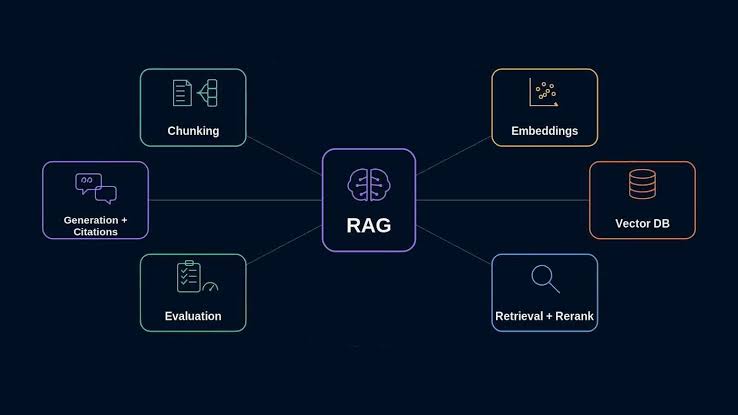
The original RAG pattern was almost elegant in its simplicity. Teams split documents into chunks, embedded them with a model such as OpenAI’s text-embedding-ada-002, stored the vectors, and pulled the top-k nearest neighbours at query time.
It worked beautifully for FAQ lookups. But it reportedly fell short on questions requiring multiple documents, reasoning across several hops, and a date filter. One similarity pass can’t know that a contract amendment sits in one file while the clause it quietly rewrites appears in another.
Root Cause: Embeddings Capture Similarity, Not Structure
Here’s the thing: vector distance measures topical closeness, not logic. It doesn’t encode hierarchy, ownership, or time. As a result, the retriever returns passages that sound relevant while leaving out the ones that are required. The industry’s first response was brute force — bigger indexes and more chunks. That approach quickly hit diminishing returns because the missing passage wasn’t a ranking problem. It was a reasoning problem.
Candidate Fix 1: Iterative Retrieval Loops
Frameworks like DSPy, reportedly developed by Stanford University researchers, treat retrieval as a program that can be compiled, evaluated, and run again. Rather than issue one query, the system sends a follow-up based on what it just read. The stated downside is cost: each loop reportedly adds another model call, and token spend grows with the number of hops, not the number of documents.
Candidate Fix 2: Graph-Based Knowledge Structures
Microsoft’s GraphRAG framework attacks the same gap from the other direction. It builds entity graphs and community summaries, storing relationships instead of inferring them at query time. The trade-off is ingestion expense and graph staleness — rebuilds are heavy, and a graph that trails the source data can still be confidently wrong.
| Approach | Strength | Stated downside |
|---|---|---|
| Static vector RAG | Cheap, low latency | Misses multi-hop questions |
| Iterative loops (DSPy) | Follows reasoning chains | Token cost per extra hop |
| Graph-based (GraphRAG) | Encodes relationships | Expensive, can go stale |
| Hybrid plus long context | Handles 2,000,000-token windows | Highest infrastructure spend |
Worth noting: by late 2025, context windows in state-of-the-art models supporting hybrid RAG had reached up to 2,000,000 tokens. That makes “just put everything in the prompt” tempting. It’s also the costliest option per query, which helps explain why enterprise deployments rely more on vector databases such as Pinecone, Milvus, and Qdrant for real-time indexing.
What’s Next: Match the Pipeline to the Query
For single-fact lookups, static vector RAG remains the cheapest correct answer. When queries connect several documents, iterative loops justify their token bill. And when the data is fundamentally relational — supply chains, org charts, and legal entities — graph structures can pay off despite the ingestion cost.
The real 2026 shift is routing: send each query to the cheapest pipeline that can actually answer it. The static-snippet era ended not because embeddings failed, but because enterprises finally started asking questions worth more than one search.
FAQs
Is RAG being replaced by long context windows?
No. Long context complements retrieval rather than replacing it, since per-query costs still make retrieval the better choice for most production workloads.
What is the main disadvantage of graph-based retrieval?
Ingestion costs are high, and the graph can fall behind source data, producing answers that sound confident but are outdated.
Which vector databases dominate dynamic RAG deployments?
Pinecone, Milvus, and Qdrant are increasingly relied-on options for real-time indexing in enterprise pipelines.
Does dynamic retrieval always improve accuracy?
No. It can improve multi-hop accuracy while adding latency and token cost, so routing matters as much as the pipeline itself.
Was this article helpful?
Your feedback directly improves future articles on this site.