NAM316/7
 IRE210/6 (38.1/50 ov, target 317)
 SA233/6 (59 ov)
 AUS
AUS ABH0
ABH0 ALF0
ALF0 BEI2
BEI2 JHM2
JHM2 RCH0
RCH0 KRE0
KRE0 AFG
AFG ZIM
ZIM SAS
SAS LAZ
LAZ ROMA
ROMA CAG
CAG TOR
TOR COMO
COMO BAN
BAN WI
WI IND-W
IND-W ZIM-W
ZIM-W GOA
GOA SC Delhi
 Milan
Milan Bologna
 PAK110
 SL114/2 (18.1/50 ov, target 111)
 NZ198/3
 IND199/4 (13.2/20 ov, target 199)
 NED371/5
 OMA265 (49.3/50 ov, target 372)
 Sevilla2
 Osasuna0
 JER
JER KUW
KUW PNG
PNG QAT
QAT JAB56/4 (9.2/20 ov, target 133)
 KAY132/9
 SIKM184
 NAGA187 & 46/4 (34 ov)
 JHK131/4 (47 ov)
 DELHI515/5d
 ODSA194
 SVCS13/0 (5 ov)
 BRODA616
 J & K6/0 (4 ov)
 CHD685/5d
 HP49/0 (14 ov)
 CGR216/8 (95 ov)
 AP231
AP231 HYD193/2 (54 ov)
 PNJB431
 AUCK
AUCK CANT
CANT CD
CD ND
ND DEN
DEN KENYA
KENYA POA
POA SPR
SPR BIK149 (19.3/20 ov, target 158)
 CHR157/3
 BRB149/5 (16.2/20 ov, target 148)
 MIS147
 MOW107/9
 TOK111/5 (18.4/20 ov, target 108)
 Parma
Parma Udinese
 Venezia
 Inter Milan
 Genoa
Genoa Juventus
 PSG2
PSG2 Lyon0
Lyon0 Mohun Bagan1
 Chennaiyin0
 DHC0
DHC0 VIS1
VIS1 JDT3
JDT3 PORT0
PORT0 KYO5
KYO5 NEW2
NEW2Manchester United’s defensive transitions and midfield setup have really changed as we head into the 2026 season. By focusing on a compact 4–4–2 or 4–2–3–1 mid-block, the team aims to create turnovers in crucial areas while holding their shape to stop opponents from advancing vertically.
You can see a noticeable shift toward a man-oriented press that kicks in as soon as the ball enters specific zones. This strategy forces other teams into long balls or risky lateral passes, which the United midfield is ready to intercept.
The interesting part is how this solid defense works seamlessly with their attacking shape. In build-up phases, the team often shifts to a 5–2–4 formation, using the goalkeeper as an active option to pull opposing midfielders out of position.
This movement aims to set up wingers in 1v1 situations, creating space for quick vertical plays. Once the ball crosses into the opponent’s half, the system transitions into a 3–2–5 or 4–2–4 structure, pushing full-backs forward to stretch the defensive line and create numerical advantages in the final third.
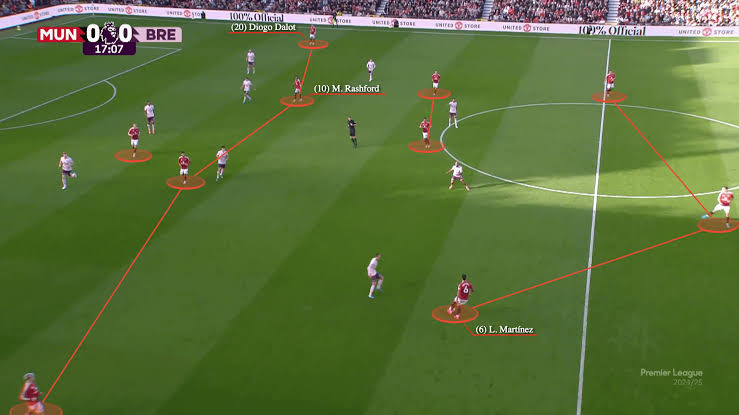
What’s truly happening on the pitch is a masterclass in positional rotation. Key players like Lisandro Martínez and Victor Lindelöf play vital roles in this setup. This strategy minimizes the risk of counter-attacks, which has been a vulnerability for the club in the past, according to tactical analysts covering the Premier League.
The midfield structure fuels these transitions. By sending opponents wide, United effectively uses the touchline as an extra defender, narrowing the pitch and stifling creative play.
When they win the ball back, the focus is on quick vertical passes. Speed is crucial here, as it takes advantage of defensive lines that are still disorganized before they can reset. This tactical flexibility—shifting fluidly between 3–2–5, 4–2–4, and 4–4–2—lets the team adapt to various opponent styles without losing their core principles of high-intensity pressure and controlled possession.
Yet, the coaching staff faces the challenge of keeping this intensity up for a full 90 minutes. The man-oriented press does a great job at creating turnovers, but it demands a lot of physical effort from both the midfield and forward lines.
As the season moves on, we expect to see further improvements in how they manage their energy levels, especially against teams that prefer a slow, patient build-up. The upcoming matches will really test whether this high-risk, high-reward structure can deliver the consistency needed to compete at the highest level.
FAQs
How does Manchester United control the midfield during goal kicks?
The team splits the pitch into two halves, ensuring they have numerical superiority in the central zones. This way, they can immediately pressure the opposition and regain the ball if turnover occurs.
Which players are key to the hybrid full-back role?
Right now, players like Lisandro Martínez and Victor Lindelöf serve as hybrid options, providing defensive stability while also helping the team transition into a 3–2–5 attacking shape.
Why is the 3–2–5 structure important for United?
This formation stretches the opponent’s defensive line by pushing full-backs high, creating 1v1 chances for wingers and ensuring there are enough players in the final third to overload the defense.