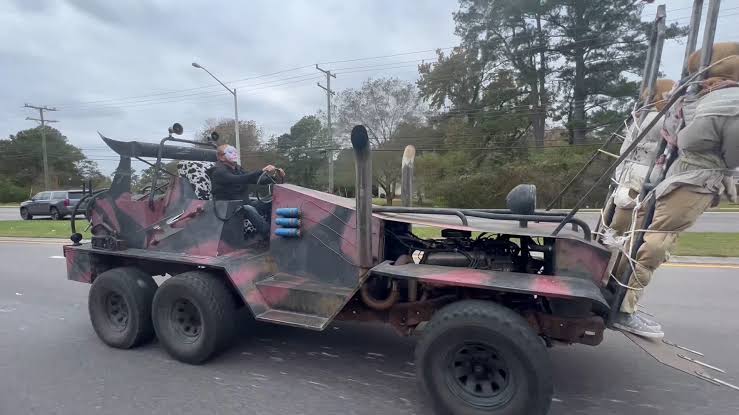
On September 1st, 2026, a meticulously crafted replica of Mad Max’s “Humungus Machine” hit the auction block on Bring a Trailer. Collectors now have a rare opportunity to acquire a road-ready tribute to Mad Max 2: The Road Warrior, though key mechanical details remain officially unconfirmed.
Historical Context: The Original Film Vehicle
Until this listing appeared, the machine existed mainly as a piece of film history rather than an active collector-car opportunity. The original movie vehicle was constructed by mechanic Ray Armstrong in New South Wales, Australia, for the brutal vehicle world depicted in Mad Max 2: The Road Warrior.
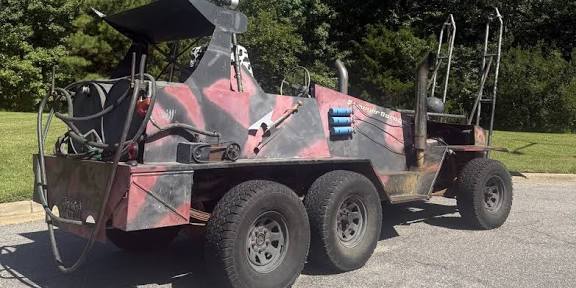
Its visual identity came from excess: an extended chassis, dual rear wheels and a heavy-duty stance that made it look more like an improvised armoured hauler than a conventional road car. That styling remains recognisable even for viewers who do not follow classic Dodge history, because the film turned the vehicle into part of the Wasteland’s visual language. The machine also belongs to a wider category of vehicles that blur the line between cinema and automotive culture. Our earlier coverage of GTA Cars Trailer examined how fictional vehicles can lead audiences back to real-world models, while this listing reverses that path by selling a physical recreation of a screen icon.
Current Status: The Bring a Trailer Listing
The catalyst is the September 2026 Bring a Trailer auction. The listing highlights the replica’s dual-rear-wheel arrangement and stretched chassis, both associated with the film’s heavy-duty aesthetic. It reportedly features a massive front-mounted V8 engine. That engine detail has not been officially confirmed in the supplied listing information, so buyers should treat it as a reported feature rather than a verified factory specification.
This distinction matters because the vehicle is not being sold as an ordinary restored classic. Its value depends on three overlapping identities: a showpiece for film collectors, a custom-built automotive object and a conversation-starting machine for enthusiasts who value visual authenticity over factory originality. The same tension appears in modern performance-car debates, including our report on the New Bring AMG. In both cases, the question is not simply whether a vehicle has a large engine, but whether its identity comes from mechanical pedigree, cultural recognition or both.
Market Shift: From Replica to Auction Item
Before the auction, the Humungus Machine was best understood as a replica linked to a famous production vehicle and its Australian construction history. After the listing, it has become a purchasable collector item with an international target audience that includes cinema memorabilia buyers and automotive enthusiasts.
That change raises practical questions. Is the vehicle valuable because it is based on a 1959 Dodge Custom Royal, or because its extended chassis, dual rear wheels and front-mounted V8 recreate an image remembered by film audiences? The answer will depend on whether the buyer prioritises documented provenance, visual accuracy or the theatre of owning an unmistakable movie tribute.
| Detail | Before the listing | After the listing |
|---|---|---|
| Status | Film-linked replica | Auction vehicle on Bring a Trailer |
| Historical reference | Ray Armstrong’s New South Wales build | Recreation of the film’s heavy-duty look |
| Platform | Reported 1959 Dodge Custom Royal | Same reported platform |
| Key design | Extended chassis and dual rear wheels | Features presented to collectors |
| Audience | Film and car enthusiasts | Worldwide memorabilia and automotive buyers |
The comparison also shows why this machine should not be judged like a conventional classic Dodge. A restored original is usually assessed through factory specification, condition and provenance; this replica is judged through resemblance, presentation and its connection to Mad Max 2. That difference could attract bidders who would never pursue a standard 1950s American car.
Next Steps: Global Bidding and Logistics
The next meaningful development will be the market’s response to the listing, especially from buyers outside Australia and the United States. Bring a Trailer has made online collector-car auctions accessible to a global audience, but international purchasers still need to examine registration, transport, import requirements and the vehicle’s legal road status before bidding. The listing should also encourage buyers to separate confirmed information from visual assumptions.
The extended chassis and dual rear wheels are visible design features, while the reported Dodge platform and large V8 need careful documentation. Enthusiasts who want a reliable driver should demand more evidence than collectors buying a display piece. Our earlier coverage of AM Radio Will Be shows how automotive objects can carry cultural meaning beyond their hardware. This replica works in the same way: its appeal is not only transportation, but the memory of a film world where survival, machinery and spectacle were inseparable. If you want a documented original classic, pick a conventional restoration; if you want a cinema-centred collector piece with an unmistakable silhouette, pick the Humungus Machine auction listing. The winning bidder will be buying movie history first and a custom vehicle second. Understanding Mad Max fully means staying ahead of these developments.
FAQs
What is the Humungus Machine?
It is a replica inspired by the vehicle featured in Mad Max 2: The Road Warrior. The original film vehicle was constructed by mechanic Ray Armstrong in New South Wales, Australia.
Where is the vehicle being sold?
The replica was listed on Bring a Trailer in September 2026. The auction targets cinema memorabilia collectors and automotive enthusiasts worldwide.
What are its main design features?
The listing features dual rear wheels and an extended chassis designed to recreate the film vehicle’s heavy-duty appearance. A massive front-mounted V8 has also been reported, but that engine detail is not officially confirmed in the available facts.
Is it an original movie vehicle?
The available information identifies it as a replica, not the original production vehicle. Buyers should review the listing documentation for construction history and mechanical records before bidding. The auction turns a memorable film machine into a real collector decision: verify the paperwork, then decide how much nostalgia is worth. Source: Caranddriver
Was this article helpful?
Your feedback directly improves future articles on this site.