NZ66/3 (9.5/20 ov)
 IND
IND NAM23/1 (3.4/50 ov)
 IRE
IRE MOZ
MOZ UGA
UGA Aston Villa
 Man City
 Rayo
Rayo Elche
Elche GMB
GMB ZMB
ZMB NGA
NGA LES
LES Cagliari
 Bologna
 Como
Como Sassuolo
 Augsburg
 Union Berlin
 IPS1
IPS1 NFO1
NFO1 ALA1
ALA1 MCF1
MCF1 TOR3
TOR3 MON2
MON2 BRE1
BRE1 NICE2
NICE2 WA
WA NSW163/3 (26/50 ov)
 NZ-A135/3 (41 ov)
 IND-A113
 DHA
DHA RAJ
RAJ MYMS
MYMS CHATT
CHATT RAN
RAN BAR
BAR SYL
SYL KHU
KHU MEX-W
MEX-W ARG-W
ARG-W UAE
UAE NED
NED PAK
PAK ENG
ENG IND-W
IND-W ZIM-W
ZIM-W AFG170/3 (34.3/50 ov, target 170)
 ZIM169
 TAS137 (25.2/35 ov, target 276)
 VIC304/7 (50 ov)
 WSW1
WSW1 BRI1
BRI1 Cologne
 Schalke
 Mainz
Mainz Bremen
 RB Leipzig
 Elversberg
 VFB2
VFB2 BMG3
BMG3 AHL4
AHL4 KHA1
KHA1
Indian football faces its most serious crisis in decades as both the top-tier Indian Super League (ISL) and the second-division I-League find themselves without commercial partners, throwing the future of competitive football in India into unprecedented uncertainty. The All India Football Federation’s inability to attract even a single bidder for the commercial rights of either league has created an existential threat to the entire domestic football ecosystem, affecting hundreds of professional players, thousands of support staff, and millions of passionate fans across the country.
The Indian Super League, which has served as India’s premier football competition since 2014 and was officially recognized as the country’s top-tier league by FIFA and AFC in October 2019, remains stuck in administrative quicksand as the December 8, 2025 expiry of the Master Rights Agreement with Football Sports Development Limited approaches without a replacement partner in sight. The I-League, India’s second division that once held top-tier status before being relegated in favor of the franchise-based Indian Super League, has now joined its senior counterpart in commercial purgatory after the AIFF’s Request for Proposal floated on November 28 failed to attract any bids by the December 13 deadline.
The ISL Commercial Partner Crisis: How Did We Get Here?
The current crisis stems from the breakdown of the relationship between the AIFF and Football Sports Development Limited, which has served as the Indian Super League’s commercial partner since 2010 under a 15-year Master Rights Agreement. FSDL, backed by Reliance Industries, was responsible for the operation, broadcast, and promotion of the ISL and operated relatively smoothly from the league’s first season in 2014. However, with the deal set to expire on December 8, 2025, the AIFF’s attempts to secure a new commercial partner have failed spectacularly.
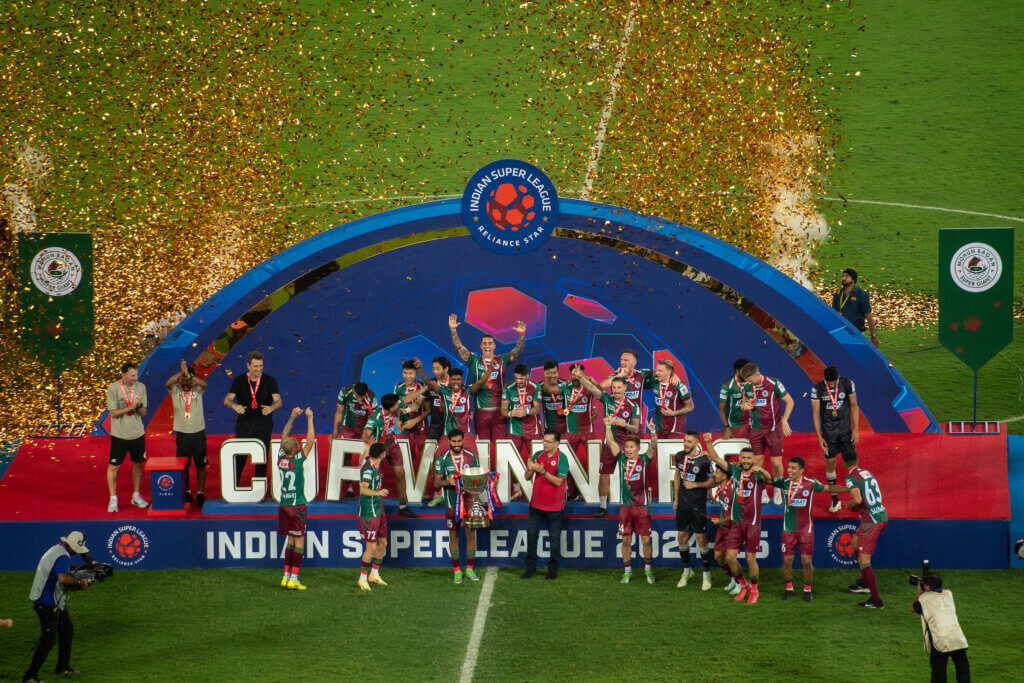
In July 2025, FSDL formally informed the ISL clubs and the AIFF that the 2025-26 season was on hold due to unresolved contractual issues. After intervention from the Supreme Court of India, which requested both parties to resolve issues and start the season as quickly as possible, the AIFF was directed in September to float an open tender for a new commercial partner. The federation released the Request for Proposal on October 16, inviting bids for a 15-year contract to monetize the league’s commercial and media rights.
However, the AIFF’s tender proved to be commercially unviable. Four parties, including FSDL, were reportedly interested initially, but with potential operating losses rising to INR 200 crore per year on top of a guaranteed INR 37.5 crore paid to the AIFF annually, not a single bid was submitted by the November 7 deadline. The RFP required the commercial partner to be responsible for match production with at least 11 cameras, marketing, media rights sales, and grassroots investment, with 70 percent distributed among ISL clubs and the remaining 30 percent to I-League teams. The tender also imposed a salary cap of INR 18 crore per club effective from the 2025-26 season.
| ISL Crisis Timeline | Key Events |
|---|---|
| 2010 | FSDL signs 15-year Master Rights Agreement with AIFF |
| October 2014 | Indian Super League launches with inaugural season |
| October 2019 | FIFA and AFC officially recognize ISL as India’s top-tier league |
| July 2025 | FSDL puts 2025-26 ISL season on hold citing contractual uncertainties |
| September 2025 | Supreme Court directs AIFF to float open tender for commercial partner |
| October 16, 2025 | AIFF releases Request for Proposal for 15-year ISL commercial rights |
| November 7, 2025 | Tender deadline passes with zero bids received |
| December 8, 2025 | Master Rights Agreement with FSDL expires |
I-League Follows ISL Into Commercial Wilderness
As if the Indian Super League crisis wasn’t damaging enough to Indian football’s reputation, the I-League has now suffered the same fate. Like the top-tier competition, the second division also failed to evoke any interest among possible sponsors and investors when the AIFF’s Request for Proposal floated on November 28 received no bids by the December 13 deadline.
The I-League tender carried an asking price of INR 6 crore, broken down as INR 4 crore for I-League, INR 1.25 crore for I-League 2, and INR 75 lakh for I-League 3. With terms and conditions similar to those for the Indian Women’s League, the AIFF had hoped prospective entities wouldn’t need extensive clarifications. However, when no entity attended the federation’s pre-bid meeting on December 5 to seek clarifications, the writing was on the wall.
The I-League crisis is particularly concerning given that the competition comes under direct control of the AIFF, which has been conducting the second division. This season, there has been no competitive football for I-League clubs besides the Durand Cup and Super Cup. Finance remains a prime concern for the competition after its budget for the first division was reduced by INR 4.02 crore to INR 10.18 crore from INR 14.20 crore in the last financial year.
The I-League, which began in 2007 as the successor to the National Football League with the aim of increasing the player pool for the India national team, has suffered from systematic marginalization since the launch of the franchise-based Indian Super League. After 12 seasons as India’s primary platform for competitive domestic football, the I-League was relegated to second-tier status in 2019 due to contractual obligations the AIFF had signed with IMG-Reliance. The league is currently without a title sponsor after Hero MotoCorp decided not to renew its sponsorship deal with Indian football after the 2022-23 season.
| I-League Commercial History | Details |
|---|---|
| 2007-2011 | ONGC as title sponsor (ONGC I-League) |
| 2011-2013 | No sponsorship deal |
| 2013-2014 | Airtel becomes title sponsor (Airtel I-League) |
| 2014-2023 | Hero MotoCorp as title sponsor (Hero I-League) |
| 2023-Present | No title sponsor |
| 2024-25 Season | Shrachi Sports pays INR 2.5 crore for commercial rights |
| 2025-26 Season | Zero bids received for commercial rights tender |
Impact on Players, Clubs, and the Football Ecosystem
The commercial partner crisis has had devastating effects across the entire Indian football ecosystem. Several ISL clubs have already warned authorities about financial instability, with Odisha FC suspending some salary payments. The impact was immediate for teams like Bengaluru FC, which struggled to meet salary obligations. Players who had contracts for the 2025-26 season suddenly found themselves in limbo, with no clarity on when competition would resume or whether their salaries would be paid.
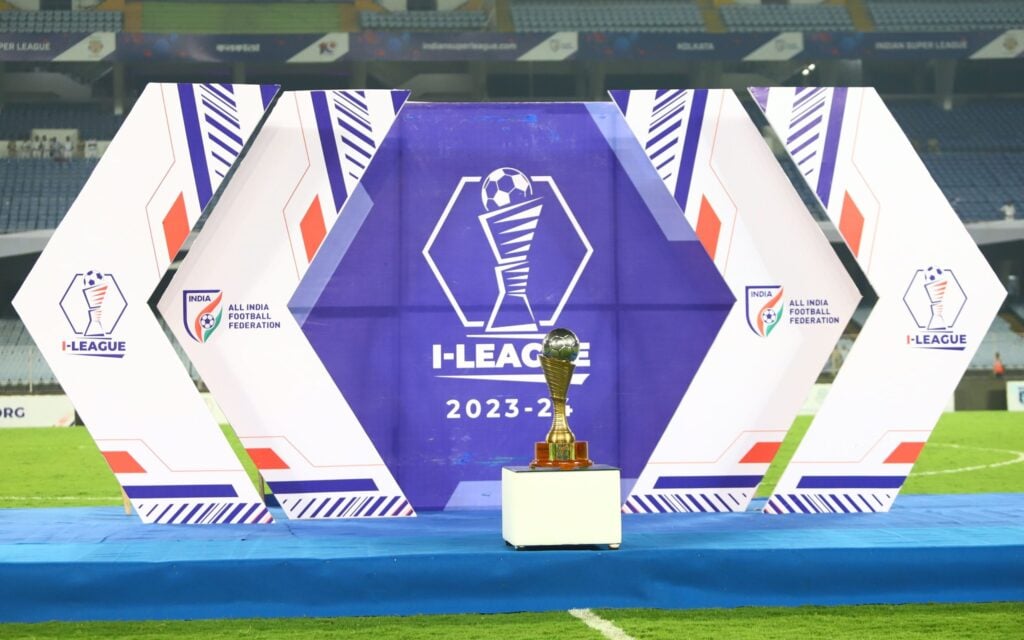
India’s top players including Sandesh Jhingan and Sunil Chhetri have publicly outlined how the delay affects the livelihoods of players. In a joint statement, ISL players described how their initial anger and frustration has transformed into desperation. For footballers operating in a country where the sport lacks the commercial infrastructure of cricket, missing even one season can have devastating financial and career consequences. Many players have families to support, mortgages to pay, and limited career windows in which to maximize earning potential.
Beyond elite players, the crisis affects thousands of individuals across the football ecosystem. Support staff members including coaches, physiotherapists, kit managers, and groundskeepers face uncertain employment. Youth academy players see their development pathways blocked. For the 330 professional footballers currently waiting to play and the thousands of support staff needing employment, the clock is ticking. The AIFF’s lack of a commercial partner means their coffers cannot operate the entire football pyramid, leaving both leagues unable to plan operations or seek sponsorships.
| Affected Stakeholders | Impact |
|---|---|
| Professional Players | 330+ players without competitive football, salary delays, career uncertainty |
| Support Staff | Thousands facing employment uncertainty (coaches, physios, groundskeepers) |
| ISL Clubs | 14 teams unable to plan operations, sponsors withdrawing, financial losses mounting |
| I-League Clubs | 14 teams with no season schedule, no competitive football besides cups |
| Youth Academies | Development pathways blocked, investments frozen |
| Fans | Millions without domestic football, season indefinitely postponed |
Government Intervention and Supreme Court Oversight
The crisis has prompted unprecedented government intervention in Indian football. Sports Minister Mansukh Mandaviya convened extensive day-long meetings on December 3, 2025 with all key stakeholders including representatives from ISL clubs, I-League teams, AIFF, FSDL, broadcasters, and potential commercial partners. The Sports Ministry instructed that all major stakeholders participate, with KPMG India Services LLP, the federation’s transaction advisor, also attending to provide clarity on financial and structural matters.
The Supreme Court has played a crucial role in attempting to resolve the impasse. On November 21, the Court reviewed Justice (Retd.) L. Nageswara Rao’s report noting that AIFF had failed to attract a single bidder for the ISL’s commercial rights. The Court urged all parties to find a practical solution within two weeks, with Solicitor General Tushar Mehta emphasizing that the ISL must be held and that the government is prepared to support the process while respecting FIFA regulations.
The Court also recorded concerns raised by club captains and the Amicus Curiae about delayed player salaries and the risk of wider collapse. Since I-League and lower-division clubs are also affected, the Court signaled a holistic approach that includes the entire league pyramid. One positive development has been the Supreme Court’s approval of the new AIFF constitution drafted under Justice Rao, with emphasis on aligning long-term solutions with global governance standards and FIFA’s statutory requirements.
I-League Clubs Demand Unified Commercial Partner
Eight I-League clubs boycotted an AIFF meeting on November 12 because it was called with only two hours’ notice, which they felt demonstrated lack of seriousness from the federation. Instead, they assembled in Delhi to meet Sports Minister Mandaviya directly, believing government intervention offers better prospects for resolving the crisis. The clubs that boycotted the AIFF meeting to pursue direct government intervention were Gokulam Kerala, Chanmari, Diamond Harbour, Sreenidi Deccan, Shillong Lajong, Namdhari, Real Kashmir, and Rajasthan United.
In a letter signed by all participating I-League club owners and sent to AIFF general secretary M Satyanarayan, the clubs demanded a single commercial partner managing ISL, I-League, and I-League 2 to ensure long-term holistic growth. They demanded immediate announcement of the I-League season within 10 days, with the league commencing by December 15, 2025 and no later than January 5, 2026. The clubs also insisted on broadcast coverage through Star Sports, Jio-Hotstar, Sony Sports, or Sony Liv networks to ensure proper visibility.
The I-League clubs argued that having one common league partner for all divisions would create sustainable growth across the entire football pyramid rather than the current fragmented approach. This unified structure would ensure that revenue distribution, broadcast quality, and commercial strategy align across all tiers of Indian football.
ISL Clubs Unite to Warn of Operational Collapse
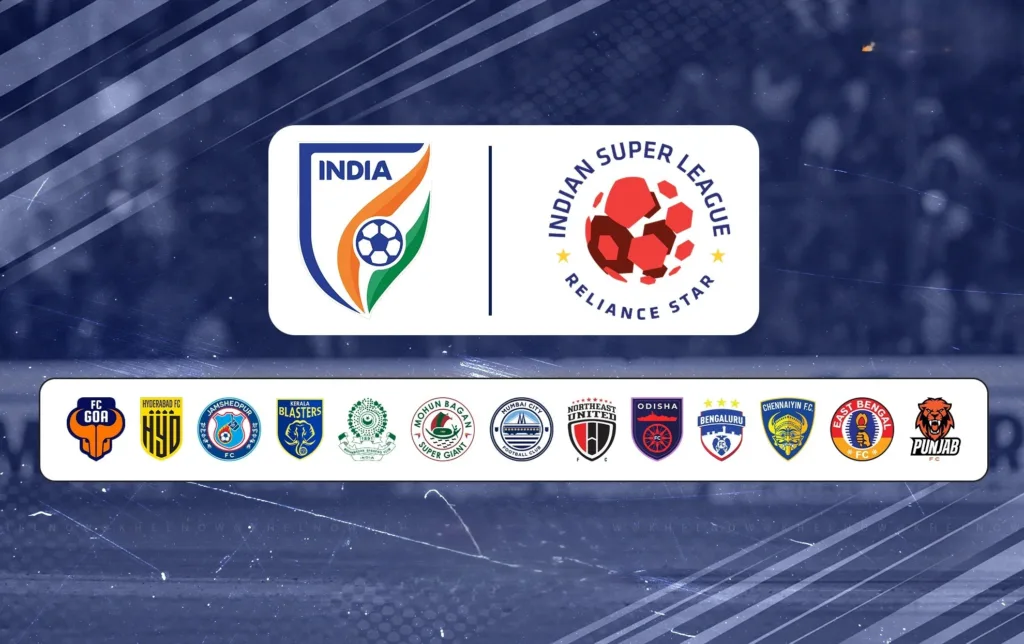
The 12 ISL clubs issued a collective letter warning of operational collapse as the Master Rights Agreement expiry approached. The signatories included FC Goa, Sporting Club Delhi (formerly Hyderabad FC, which relocated and rebranded on October 7, 2025), NorthEast United, Jamshedpur FC, Bengaluru FC, Mohun Bagan Super Giant, Chennaiyin FC, Mumbai City FC, Kerala Blasters, Punjab FC, Odisha FC, and Mohammedan Sporting, with newly promoted Inter Kashi also joining the representation.
The clubs emphasized that for more than a decade, ISL teams have accepted significant financial losses while still investing heavily in infrastructure, player development, and youth systems. They were supported by predictable league structures and guaranteed income from centralized rights. With that revenue stream now gone, sponsors have paused or withdrawn commitments, leaving clubs with obligations to honor but virtually no income. The clubs described moving from a challenging environment into one nearing commercial impossibility that risks rendering ongoing operations untenable.
The Path Forward: Uncertainty and Hope
As of mid-December 2025, the future of both the Indian Super League and I-League remains deeply uncertain. The ISL season, originally scheduled to begin in December, faces further delays with no definite start date. The I-League season hasn’t even been announced, leaving 14 clubs in complete limbo. Global consultancy KPMG is overseeing the process of finding a new long-term commercial partner, but the failure of two separate tenders raises serious questions about Indian football’s commercial viability.
The stated ambition for Indian football is not just to run a popular domestic competition but to field clubs capable of standing their ground in Asia. The ISL’s participation in the continental calendar has given Indian clubs a clear route into the AFC Champions League Elite and the second-tier AFC Champions League Two, with Mumbai City and Mohun Bagan Super Giant already carrying the flag in these competitions. However, without a functioning domestic league structure, even these continental ambitions hang in the balance.
For Indian football to emerge from this crisis, fundamental questions about league structure, commercial viability, and governance must be answered. The AIFF’s inability to attract commercial partners for either the ISL or I-League suggests that the current model needs significant restructuring. Whether through more realistic commercial terms, unified management across divisions, or fundamental changes to league operations, Indian football requires urgent solutions if it is to avoid a complete collapse of its professional ecosystem.
The coming weeks will prove critical as stakeholders meet under government mediation and the Supreme Court deadline for resolution approaches. For the hundreds of professional players, thousands of support staff, and millions of fans who make up Indian football, the hope is that sensible heads will prevail and competitive football will return before permanent damage is done to the sport’s infrastructure and reputation in the country.
Read More: Paulo Dybala Set to Leave Roma as Free Agent at End of Season