NAP3
NAP3 ROMA3
ROMA3 CHE0
CHE0 TOT0
TOT0 VAL1
VAL1 VIL0
VIL0 DOR0
DOR0 SGE0
SGE0 WIL0
WIL0 CAM3
CAM3 ALV0
ALV0 FCA1
FCA1 MTL0
MTL0 NSH0
NSH0 RIY
RIY TAA
TAA LAZ
LAZ PAR
PAR RCL
RCL PAR
PAR MEX-W
MEX-W ARG-W
ARG-W ATM
ATM DEP
DEP UAE
UAE NED
NED PAK
PAK ENG
ENG IND-W
IND-W ZIM-W
ZIM-W KHO0
KHO0 ETT3
ETT3 RAC2
RAC2 ESP1
ESP1 ARS2
ARS2 EVE0
EVE0 KNGHT126/6
 MPUMA63/4 (10.1/20 ov, target 127)
 NZ-A135/3 (41 ov)
 IND-A113
 SYL
SYL KHU
KHU MYMS299/4 (87 ov)
 CHATT
CHATT DHA293/3 (84.1 ov)
 RAJ
RAJ RAN320/5 (80 ov)
 BAR
BAR GMB
GMB LES
LES MOZ
MOZ ZMB
ZMB NGA
NGA UGA
UGA NAM321/6
 IRE290 (47.3/50 ov, target 322)
 NZ180/5
 IND181/6 (19.5 ov)
 BHA3
BHA3 WHU0
WHU0 Inter Milan
 Fiorentina
 Churchill
 Punjab FC
 Athletic
 Getafe
 C Palace
 Newcastle
 COV0
COV0 FUL1
FUL1 OFC0
OFC0 NEU0
NEU0 NEOM2
NEOM2 ABH0
ABH0
Numbers tell the story of a nation’s love affair with the longest format. The Indian men’s cricket team crossed an extraordinary threshold in its sporting history by playing its 600th Test match, taking the field against Sri Lanka at the Galle International Stadium on August 15, 2026, becoming only the third nation in international cricket history — and the first Asian team — to reach the 600-Test mark. The date coincided with India’s 80th Independence Day, adding a layer of significance to the occasion.
The Milestone at a Glance
| Detail | Information |
|---|---|
| 600th Test Venue | Galle International Stadium, Sri Lanka |
| 600th Test Date | August 15, 2026 |
| Opponent | Sri Lanka |
| Test Debut | June 25, 1932 vs England, Lord’s |
| Years in Test Cricket | 94 years |
| Total Wins | 187 |
| Total Defeats | 188 |
| Total Draws | 224 |
| Tied Tests | 1 |
| Players Used | 319 |
| Captains Used | 38 |
| Most Appearances | Sachin Tendulkar (200 Tests) |
| Most Successful Captain | Virat Kohli (40 wins in 68 Tests) |
The Beginning — Lord’s, 1932
India made their Test debut on June 25, 1932, against England at Lord’s under the captaincy of C.K. Nayudu, who took charge after the Maharaja of Porbandar and his deputy withdrew on the eve of the match.
England, led by Douglas Jardine, scored 259 in their first innings after Mohammad Nissar dismissed Percy Holmes and Herbert Sutcliffe early. Nissar finished with five wickets — India’s first five-wicket haul in Test cricket. India were bowled out for 189, giving England a 70-run lead. England then declared at 275/8, leaving India 346 to win. Despite Amar Singh’s fighting 51, India lost by 158 runs.
The team had to wait until the 1951-52 season for its first Test win, when they defeated England by an innings and eight runs in Chennai. The first away win came even later, in 1968, in Dunedin, New Zealand, when Mansoor Ali Khan Pataudi’s side pulled off a 157-run victory, finally proving India could win outside familiar conditions too.
The 600th Test — A Winning Occasion
India marked its 600th Test with a commanding 165-run victory over Sri Lanka in Galle, with Devdutt Padikkal producing a magnificent century and Manav Suthar claiming a match-winning 10-wicket haul.
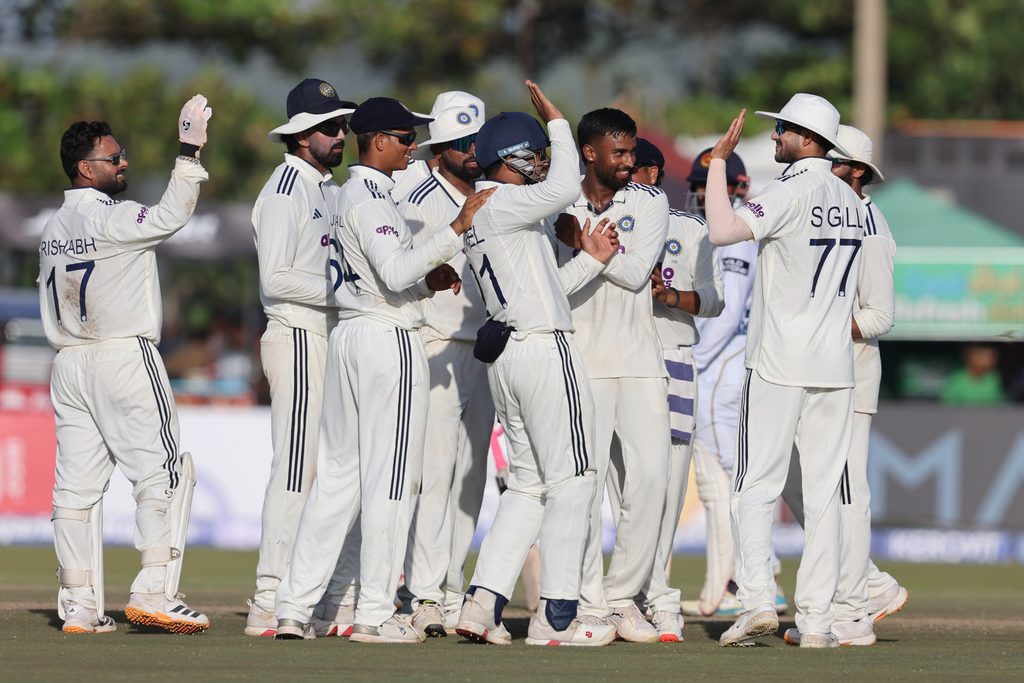
Shubman Gill captained the side, won the toss and elected to bat first. Shubman Gill entered the record books as the 38th player to captain India in Test cricket, leading the side in their 600th match.
India’s 165-run victory gave it a 1-0 lead in the two-Test series, making its 600th Test another landmark in a journey that has taken the team from early struggles to sustained success on the international stage.
India’s Record — Every 100 Tests
India’s record across every 100 Tests reflects the gradual improvement in its fortunes:
- 1st to 100th Test: 10 wins, 40 defeats, 50 draws — win-loss ratio of 0.25
- 201st to 300th Test: 21 wins, 26 defeats, one tie, 52 draws — win-loss ratio of 0.80
- 301st to 400th Test: 32 wins, 31 defeats, 37 draws — win-loss ratio of 1.03
- 401st to 500th Test: 42 wins, 28 defeats, 30 draws — win-loss ratio of 1.50
- 501st to 600th Test: 57 wins, 31 defeats, two draws — win-loss ratio of 1.83
| Block | Tests | Wins | Defeats | Draws | Win-Loss Ratio |
|---|---|---|---|---|---|
| 1st – 100th | 100 | 10 | 40 | 50 | 0.25 |
| 101st – 200th | 100 | 25 | 28 | 47 | 0.89 |
| 201st – 300th | 100 | 21 | 26 | 52+1T | 0.80 |
| 301st – 400th | 100 | 32 | 31 | 37 | 1.03 |
| 401st – 500th | 100 | 42 | 28 | 30 | 1.50 |
| 501st – 600th | 100 | 57 | 31 | 2 | 1.83 |
| Overall | 600 | 187 | 188 | 224+1T | — |
How Long It Took to Reach Each Century
India made their debut in 1932 against England at Lord’s but took 35 years to reach 100 Tests, while the next two hundred milestones took 15 and 14 years, respectively. Since then, they have played 100 Tests roughly every ten years.
| Milestone | Year Reached | Time Taken |
|---|---|---|
| 1st Test | 1932 | — |
| 100th Test | 1967 | 35 years |
| 200th Test | 1982 | 15 years |
| 300th Test | 1996 | 14 years |
| 400th Test | 2006 | ~10 years |
| 500th Test | 2016 | ~10 years |
| 600th Test | 2026 | ~10 years |
The Landmark Tests — What Happened?
India reached its 100th Test during the third match of its 1967 series against England at Birmingham. Led by Mansur Ali Khan Pataudi, India entered the match having already lost the first two Tests. England scored 298, with India’s four spinners taking all 10 wickets.
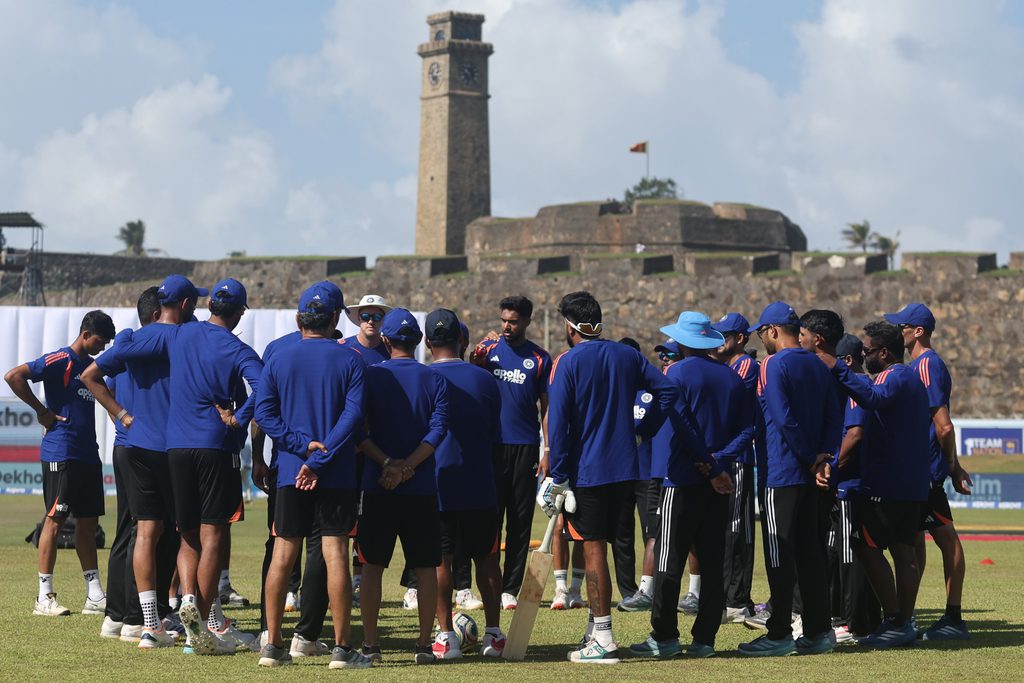
India’s 200th Test was played against Pakistan at Lahore in December 1982. The match ended in a draw after several impressive batting performances.
India played its 300th Test against South Africa in Ahmedabad in November 1996. The match was notable as it also marked VVS Laxman’s Test debut.
The Transformation — Home and Away
Turning home venues into fortresses helped India’s win-loss record rise sharply in the last couple of decades. This constant improvement saw their overall win tally exceed their losses for the first time in 2024, nearly 92 years after their debut.
India won a record 18 consecutive Test series played at home between 2013 and 2024.
Their record away from home also improved significantly, winning 37 of 107 matches in the last two blocks, compared with only 26 of 193 in the first four blocks
The Captains, Players and Icons
A total of 319 players have represented India in Tests so far, with Sachin Tendulkar holding the record for most appearances with 200 matches. From CK Nayudu, who led India in its first Test, to Rishabh Pant and the current generation, 38 players have captained India in the format.
Virat Kohli remains India’s most successful Test captain, having led the team in 68 matches between 2014 and 2022, winning 40.
Sunil Gavaskar, Sachin Tendulkar, Rahul Dravid and Virat Kohli have been among the country’s most prolific run-scorers, setting benchmarks across generations.
The Bowling Revolution
During the 1960s and 1970s, India was renowned for its formidable spin quartet of Bishan Singh Bedi, Erapalli Prasanna, Bhagwat Chandrasekhar and Srinivas Venkataraghavan. The modern era, however, has seen India develop a potent combination of pace and spin. Jasprit Bumrah, Mohammed Shami, Mohammed Siraj, Ishant Sharma, Umesh Yadav and Bhuvneshwar Kumar have carried forward India’s fast-bowling tradition, while Ravichandran Ashwin and Ravindra Jadeja have maintained the country’s reputation for quality spin.
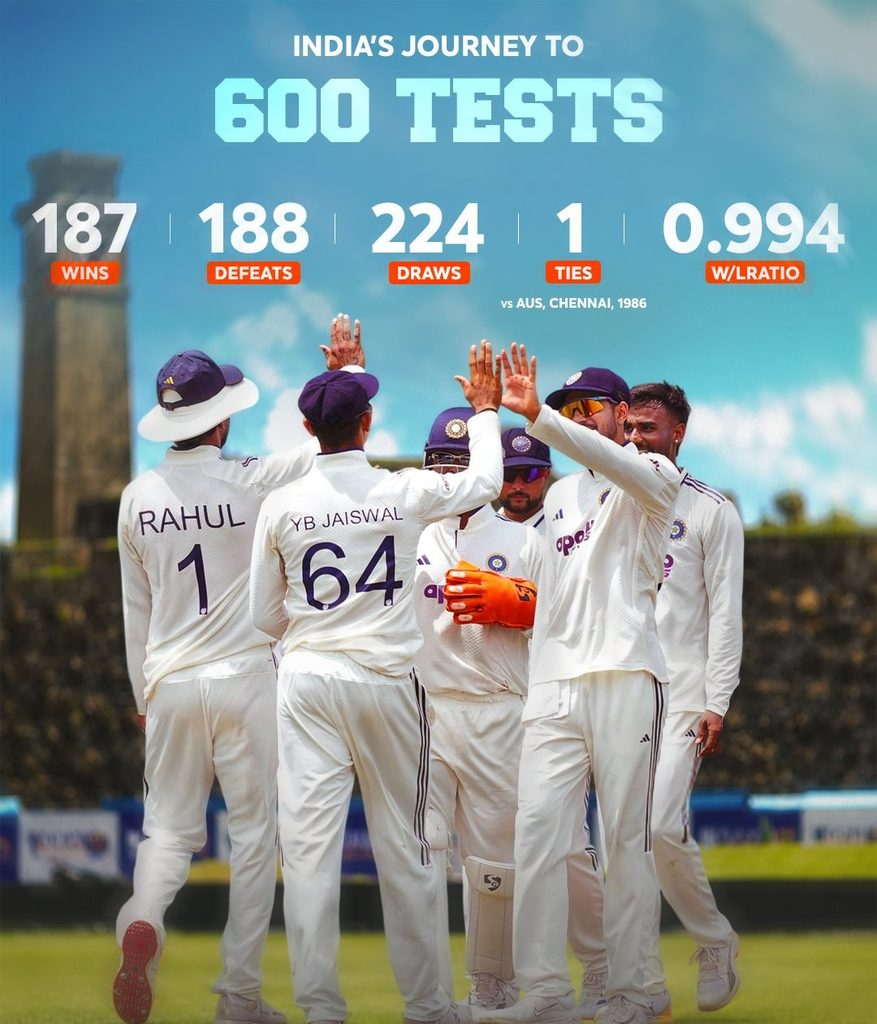
Nations with 600+ Tests
Only two teams in the history of the sport had previously completed 600 men’s Tests: England (1,097) and Australia (883).
| Rank | Nation | Tests Played |
|---|---|---|
| 1 | England | 1,097 |
| 2 | Australia | 883 |
| 3 | India | 600 |
Read More: Top 10 Batsmen with Most Sixes in Test Cricket — Updated 2026 Rankings