2027 Hyundai Tucson and Toyota’s next-gen Highlander. Here’s the problem: most family SUVs today force buyers into a compromise.
A pure electric SUV delivers silent torque and low running costs, yet range anxiety still keeps suburban families tethered to charging maps. A traditional hybrid sips fuel but cannot match the instant punch of an EV. Hyundai’s bet is that an EREV — a setup where a gasoline engine exists only to charge the battery, never to drive the wheels — can thread that needle without asking customers to give up the gas station.
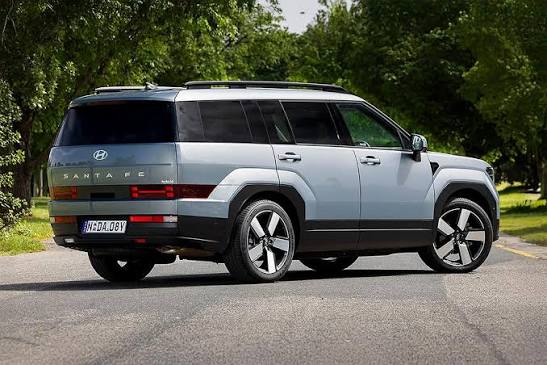
The Powertrain Layout That Makes It Work
The EREV architecture is the key to understanding the move. Unlike a conventional hybrid, where the engine and motor can both send power to the wheels, an EREV uses the gasoline unit strictly as a generator.
Electric motors handle all propulsion, while the engine fires up only to refill the battery on the move. That design unlocks two practical wins. First, the vehicle can drive short commutes on electricity alone, behaving much like a battery-electric SUV in town.
Second, on long highway runs, the engine eliminates the charging stops that still turn off buyers in markets where DC fast-chargers remain patchy. The trade-off is mechanical complexity — two energy systems, more weight, and higher sticker pricing than a comparable pure hybrid.
Range, Battery, and Production Targets
The headline figure Hyundai is targeting is a total driving range reportedly exceeding 600 miles on a single fill-up and charge.
To get there, the large-battery EREV system pairs an electric drive unit with a battery capacity of roughly 50 kWh, which is larger than the packs found in most current plug-in hybrids and closer in size to entry-level battery EVs.
| Parameter | Santa Fe EREV (Target) |
|---|---|
| Total system range | 600+ miles (combined) |
| Battery capacity | ~50 kWh |
| Engine role | Generator only |
| Mass production (North America) | End of 2026 |
| China market production | End of 2025 |
Worth noting: the 600-mile claim is a combined figure, not pure electric driving. Real-world electric-only range will almost certainly be a fraction of that, depending on weather, load, and speed. Still, for a family covering weekend highway runs, the math now looks closer to a conventional SUV than to a battery EV.
Why This Matters for the Family SUV Segment
The strategic logic is straightforward. EREVs let automakers sell a vehicle that qualifies for green-vehicle incentives in some US states and China, while sidestepping the charging infrastructure gap that continues to throttle pure-EV adoption.
For Hyundai, putting the format into the Santa Fe is a calculated reach for households that want electrification without the anxiety. That said, this is not a free lunch.
EREVs typically cost more than a comparable hybrid because of the larger battery, and they still burn fuel when the engine cycles on. Buyers will be paying for redundancy — a full electric drivetrain plus a combustion generator — in exchange for flexibility.
The Real Competition
Toyota has long argued that hybrids, not battery EVs, are the fastest path to lower emissions, and the Highlander Hybrid remains the default three-row family SUV in many US driveways. The new Santa Fe takes a different angle: more electric range, more silent running, and a fuel-engine backup.
For a buyer weighing an electric SUV against a hybrid, the EREV format now offers a third door — one that Hyundai intends to push open before the end of next year, with North American production slated for late 2026 and Chinese-market output starting by the end of 2025. The verdict is simple. If you regularly drive short distances and can charge at home, a pure EV still makes the strongest economic case. If you take long highway trips and want one vehicle that handles both, Hyundai’s new Santa Fe EREV is shaping up to be the most compelling middle ground on the market.
Related Articles
FAQs
When will the Hyundai Santa Fe EREV go on sale?
Mass production for North America is slated to begin by the end of 2026, with the Chinese market version starting production by the end of 2025. How far can the Santa Fe EREV drive on electricity alone? Official electric-only range has not been disclosed, but the roughly 50 kWh battery suggests a figure competitive with current plug-in hybrids, well below the 600-mile total system range.
Does the engine ever drive the wheels? No. In the EREV setup, the gasoline engine acts solely as a generator, while electric motors handle all propulsion. How is this different from a regular hybrid? A conventional hybrid can drive the wheels with both engine and motor. An EREV drives the wheels electrically only, with the engine reserved for charging the battery. Why is Hyundai launching EREV now? The format was confirmed as part of Hyundai’s broader electrification strategy outlined at the 2024 CEO Investor Day, targeting buyers who want EV refinement without giving up long-distance flexibility. SEO_
Was this article helpful?
Your feedback directly improves future articles on this site.