SA425/9d
 AUS99 & 202/4 (70.3 ov) (f/o)
 NZ225/4
 IND218/6 (18.6/20 ov, target 226)
 ENG277/3 (40.1/50 ov)
 SL
 NAM
 IRE229/9 (50 ov)
 AUS-W
 NZ-W11/2 (2.4/14 ov)
 HAZ
 FAY
 FAT
 SHA
 ARA
 AZ
 DZG
 NEC
 FER
 TOR
 JUV
 REN
 LECH
 SUN
 OFI
 B04
 Aston Villa3
 Viking FK1
 Bayern2
 Arsenal2
 Club Brugge3
 Lens0
 Inter Milan1
 Shakhtar0
 KUW
 QAT
 PNG
 JER
 MPUMA
 SA-EM
 GHA232 & 82/3 (26.3 ov)
 O&G410/9d
 KRL151 & 234
 SNGP195 & 87/4 (27 ov, target 191)
 HHKA371 & 166/2 (28 ov)
 SBP398
 BCBXI371/7 (90 ov)
 WI
 IND-W
 ZIM-W
 LES
 ZMB
 NGA
 MOZ
 AFG
 ZIM
 GMB
 UGA
 EASTN
 KZNIN
 DOLPH
 SWD
 AFG19
 BAN19
 BAN160
 NWEST148/5 (17.5/20 ov, target 148)
 Limpo147/6
 NCAPE126/6
 Betis1
 Feyenoord0
 Real Madrid4
 RB Leipzig1

The compact SUV vs midsize SUV decision changed in September 2026, when the 2026 Toyota RAV4, Hyundai Tucson and Honda CR-V placed several compact SUVs close to midsize-SUV pricing in the United States.
The supplied pricing details are based on manufacturer listings and live-web information that have not been independently confirmed. Toyota’s 2026 RAV4 LE is listed at $29,025, Hyundai’s 2026 Tucson starts at $28,500, and Honda’s 2026 CR-V starts at $30,100.
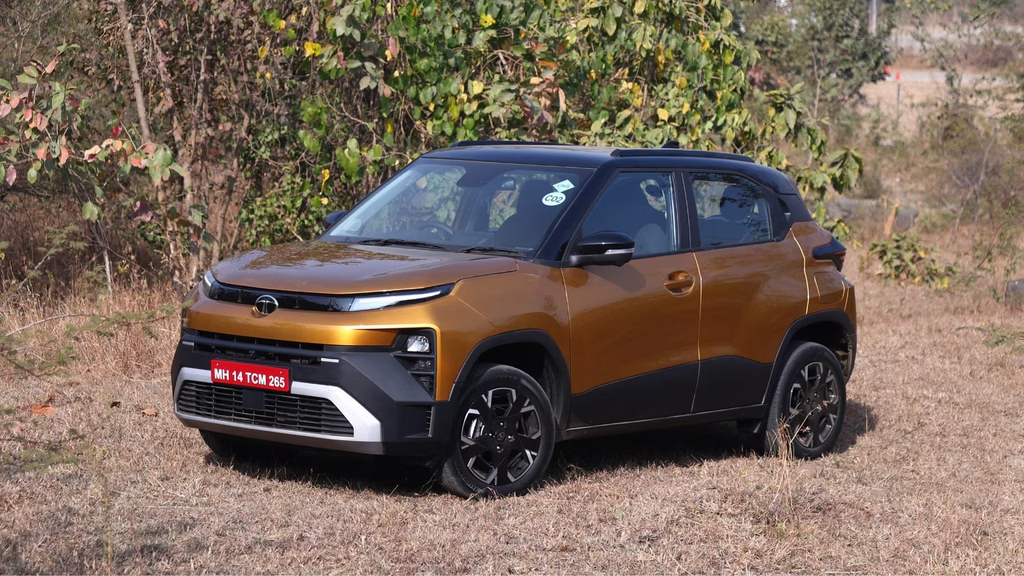
Before: compact SUVs were the obvious urban choice
Before these 2026 one passenger. The case for a midsize SUV became stronger only when families needed more cabin space, extra luggage room or three-row flexibility.
Catalyst: new pricing narrows the gap
The listed 2026 $28,500, undercutting the RAV4 LE by $525 and the CR-V by $1,600. Those figures make the compact class more competitive on upfront cost, but they do not show insurance, servicing, fuel or financing expenses. A midsize SUV can still justify a higher purchase
After: the daily-use decision is more specific
The compact SUV vs midsize SUV choice now depends on the commute rather than the badge. A compact model remains the better fit for apartment parking, crowded streets and one- or two-person travel. Tesla’s Model Y, for example, is listed with an EPA-estimated 320-mile range in Long Range form, giving electric commuters a different way to reduce routine fuel stops.
Midsize SUVs bring practical advantages when the route includes long highway trips, frequent passengers or recreational equipment. The Chevrolet Blazer is reportedly rated for a maximum towing capacity of 4,500 pounds, while Kia’s 2026 Sorento was reportedly launched on August 15, 2026, with a listed starting $31,990. Subaru’s Outback reportedly uses a 2.4-litre turbocharged BOXER engine, with 0–100 km/h acceleration in 6.3 seconds. Worth noting: a daily driver should be judged by its worst regular task. A compact SUV that struggles with a weekly family trip may be less useful than a midsize SUV that feels slightly larger every day.
| Daily need | Compact SUV | Midsize SUV |
|---|---|---|
| City parking | Easier in tight spaces | Requires more room |
| Typical passenger load | One to four people | Families and frequent passengers |
| Running-cost priority | Usually the stronger fit | Depends on engine and powertrain |
| Long-distance luggage | Adequate for smaller households | More useful for bulky loads |
| Towing and capability | Limited compared with larger SUVs | Better suited to heavy equipment |
The same practical test applies to buyers comparing SUVs with specialist vehicles: our earlier look at the Porsche 911: Daily focused on everyday usability rather than headline performance. A buyer considering a plug-in hybrid should also compare charging access and commute length, not just the vehicle’s body size; our JSW SUV coverage provides relevant context.
Recommendation: match the SUV to your routine
Pick a compact SUV if your commute involves crowded city roads, limited parking, modest weekly mileage and no regular need for three-row seating. The 2026 Tucson’s listed $28,500 starting midsize SUV if you carry five or more people frequently, travel with large luggage or tow equipment. For more detail, see Roadshow by CNET.
Do not choose the larger vehicle merely for occasional use; that can mean paying for extra bulk during every parking manoeuvre and urban trip. For households considering electric family transport, the 7-Seat Electric SUV discussion adds another factor: charging availability can matter as much as seating capacity. The right purchase is the SUV that handles your most common journey without making its unused capability a daily cost. The best answer is simple: if you commute mostly in cities, pick a compact SUV; if people, luggage and towing fill your calendar, pick a midsize SUV.
FAQs
Is a compact SUV better for daily commuting?
A compact SUV is usually better when parking space, traffic manoeuvrability and lower routine costs matter most. It is less suitable when a household regularly carries many passengers or bulky luggage.
Is a midsize SUV worth the extra cost?
A midsize SUV can be worth it when its additional seating, cargo space or towing ability is used frequently. Occasional needs alone may not justify the larger vehicle.
Which is easier to park?
A compact SUV is generally easier to position in narrow streets and smaller parking bays. Buyers should still check the exact vehicle’s length, width, turning circle and camera system.
Should Indian buyers compare US
No. US
Was this article helpful?
Your feedback directly improves future articles on this site.