SCP1
 ACV1
 Mohun Bagan
 Chennaiyin
 PSG
 Lyon
 Sevilla
 Osasuna
 NED
 OMA
 NZ
 IND
 NAM
 IRE
 PAK
 SL
 SA
 AUS
 BAR1
 RMA2
 UDI0
 MIL2
 RSO2
 LEV1
 LEC0
 JUV2
 LIMWn
 NW-W
 NCWmn
 FsWm
 NZ-A317
 IND-A113 & 146/2 (44 ov)
 SYL280/2 (84 ov)
 KHU
 MYMS465/7d
 CHATT134/2 (40 ov)
 DHA521
 RAJ103/6 (26 ov)
 RAN402
 BAR179/3 (56.1 ov)
 BRB
 MOW
 LUL
 SPR
 TOK
 MEX-W51 (12.5/20 ov, target 187)
 ARG-W186/7
 NGA148
 UGA147/9 (20 ov, target 149)
 GMB112/9
 LES109 (19.5/20 ov, target 113)
 MOZ110/7 (19/20 ov, target 110)
 ZMB109/9
 IND-W328/6
 ZIM-W207 (48.5/50 ov, target 329)
 ENG241
 LAFC
 LA
 Neftchi Fergana
 Al Ittihad
 Besiktas
 Istanbul BB
 Caykur Rizespor
 Trabzonspor
 Al Ahli
 Al-Gharafa
 SUN0
 LEE0
 SCF1
 MUN3
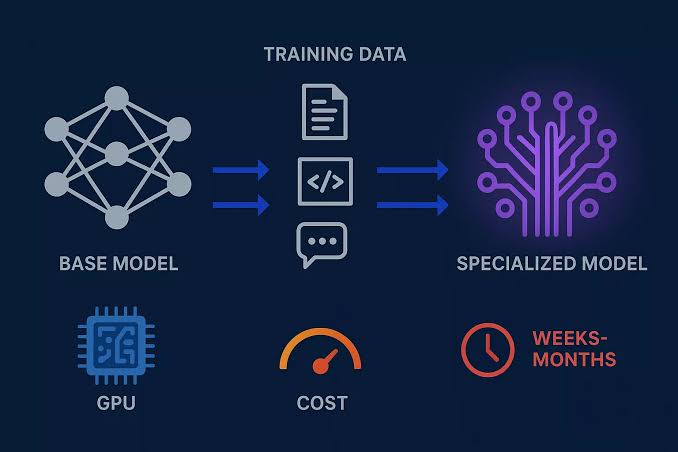
Prompt Engineering vs Fine-Tuning comes down to a simple question first: what can you afford to spend? Fine-tuning jobs for OpenAI’s GPT-3.5 Turbo run $0.008 per 1,000 training tokens, based on standard API pricing updates from 2023.
That fraction of a cent hides a big strategic fork in the road for developers building Intelligent systems. Teams choose between adapting workflows to the model or forcing the model to adapt to workflows. That call shapes infrastructure costs, latency, and how maintainable the system stays over time. Insights from industry deployments show how these approaches play out across enterprise and startup environments. Here’s what the data reveals about the mechanics, economics, and future-proofing of each path.
What defines the difference between Prompt Engineering vs Fine-Tuning?
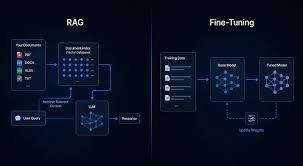
The distinction lies in where the Intelligence resides. Prompt engineering leans on in-context learning, using existing pre-trained model weights without modifying them. Developers write instructions that guide the model through its vast latent space.
This approach shines when tasks need dynamic reasoning or access to fresh information that shifts daily. Fine-tuning works differently. It alters model parameters through additional training on a specific, domain-specific dataset. The model learns a new distribution during the training phase, embedding knowledge permanently into its parameters. That makes fine-tuning ideal for rigid style transfer or repetitive pattern recognition.
Prompt engineering manipulates the input; fine-tuning reshapes the internal representation.
Understanding this mechanical difference clarifies why some teams prefer zero-parameter overhead while others invest in compute-heavy retraining cycles. Once you grasp the core mechanism, the next step involves weighing the economic impact of each method.
Cost Comparison: Prompt Engineering vs Fine-Tuning Economics
Cost structures diverge sharply based on volume and complexity. Prompt engineering usually means higher inference costs, because every interaction burns through a large token budget. OpenAI‘s GPT-4o model supports a context window of up to 128,000 tokens as of early 2024, which allows rich context but drives up API bills for heavy workloads.
Fine-tuning offers a different economic profile. Training fees depend on dataset size, while inference often gets cheaper because prompts are shorter. Hardware constraints can complicate self-hosted fine-tuning efforts. Parameter-Efficient Fine-Tuning methods like LoRA cut the number of trainable parameters by up to 99% compared to full fine-tuning, which makes it feasible for smaller graphics processing unit (GPU) clusters. LoRA democratizes access, sure, but high-volume inference still requires careful budget monitoring. With costs mapped out, the decision shifts toward which method delivers better results for specialized tasks.
Which approach wins for specialized performance?
Performance depends entirely on the nature of the task. For general-purpose queries, conversational flows, or tasks requiring real-time data retrieval, prompt engineering remains the dominant solution. Advanced prompt-following capabilities keep improving fast. Anthropic released Claude 3.5 Sonnet on June 20, 2024, featuring advanced prompt-following capabilities that blur the line between instruction and behavior modification.
When precision is non-negotiable, though, fine-tuning holds the advantage. It forces the model to conform to strict output schemas, which reduces hallucination rates in regulated industries. Open-weight ecosystems also empower direct control. Meta released the Llama 3 open weights model family on April 18, 2024, in 8B and 70B parameter sizes, giving teams the option to fine-tune locally without vendor lock-in. Managed services simplify this further. Google Cloud Vertex AI provides managed infrastructure for tuning Gemini models using custom datasets as of 2024, removing operational friction. Teams must weigh the flexibility of prompts against the rigidity of tuned weights. Now that we’ve covered mechanics, economics, and performance, the final question addresses practical implementation. For more detail, see VentureBeat AI.
When should teams choose Prompt Engineering vs Fine-Tuning?
Prompt engineering suits projects where requirements evolve faster than training pipelines can handle. Startups iterate quickly, so they rarely have time to wait on a retraining cycle.
Adapt the model to your workflow for stability, or adapt your workflow to the model for speed. The right choice hinges on your tolerance for compute overhead versus iteration velocity.
Is prompt engineering better than fine-tuning?
Prompt engineering is better for dynamic tasks requiring real-time information, while fine-tuning excels at enforcing consistent style and schema adherence.
Can I combine both techniques?
Yes, many production systems use lightweight fine-tuning for format compliance alongside prompt engineering for complex reasoning and tool use.
What is the cheapest way to test fine-tuning?
Testing fine-tuning on small datasets via managed platforms like Google Cloud Vertex AI allows validation without upfront infrastructure investment.
Was this article helpful?
Your feedback directly improves future articles on this site.