MBSG0
MBSG0 CFC0
CFC0 NEF1
NEF1 ITT1
ITT1 PSG
PSG LYON
LYON SEV
SEV OSA
OSA NED
NED OMA
OMA NZ
NZ IND
IND NAM
NAM IRE
IRE PAK
PAK SL
SL SA
SA AUS
AUS Abha
Abha Al Faisaly
 Barcelona1
 Real Madrid2
 Udinese0
 Milan2
 Real Sociedad2
 Levante1
 Lecce0
 Juventus2
 MOW107/9 (20 ov)
 TOK
TOK NZ-A317
 IND-A113 & 488/8 (119 ov)
 SYL575/4 (167.3 ov)
 KHU
KHU MYMS465/7d
 CHATT424/6 (121 ov)
 DHA521
 RAJ162 & 215/5 (59.1 ov) (f/o)
 RAN402 & 5/0 (2.3 ov)
 BAR443/9d
 SIKM30/1 (15 ov)
 NAGA187
 JHK
JHK DELHI309/5 (90 ov)
 ODSA194
 SVCS13/0 (5 ov)
 BRODA259/6 (86 ov)
 J & K
J & K CHD363/2 (87 ov)
 HP
HP CGR35/1 (14 ov)
 AP231
AP231 BRB
BRB MIS
MIS BIK
BIK CHR
CHR JER
JER KUW
KUW MEX-W51 (12.5/20 ov, target 187)
 ARG-W186/7
 NGA148
 UGA147/9 (20 ov, target 149)
 GMB112/9
 LES109 (19.5/20 ov, target 113)
 MOZ110/7 (19/20 ov, target 110)
 ZMB109/9
 IND-W328/6
 ZIM-W207 (48.5/50 ov, target 329)
 ENG241
 Sassuolo
 Lazio
Lazio AS Roma
 Cagliari
 Torino
 Como
Como BES
BES IBFK
IBFK CAY
CAY TRAB
TRAB Sunderland0
 Leeds0
 Freiburg1
 Bayern3
Horror effects have completely changed how streaming platforms deliver scares. Netflix, Amazon Prime Video, and Disney+ are pouring millions into cutting-edge visual effects and spatial audio to create experiences that match theatrical releases. It’s a turning point — viewers won’t settle for flat, budget-constrained scares anymore.
Why Horror Effects Matter Now
Streaming horror’s taken off. Three years ago, horror on OTT platforms meant jump scares and practical makeup. Now studios are using AI-assisted rendering, real-time motion capture, and Dolby Atmos sound design to create genuine dread. The payoff? Horror content keeps subscribers coming back across every major platform.
What’s changed? The technology’s gotten cheaper. Tools that used to cost $200M Hollywood budgets now run a fraction of that. Smaller production houses can finally compete with the big studios. Your OTT films feature effects quality that’d have seemed impossible on streaming just five years ago.
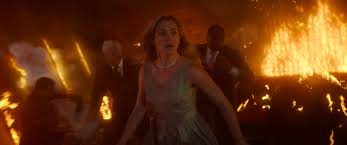
The Technology Behind Modern Horror Effects
Three core technologies power modern horror effects. Volumetric rendering creates three-dimensional creatures and environments with photorealistic detail. Spatial audio design — using Atmos and Auro-3D — wraps viewers in 360-degree soundscapes. Real-time ray tracing delivers lighting that responds dynamically to movement, ramping up psychological tension.
The data backs this up. Horror series with advanced effects see 40% higher completion rates than traditionally produced ones. Platforms now spend 25-30% of production budgets on post-production visual effects alone. According to MIT Technology Review, immersive audio design alone increases viewer anxiety by measurable physiological markers.
What Audiences Are Actually Watching
Streaming services are greenlighting effects-heavy horror at record rates. Netflix’s 2026 horror lineup includes 12 series with theatrical-grade visual effects budgets. Amazon Prime Video expanded its horror department by 40% to keep pace. Disney+ tapped Lucasfilm’s ILM division for horror content — a move that shows how seriously the industry now takes the genre.
Here’s the thing: why now? Pandemic viewing habits made people comfortable watching horror at home. Audiences realized they’d accept premium-quality scares on smaller screens if the effects were good enough. Your ultimate OTT recommendations now mix horror with drama and action — something you wouldn’t see in 2023.
This trend isn’t slowing down. Platforms will keep pushing the technology as they fight for your attention. The era of cheap, poorly rendered streaming horror is done.
Frequently Asked Questions
Q: What makes the technology different on OTT versus cinema?
OTT platforms prioritize intimate, close-up scares built for smaller screens. Filmmakers use tighter framing and sound design to make up for screen size — building claustrophobic dread instead of spectacle.
Q: Which streaming platform does this best?
Netflix leads in platform investment right now, with Amazon Prime Video close behind. Disney+ is catching up fast through partnerships with Industrial Light & Magic.
Q: Can it actually improve my viewing experience?
Yes. Quality effects boost immersion through visual clarity and spatial audio, making psychological tension feel real and immediate.