PSG2
PSG2 LYON0
LYON0 SEV1
SEV1 OSA0
OSA0 NED
NED OMA
OMA NZ
NZ IND
IND NAM
NAM IRE
IRE PAK
PAK SL
SL SA
SA AUS
AUS Abha
Abha Al Faisaly
 AFG
AFG ZIM
ZIM Sassuolo
 Lazio
Lazio MBSG1
MBSG1 CFC0
CFC0 Barcelona1
 Real Madrid2
 Udinese0
 Milan2
 Real Sociedad2
 Levante1
 BRB15/0 (1.4/20 ov, target 148)
 MIS147
 NZ-A317
 IND-A113 & 488/8 (119 ov)
 SYL575/4 (167.3 ov)
 KHU
KHU MYMS465/7d
 CHATT424/6 (121 ov)
 DHA521
 RAJ162 & 215/5 (59.1 ov) (f/o)
 RAN402 & 5/0 (2.3 ov)
 BAR443/9d
 SIKM30/1 (15 ov)
 NAGA187
 JHK
JHK DELHI309/5 (90 ov)
 ODSA194
 SVCS13/0 (5 ov)
 BRODA259/6 (86 ov)
 J & K
J & K CHD363/2 (87 ov)
 HP
HP CGR35/1 (14 ov)
 AP231
AP231 BAN
BAN WI
WI IND-W
IND-W ZIM-W
ZIM-W MEX-W51 (12.5/20 ov, target 187)
 ARG-W186/7
 NGA148
 UGA147/9 (20 ov, target 149)
 MOW107/9
 TOK111/5 (18.4/20 ov, target 108)
 LUL88/3 (9.5/20 ov, target 88)
 SPR87
SPR87 VAG169/4
 AND2
AND2 BUR3
BUR3 BOU1
BOU1 REIM0
REIM0 MON1
MON1 RSFC1
RSFC1 WAL0
WAL0 SAL1
SAL1 TUA1
TUA1 MUS0
MUS0 U. de Chile0
 EVE0
EVE0 AS Roma
 Cagliari
 Torino
 Como
Como CFC
CFC GRE
GRE FLA
FLA CAM
CAM Daejeon
 Vissel Kobe
 Darul Ta'zim
 Port FC
 Lecce0
 Juventus2
 Sunderland0
 Leeds0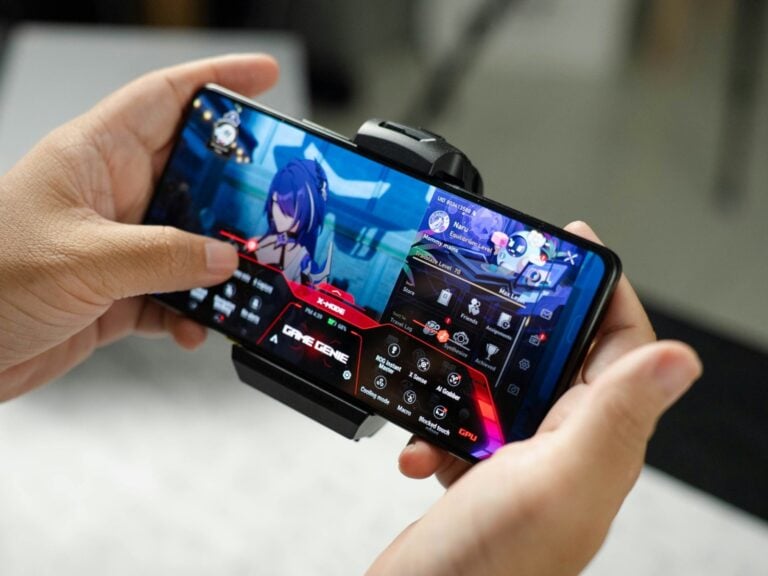
Haptic feedback technology has come a long way from simple phone vibrations. Today’s flagship devices pack precision haptic engines capable of delivering over 200 distinct vibration patterns per second, transforming touchscreen gaming into something genuinely immersive. This is real—not marketing spin—and it’s changing how smartphones deliver gameplay feedback.
📋 In This Article
Here’s What Happened
Early 2026 marked a turning point. Samsung, Apple, and OnePlus all dropped flagship models with next-generation linear actuators at the same time. These aren’t your old rotating motors that created clunky vibrations. Modern haptic systems use electromagnetic actuators that react to game physics instantly.
Fire a weapon in a shooter? You get a sharp, precise pulse. Accelerate in a racing game? The haptic engine ramps up intensity to match your speed. Game studios are now building titles specifically for these capabilities, creating experiences you simply can’t get on older devices.

The Real Impact on Mobile Gaming
Haptic feedback makes you play better. Tactile cues arrive at the same time as visual feedback, so your brain processes information faster and your reaction times improve. Check out our guide to smartphone cooling technology to see how thermal management works alongside haptic systems to keep devices running during long gaming sessions.
Studios like Tencent and Supercell are weaving haptic layers into competitive games. If you’re playing without haptic feedback? You’re at a real disadvantage. This market pressure rivals what we saw with high refresh rate displays.
Technical Specifications and Performance
The latest phones feature dual linear actuators that work independently, letting you feel feedback in different screen zones simultaneously. Response time dropped below 10 milliseconds, keeping pace with your display’s frame rate. Battery drain stays minimal at roughly 2-4% extra power during heavy gaming.
Our article on 3D smartphone parts manufacturing explains how precision engineering makes these compact, efficient actuators possible. Flagship phones with haptic feedback run $899 to $1,299, with mid-range options arriving by Q3 2026.
What Manufacturers Are Saying
Samsung’s VP of Mobile Innovation called haptic feedback “the next sensory frontier for mobile devices.” Apple emphasized how it integrates with their gaming ecosystem. The Verge reported that over 60% of the top 100 gaming apps now support haptic feedback—a clear sign the industry’s behind this shift.
OnePlus positioned haptic feedback as critical for competitive gaming, essentially daring rivals to match their actuator quality.
What’s Next for Haptic Innovation
Haptic feedback’s expanding beyond games. By late 2026, expect it in navigation apps, accessibility features, and productivity tools. Mid-range phones will become the real competition zone, with manufacturers fighting to deliver haptic experiences under $600. Developers are already testing haptic-enhanced notifications and gesture recognition, suggesting this technology will become as standard as the touchscreen.
People Also Ask
Does haptic feedback drain battery quickly?
No. You’re looking at 2-4% extra power during gaming, which is tiny compared to what your display uses.
Can older games use haptic feedback?
Some get haptic updates through patches, but games built from the ground up for haptic feedback feel noticeably better.
Is haptic feedback worth upgrading for?
If you play competitive mobile games regularly, absolutely—you’ll see real reaction time improvements.
Which phones have the best haptic feedback?
Samsung Galaxy S26, iPhone 16 Pro, and OnePlus 14 Pro are currently the leaders in actuator precision and response speed.