When Oliver Glasner arrived at Crystal Palace in February 2024, few could have predicted the extraordinary transformation that would follow. The Eagles were languishing in 15th place after ten defeats in their previous 17 games, hovering perilously close to relegation danger. Fast forward to December 2025, and Crystal Palace sit fifth in the Premier League having just lost their first home match of the season against Manchester City. The question on everyone’s lips: just how high can the Austrian tactician take this club?
Crystal Palace Under Oliver Glasner: The Transformation
| Metric | Pre-Glasner | Under Glasner |
|---|---|---|
| Average League Position | 10th-15th range | 4th-5th (current season) |
| FA Cup Titles | 0 | 1 (2024-25) |
| Community Shield Wins | 0 | 1 (2025) |
| European Competition | Never qualified | Conference League 2025-26 |
| Club Record Points | 49 points | 53 points (2024-25) |
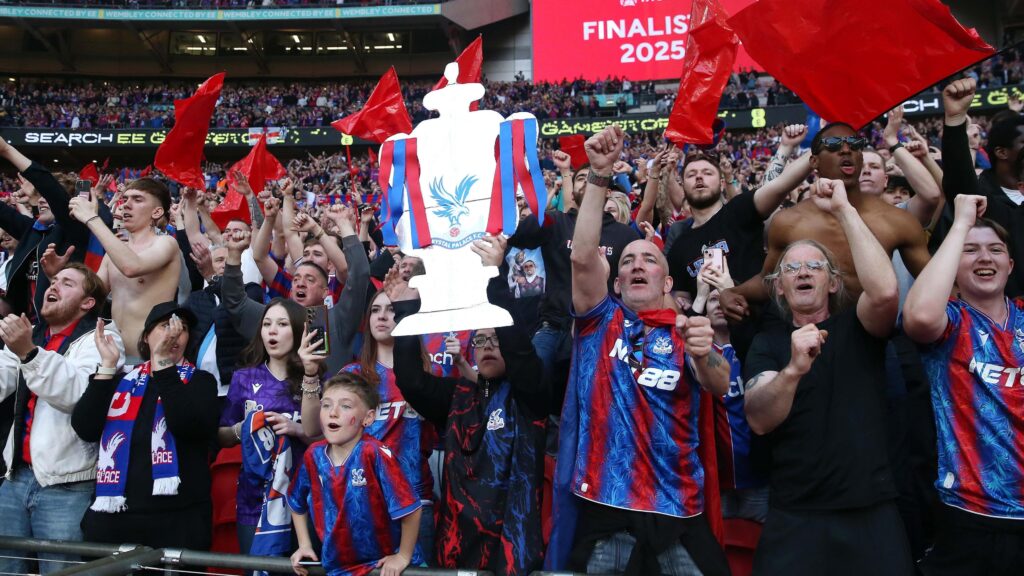
The numbers tell a remarkable story. Glasner has overseen Crystal Palace’s most successful period in their Premier League history, delivering the club’s first-ever major trophy with the FA Cup triumph over Manchester City in May 2025.

That 1-0 victory at Wembley Stadium was followed by a Community Shield success against Liverpool on penalties, marking Palace’s debut in both competitions with silverware.
Tactical Revolution at Selhurst Park
Glasner’s immediate impact upon arrival was tactical clarity. He converted Roy Hodgson’s struggling 4-2-3-1 formation into his trademark 3-4-2-1 system, bringing organization and identity to a team that desperately needed both. The transformation was instant – Palace’s final seven games of the 2023-24 season produced six wins and a draw, including memorable victories at Anfield against Liverpool and a 5-0 demolition of Aston Villa on the final day.
The Austrian’s tactical approach centers on defensive solidity combined with rapid transitions. Palace don’t dominate possession – averaging just 43.5% this season, fourth lowest in the Premier League – but they’re devastatingly effective when they have the ball. Their 3-4-2-1 shape uses wing-backs to provide width while maintaining defensive security, with Daniel Munoz and Tyrick Mitchell becoming crucial to both attack and defense.
Since Glasner’s first game, Palace have posted the fifth-best defensive record in the Premier League. Only three sides have restricted opponents to fewer shots on target or kept more clean sheets. This defensive excellence stems from consistency of selection – Glasner has used the same back three personnel in 93.3% of matches, with Marc Guehi, Maxence Lacroix, and their partners forming an impenetrable barrier.
Oliver Glasner’s Key Tactical Principles
| Aspect | Implementation |
|---|---|
| Formation | 3-4-2-1 (occasionally 4-2-3-1) |
| Possession Style | Direct, transitional (43.5% average possession) |
| Defensive Approach | Compact blocks, aggressive duelling |
| Wing-Back Usage | High attacking involvement, disciplined recovery |
| Set Pieces | Major source of goals (16 in 2024-25 vs 5 pre-Glasner) |
Player Development and Recruitment
One of Glasner’s most impressive achievements has been maximizing individual talent. Jean-Philippe Mateta’s transformation epitomizes this success. The French striker scored just 11 goals combined under Roy Hodgson and Patrick Vieira in 79 appearances. Under Glasner, he scored 13 league goals in his first 13 games and has become one of the Premier League’s most lethal forwards, earning international honours with France.

The recruitment has been astute despite operating with one of the biggest net transfer profits in the Premier League. While Michael Olise departed for Bayern Munich for £50.8 million, Palace smartly invested in players like Daniel Munoz and Maxence Lacroix, who have proven themselves capable of competing at the highest level. Lacroix, who previously worked with Glasner at Wolfsburg, has vindicated the decision to sell Joachim Andersen to Fulham.
Palace’s ability to develop and sell talent hasn’t hindered progress. Despite operating with significantly less spending power than their top-half rivals, they’ve maintained competitive performances. According to Sky Sports’ expected goals formula, Palace’s underlying performance data suggests they should be even higher than fifth – incredibly topping the xG rankings.
Crystal Palace 2025-26 Season Performance
| Competition | Status | Achievement |
|---|---|---|
| Premier League | 5th place | Best start in recent history |
| Conference League | League phase | First European campaign |
| EFL Cup | Quarter-finals | Lost to Arsenal |
| FA Cup | Third round | Upcoming vs Macclesfield |
The Squad Depth Challenge
However, significant challenges loom. Palace are currently navigating a gruelling schedule of 15 matches in just 49 days between November and January. No Premier League team has played as many as Palace’s 25 matches across all competitions this season, with the club featuring the top four players for minutes played across all competitions.
This intensity tests squad depth that remains Palace’s Achilles heel. Glasner has made just 14 changes to his starting XI this season – the lowest of any Premier League club. While consistency has bred success, the inability to rotate could prove their downfall. Injuries to Daniel Munoz and the likely AFCON departure of Ismaila Sarr will further strain resources.
Glasner has acknowledged the challenge, suggesting he will field weakened teams in certain Conference League fixtures to manage player fatigue. The Austrian repeatedly emphasizes the need to increase squad depth to sustain their remarkable trajectory.
Looking Ahead: European Dreams and Beyond
Crystal Palace chairman Steve Parish recently declared this the best time to be a Palace fan, stating the club is “in the best place it’s ever been in every single metric.” The evidence supports his enthusiasm. Prior to this campaign, Palace had never finished higher than 10th in the Premier League. Their current position in the Champions League qualification places is genuinely unprecedented.
Glasner himself told The Athletic that his players “aren’t happy to be 15th anymore” and have “tasted the sweet honey” of success. The transformation in mentality matches the tactical revolution – Palace now expect to compete for European football rather than merely survive relegation battles.
The Austrian’s tactical acumen, recruitment strategy, and ability to maximize player potential have created something special at Selhurst Park. With the club’s first major trophy secured, European football being contested, and a genuine challenge for top-six established, Palace have already flown higher under Glasner than anyone dared imagine.
Whether they can sustain this altitude through squad depth limitations and fixture congestion remains the season’s defining question. But one thing is certain: Oliver Glasner has fundamentally changed what’s possible for Crystal Palace, and the Eagles aren’t planning to come back down to earth anytime soon.
Read More: Real Madrid to Be Without Brahim Diaz for Six Matches at Least