MIL2
 INT1
 TRY1
 MNS0
 AVL0
 FUL0
 BAR1
 ALA0
 SKC1
 DAL1
 STL0
 SD1
 Coritiba1
 Vitória0
 AJA1
 AZ0
 NZ
 IND
 NAM
 IRE
 Como
 Venezia
 Mumbai City
 SC Delhi
 Getafe
 Sevilla
 Frosinone
 Torino
 Lazio
 Cagliari
 Strasbourg
 Auxerre
 HIL2
 FAT0
 TOT2
 CRY0
 BET2
 MCF1
 MUN2
 DOR2
 JER
 QAT
 KENYA
 PNG
 TAS427
 NSW174/8 (60 ov)
 NZ-A
 IND-A291/7 (88 ov)
 QLD
 VIC282/9 (84 ov)
 DHA
 BAR
 SYL218
 CHATT64/1 (15 ov)
 MYMS
 KHU280/8 (82 ov)
 RAN
 RAJ155/6 (59 ov)
 AFG
 ZIM
 NED
 OMA
 ST-W
 BH-W
 SS-W
 HH-W
 MS-W
 PS-W
 OTAGO
 CD
 PAK331/7 (48.3/50 ov, target 326)
 SL325/8
 UAE266/5 (49/50 ov, target 264)
 MR-W136/6
 AS-W185/2
 WAR133/6 (16.3/20 ov, target 131)
 WPR130/8
 MOW171/8
 VAG101 (18.4/20 ov, target 172)
 CAM2
 GAE0
 AND0
 KVCW0
 WAA0
 USG0
 Inter Kashi
 GOA
 Union Berlin
 Cologne
 UDI2
 ROMA5
 RAY3
 CEL0
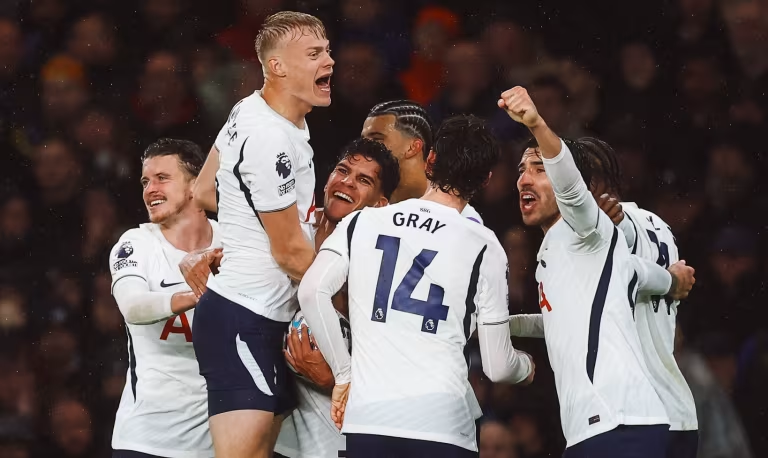
Strictly speaking, Tottenham only collected three points at Chelsea on last Saturday. Those points gave them a welcome lift in the Premier League table. Yet the result felt like far more than a routine win.
Part of that is history. Spurs had won just once in 34 previous league trips to Chelsea, and this was their first clean-sheet victory at Stamford Bridge in any competition since December 1986. Many supporters have witnessed only one other success there, in April 2018 under Mauricio Pochettino, when the team was a genuine force.
The context sharpened the mood. Tottenham arrived in the relegation zone with a single win, over newly promoted Coventry City, following consecutive 17th-place finishes and without some key players. Few predicted what followed, and fans are entitled to savour it.
A Possible Turning Point
The deeper significance lies in the hope that this result and performance can reset a club that has drifted badly for two years. The win lifted Spurs to 12th, before Sunday’s fixtures pushed them back to 14th.
This summer, Tottenham invested heavily in Roberto De Zerbi’s vision, rebuilding the squad at huge expense. Early results suggested a slow bedding-in period. They did not score a league goal until the 86th minute of their fifth game, by which point Aston Villa led 3-0.
Since the international break, though, there has been progress. They drew 1-1 at Manchester United, deserving more, and then beat Coventry. That win was badly needed, but all three goals came from outside the box and the team generated only 0.86 expected goals, so it was hardly convincing.
At Chelsea, in a far tougher setting, they delivered when it counted. Spurs held 68.9% possession and, while clear chances were scarce, they reached dangerous areas so often that openings came. The goals were a freak Mike Penders own goal and a superb, probably unrepeatable solo strike from Mathys Tel after a 45-metre carry. Their 0.74 xG understated how much they controlled the game.
Fernandes Finds His Role
It was no accident that this was the first match in which £85 million signing Mateus Fernandes started at the base of midfield. He is exactly the press-resistant player De Zerbi’s style demands, but injuries, match sharpness and the recent birth of his first child meant he had only played in advanced roles, even briefly out wide.
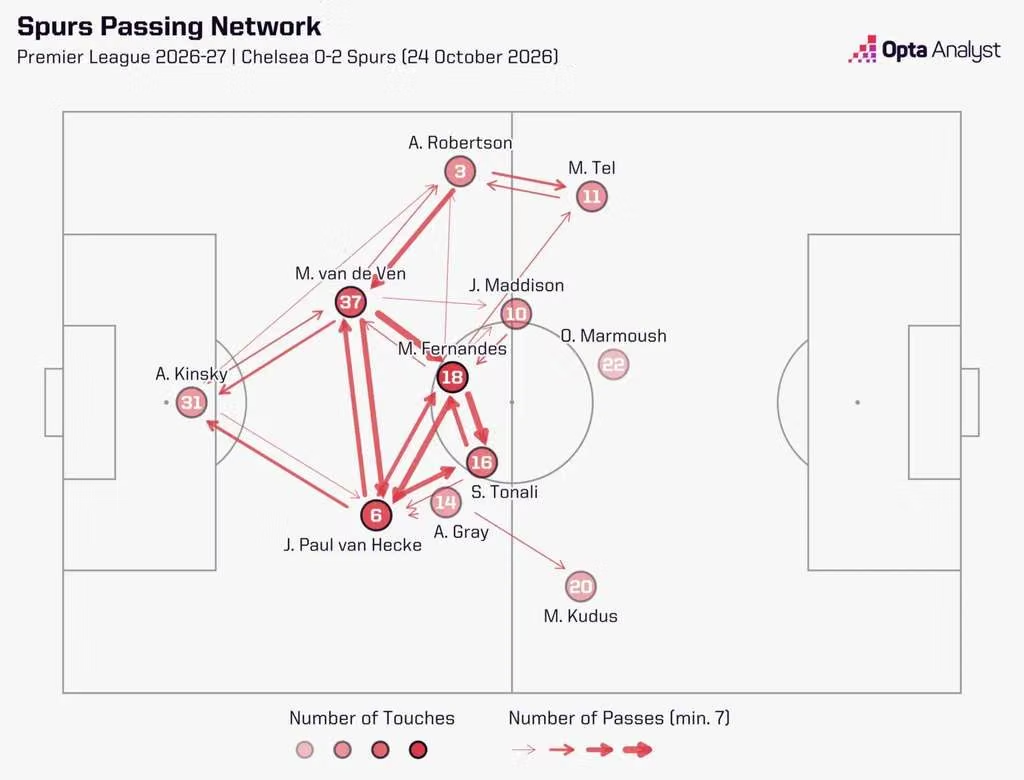
At Stamford Bridge, everything flowed through him, and he showed that a deeper position suits him best. He partnered another expensive summer arrival, Sandro Tonali, as Spurs’ new midfield pairing started together for the first time.
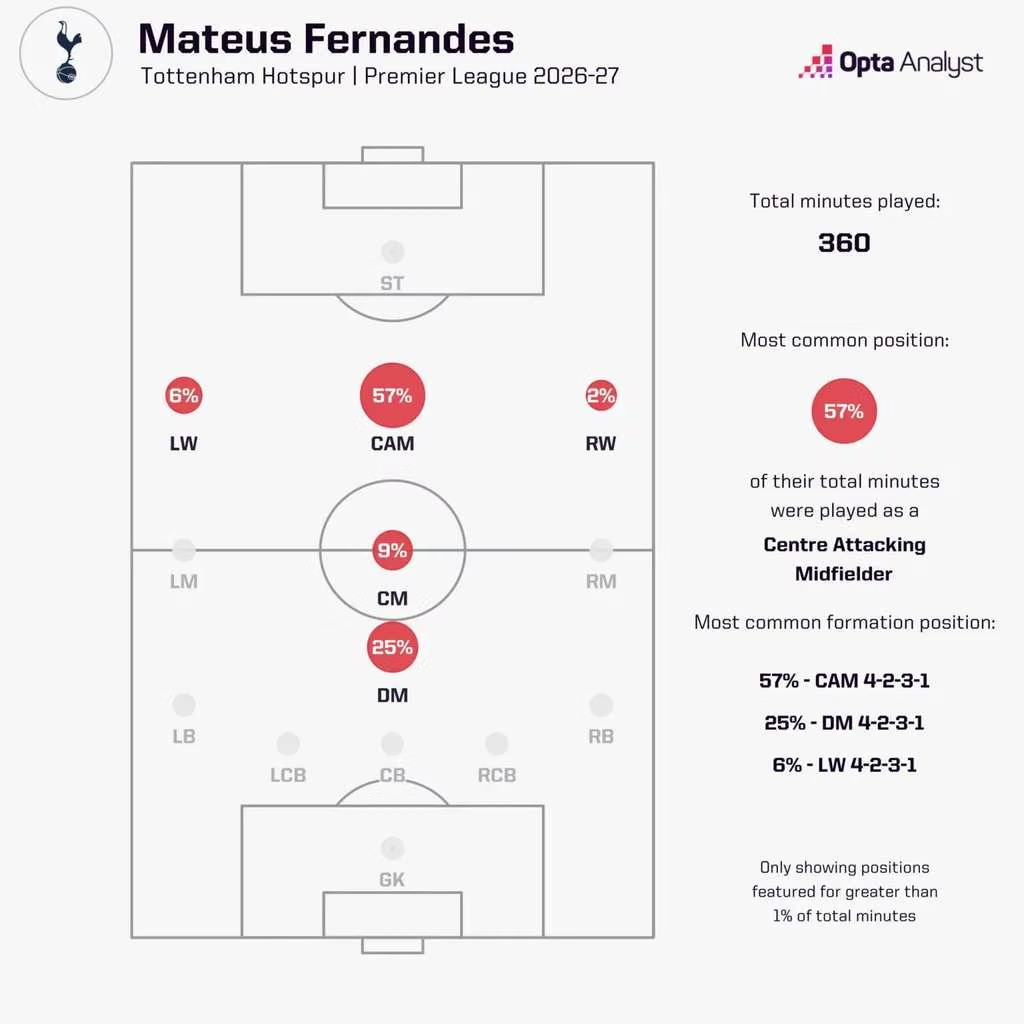
His numbers were extraordinary:
- 124 touches, more than any player has recorded away from home in a league game this season.
- Five tackles, the most in the match.
- 92.2% passing accuracy from 102 passes.
- 89 touches under pressure, the fifth highest in any league game this term.
- 48 touches under high pressure (an opponent within two metres) in his own half, the most by anyone in the competition.
- 91.2% pass completion while under pressure.
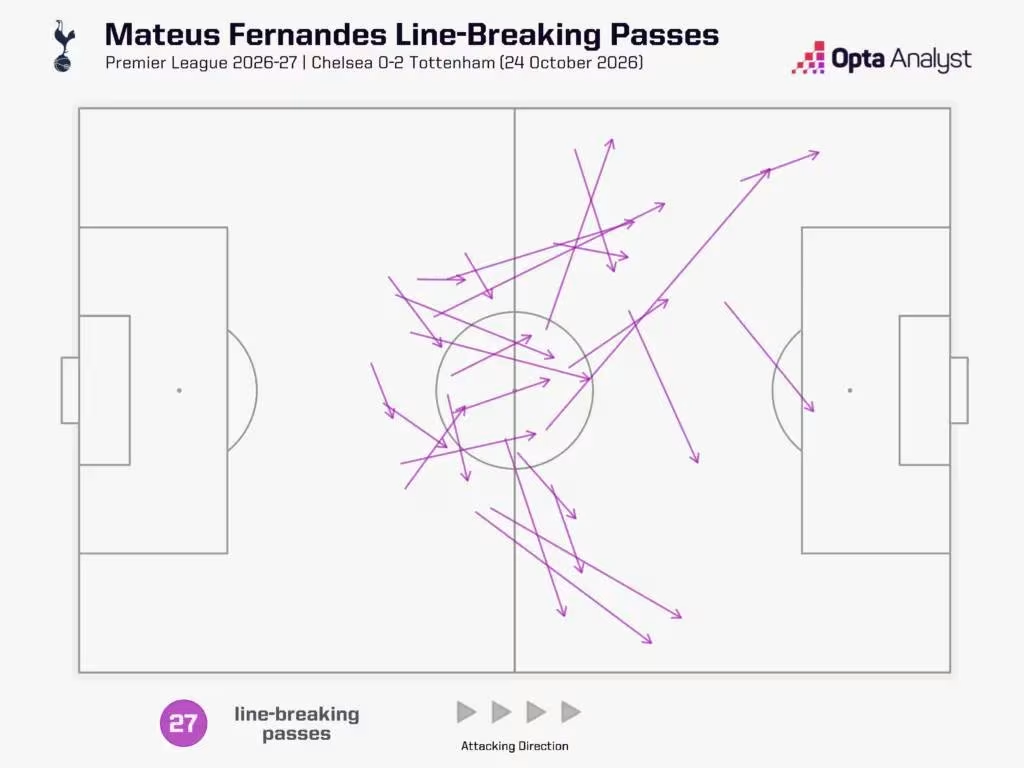
He also moved the ball forward. His 27 line-breaking passes were the 12th most in a league game this season, and 21 of them came under pressure, a figure nobody has bettered all campaign. If Spurs needed a key to unlock De Zerbi’s ideas, Fernandes may be it. He allowed them to bait Chelsea’s press, play through it and move the ball from back to front reliably, something they have not done for a long time.

Work Remains in the Final Third
Once in attacking areas, the picture was less rosy. Their 58 final-third entries for only 0.74 xG is among the poorest ratios by any team in a league game this season. Still, the regularity with which they arrived in advantageous positions is encouraging.
Nobody in the squad has scored more than one league goal. Spurs need at least one of Dominic Solanke, Omar Marmoush, Sávio, Mohammed Kudus or Tel to find a steady scoring touch.
Even so, things are trending upward. “We are improving a lot,” De Zerbi said afterwards, pointing to the group’s mentality, relationships and quality on the pitch.
A Kind Schedule Awaits
The timing helps. Based on the average Opta Power Rating of their next five opponents, Tottenham have the easiest run in the Premier League: Crystal Palace (win), Leeds (away), Ipswich (home), Sunderland (away) and Fulham (home). Three of those sides sit below them, one is a point ahead and another two points ahead. After Chelsea, hoping to win all five is not unreasonable.
Five more victories would create a seven-game winning streak, something only Aston Villa managed last season, so that is unlikely. But three wins from five looks entirely realistic and would set them up well.
Spurs are three points above the relegation zone and not yet safe, but they are also just two points from the top six. They have good reason to look up rather than over their shoulders.
The Danger Ahead
That favourable stretch is followed by the toughest. From 4 December, Spurs face the hardest fixtures in the division, including Arsenal, Liverpool, Brighton and Bournemouth, before a trip to the Etihad to meet Manchester City. They could struggle to pick up points against any of those teams, so they need a cushion built beforehand.
After a performance like this, it is time to think about what Tottenham might achieve rather than how to escape another relegation fight. But it was one win, and things can unravel quickly. At the very least, Spurs have shown they have foundations to build on, and a side capable of doing what De Zerbi wants.
Read More: Liverpool vs Arsenal: Five Storylines That Could Shape a Heavyweight Anfield Showdown
Also Read: Big Ron Takes Anfield by Storm: Why Ronald Araújo Is Becoming a Loan Star for Liverpool
FAQs
Why was Tottenham's win at Chelsea so significant?
It was their first clean-sheet win at Stamford Bridge in any competition since December 1986.
Who was Tottenham's best player against Chelsea?
Mateus Fernandes, who made 124 touches and completed 92.2% of his passes in a deeper midfield role.
How did Tottenham score at Chelsea?
A Mike Penders own goal and a long solo run and finish from Mathys Tel.