NED
 OMA
 NAM316/7
 IRE144/5 (28.1/50 ov, target 317)
 SA221/4 (53 ov)
 AUS
 ABH0
 ALF0
 BEI1
 JHM1
 RCH0
 KRE0
 AFG
 ZIM
 SAS
 LAZ
 ROMA
 CAG
 TOR
 COMO
 BAN
 WI
 IND-W
 ZIM-W
 GOA
 SC Delhi
 Milan
 Bologna
 PAK110
 SL114/2 (18.1/50 ov, target 111)
 NZ198/3
 IND199/4 (13.2/20 ov, target 199)
 Sevilla2
 Osasuna0
 PSG2
 Lyon0
 JER
 KUW
 PNG
 QAT
 JAB2/1 (1.2/20 ov, target 133)
 KAY132/9
 SIKM184
 NAGA187 & 46/4 (34 ov)
 JHK131/4 (47 ov)
 DELHI515/5d
 ODSA194
 SVCS13/0 (5 ov)
 BRODA616
 J & K6/0 (4 ov)
 CHD685/5d
 HP49/0 (14 ov)
 CGR216/8 (95 ov)
 AP231
 AUCK
 CANT
 CD
 ND
 DEN
 KENYA
 POA
 SPR
 BIK149 (19.3/20 ov, target 158)
 CHR157/3
 BRB149/5 (16.2/20 ov, target 148)
 MIS147
 MOW107/9
 TOK111/5 (18.4/20 ov, target 108)
 LUL88/3 (9.5/20 ov, target 88)
 Parma
 Udinese
 Venezia
 Inter Milan
 Genoa
 Juventus
 Mohun Bagan1
 Chennaiyin0
 DHC0
 VIS1
 JDT3
 PORT0
 KYO5
 NEW2

China flips the script this week, with Chinese automotive suppliers now pitching “reverse joint ventures” to legacy Western automakers—a proposal that would have sounded absurd to an auto executive just two decades ago.
As reported by The Drive on Thursday, August 20, 2026, Chinese automotive suppliers are offering to help Western automakers build cars faster in their home markets. The reversal is stark: the country once criticized for copying Western designs now sells its manufacturing speed back to the original source.
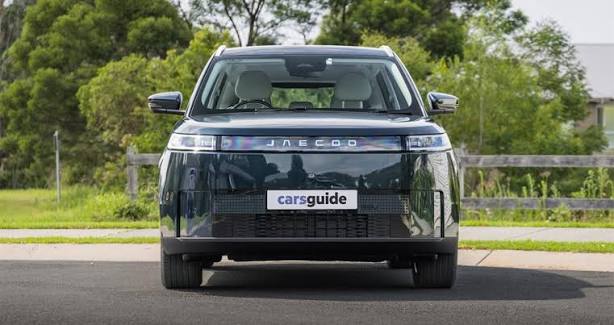
The Reverse Joint Venture Model Explained
Geely Senior Vice President Victor Yang Xueliang stood alongside Ford Europe President Jim Baumbick at a Ford plant outside Valencia, Spain on July 23, announcing joint vehicle development for the European market.
This is the template for what Geely calls “reverse joint ventures”—a term that inverts decades of conventional automotive partnerships. The pitch is straightforward. Chinese suppliers bring their development speed, supply chain flexibility, and engineering workforce to help Western brands compress their typical 5-7 year vehicle development cycles.
For legacy automakers struggling to match Chinese EV makers’ pace, this offers a shortcut that doesn’t require abandoning their own brand identity.
What Western Automakers Gain
The appeal lies in speed. Chinese manufacturers have demonstrated the ability to move from concept to production in roughly half the time of traditional Western automakers, leveraging aggressive supplier networks and parallel engineering processes. For Ford and others facing intense competition from BYD and Geely’s own brands, the offer carries genuine strategic weight.
| Partnership Element | Traditional JV | Geely’s Reverse JV |
|---|---|---|
| Technology Flow | Western to Chinese | Chinese to Western |
| Development Location | China | Western home markets |
| Primary Workforce | Chinese engineers | Geely staff deployed abroad |
| Speed Advantage | Moderate | Reportedly faster cycles |
| Brand Control | Western leads | Shared development |
Context: Why This Matters Now
The timing is no accident. Western automakers face mounting pressure to electrify their lineups while Chinese EV makers expand aggressively into Europe, Southeast Asia, and Latin America.
The European Union’s tariff walls have slowed Chinese vehicle imports, but they haven’t stopped Chinese suppliers from partnering with local manufacturers instead. This is also a strategic pivot for Geely.
Rather than fighting trade barriers head-on, the company positions itself as an indispensable partner—embedding its technology and expertise directly into Western supply chains. It’s a softer entry strategy, and one that’s harder for regulators to block than finished vehicle imports.
The historical irony is hard to miss. A Chinese executive time-traveling from 2005 would find this news nearly incomprehensible. Back then, the flow of technology ran strictly one way: Western joint ventures brought engineering expertise to China in exchange for market access.
Today, the direction has reversed, and the leverage has shifted with it.
What’s Next For Global Automakers
The Ford-Geely partnership in Valencia is just one data point, but it signals a broader trend. Expect more Chinese suppliers to offer similar “reverse JV” deals to European and North American automakers over the next 12-24 months, particularly for EV platforms and battery integration. For Western automakers, the calculus is uncomfortable but clear.
Accepting Chinese help accelerates their transition and reduces development costs, but it also deepens their dependence on a geopolitical rival. Rejecting the offer risks falling further behind on development speed—a gap that could prove fatal in a market where Chinese EVs already dominate the value segment. The real question isn’t whether this model works. It’s whether Western regulators and consumers will accept Chinese-built technology wearing a domestic badge. The industry’s answer to that question will shape the next decade of global automotive competition. The takeaway: China’s offer to help Western automakers build faster at home isn’t charity—it’s a calculated strategy to embed Chinese technology into global supply chains, and it’s already happening in Spain. For more detail, see Roadshow by CNET.
Related Articles
FAQs
What is a reverse joint venture?
A reverse joint venture reverses the traditional model where Western companies bring technology to China, instead having Chinese suppliers provide technology and staff to help Western automakers build vehicles in their own markets. Which companies are involved in this deal? Geely and Ford have announced joint vehicle development for Europe at a Ford plant near Valencia, Spain, with Geely providing its development capabilities and workforce.
Why would Western automakers accept Chinese help? Chinese manufacturers develop vehicles significantly faster than legacy Western automakers, and accepting help compresses development timelines while reducing costs—critical advantages in the competitive EV market. Is this happening outside Europe? The Ford-Geely partnership is in Europe, but Chinese suppliers are reportedly exploring similar arrangements globally as trade barriers push them toward partnership models instead of direct exports. Could this threaten Western automotive jobs? The model actually creates local jobs by keeping production in Western home markets, though it shifts engineering and technology control toward Chinese partners. Stay tuned for more on china flips.
Was this article helpful?
Your feedback directly improves future articles on this site.