UDI0
 MIL2
 BAR0
 RMA1
 SCP0
 ACV1
 Mohun Bagan
 Chennaiyin
 PSG
 Lyon
 Sevilla
 Osasuna
 NED
 OMA
 NZ
 IND
 NAM
 IRE
 PAK
 SL
 SA
 AUS
 RSO2
 LEV1
 LEC0
 JUV2
 SUN0
 LEE0
 SCF1
 MUN3
 LIMWn
 NW-W
 NCWmn
 FsWm
 NWEST22/3 (3.1/20 ov, target 181)
 NCAPE180/3
 BOL137/9 (20 ov)
 TITNS137/8
 NZ-A317
 IND-A113 & 106/2 (36 ov)
 SYL280/2 (84 ov)
 KHU
 MYMS465/7d
 CHATT134/2 (40 ov)
 DHA521
 RAJ103/6 (26 ov)
 RAN402
 BAR179/3 (56.1 ov)
 BRB
 MOW
 LUL
 SPR
 TOK
 MEX-W51 (12.5/20 ov, target 187)
 ARG-W186/7
 NGA148
 UGA147/9 (20 ov, target 149)
 GMB112/9
 LES109 (19.5/20 ov, target 113)
 MOZ110/7 (19/20 ov, target 110)
 ZMB109/9
 IND-W328/6
 ZIM-W207 (48.5/50 ov, target 329)
 ENG241
 LAFC
 LA
 Neftchi Fergana
 Al Ittihad
 Besiktas
 Istanbul BB
 Caykur Rizespor
 Trabzonspor
 Al Ahli
 Al-Gharafa
 AUX1
 MNS1
 ANG0
 LOR0

Ford’s planned end to China-built Lincoln production for the U.S. by 2030 is the kind of supply-chain reset that can reorder dealership inventories for years, not months. The announcement—reported as part of Ford’s broader global restructuring—centres on Lincoln models that are currently made in China joint ventures and then exported to American buyers.
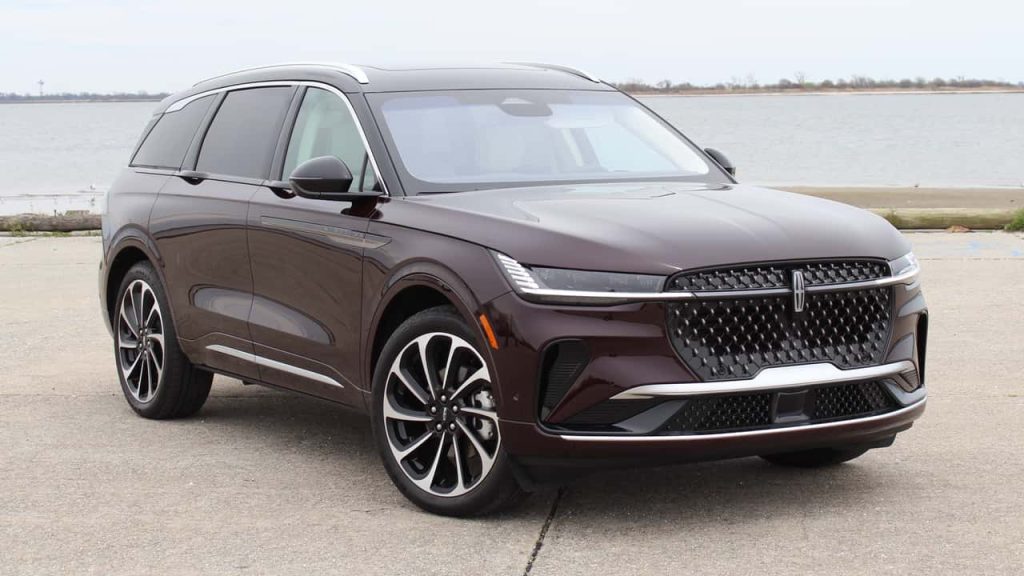
What changes first: Ford’s China-built Lincoln exit, 2030 target, U.S. impact
Ford has announced plans to end the production of China-built Lincoln vehicles for the United States market by the year 2030, according to reporting on the move. That matters because the Lincoln lineup sold in the U.S. has included vehicles tied to China-based manufacturing, meaning the “where it’s built” question is now becoming a “where it is built instead” question for both Ford and Lincoln retailers.
This is not just a branding or logistics tweak. It directly affects the manufacturing footprint and allocation planning across international markets—exactly the kind of operational lever Ford CEO Jim Farley has discussed as part of improving global profitability and streamlining production decisions. For U.S. buyers, the near-term effect is availability and pricing stability; for dealers, it’s what they stock, when they order, and how they plan trade-ins.
The “four-year window” problem Ford and China partners must solve
One reason this deadline is already shaping strategy: Ford and its Chinese manufacturing partners are given a window—reported as roughly four years—to adjust supply chains and vehicle allocations. Even if the exact phasing details are still being worked through, dealerships typically can’t wait for the last minute; inventory cycles, finance offers, and marketing plans are built on predictable supply.
That creates a practical conflict between two timelines. The corporate timeline aims for a profitable, rational production footprint; the retail timeline requires smooth handoffs between model sources. If Ford transitions too quickly, it risks shortfalls during reorder periods. If it moves too slowly, it risks carrying inefficiencies longer than necessary.
How joint-venture exports turn into a U.S. planning headache
The shift targets China-produced Lincoln vehicles that are exported to the U.S. including models built within joint ventures in China such as the Nautilus. That detail matters because joint-venture production tends to be designed for economies of scale—volumes, sourcing of components, and production schedules—across multiple markets.
Here’s the thing: when exports are reduced, the downstream ripple doesn’t stop at vehicles. It touches supplier tooling schedules, parts logistics, and even sub-assemblies sourced specifically for the export specification. Lincoln dealers will then need to pivot their future inventory planning as reliance on China-sourced luxury SUVs phases out.
What dealership strategy looks like when “built in China” is fading
The U.S. Lincoln dealer network will have to treat the transition as an inventory and forecasting exercise, not a marketing storyline. In practical terms, dealers will want clarity on:
- Which trims and variants will be available during the transition years
- What lead times will feel like as production sourcing changes
- How they’ll manage customer expectations for “the same car” when manufacturing origins shift
That’s also where consumer confidence comes in. Buyers often anchor on the spec sheet, but dealers live on availability. If certain configurations become harder to procure, retail demand could shift to whatever is easiest to source—whether that’s another Lincoln model or different trim levels.
Breakdown table: China-built Lincoln models vs. U.S. transition needs
| Decision driver | What’s at stake for U.S. Lincoln | Example implicated |
|---|---|---|
| 2030 end of China-built production for the U.S. | Future inventory continuity | China-built export vehicles |
| Joint-venture export supply | Component schedules and production runs | Lincoln Nautilus (China JV) |
| Reported ~four-year adjustment window | Reordering, lead times, and dealer planning | Transition phasing operations |
Ford’s wider restructuring goal: profitability through footprint changes
CEO Jim Farley’s broader restructuring goals are the backdrop to this decision. The logic is straightforward: Ford wants to optimize profitability and rationalize manufacturing footprints across international markets. In that context, ending China-built Lincoln production for the U.S. by 2030 reads like part of a disciplined “source where it makes the most economic sense” strategy.
The protagonist in this story is Ford’s planning apparatus: corporate leadership setting the endpoint and operational teams figuring out how to re-allocate output without damaging retail stability. The conflict is the gap between what global restructuring requires and what dealership networks need on the ground. The resolution—still in progress—will show up in the U.S. through model availability, order lead times, and how quickly Lincoln can present a consistent “next chapter” product flow.
What Indian and global buyers should watch next
For global automakers watching this move, Ford’s Lincoln pivot is a reminder that “built in” is now a business variable, not just a marketing line. For Indian and overseas buyers, it also raises an export-supply question: how will automakers retool production plans to match changing trade flows, costs, and regulatory expectations?
While the broad direction is clear, the exact execution—what happens model-by-model, and how quickly production origin changes—will determine whether the transition feels seamless or disruptive in showrooms.
The takeaway: Ford’s 2030 China-built Lincoln exit is already forcing the U.S. retail network to re-plan, and the winning dealers will be the ones with the clearest transition roadmap.
Related Articles
- Volvo Electric Heavy Trucks — Built in Queensland for Australia
- Ford Pitched $40,000 Mustang Sedan and $25,000 SUV to Dealers
- Ford Fathom Electric Pickup 2026: Speculations & Musings
FAQs
Why is Ford ending China-built Lincoln vehicles for the U.S. by 2030?
Ford announced plans to end China-built Lincoln production for the United States market by 2030, in line with broader global restructuring objectives aimed at optimizing profitability and manufacturing footprints, as outlined by CEO Jim Farley.
Which Lincoln model is tied to China-built export supply?
The shift impacts Lincoln vehicles manufactured in China joint ventures that are exported to American buyers; the Lincoln Nautilus is specifically cited in connection with this export pattern.
What happens to U.S. Lincoln dealerships during the transition?
Dealers will need to pivot inventory planning as reliance on China-sourced luxury SUVs phases out, since reorder timing and available variants depend on where production is ultimately allocated.
Was this article helpful?
Your feedback directly improves future articles on this site.