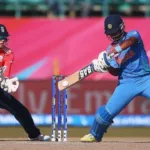
In a World Cup featuring many important contributions from diaspora players, the round-of-16 match between Canada and Morocco carries another uniquely layered immigrant story — one that connects the two nations through a goalkeeper who could have played for either of them.
Morocco’s Yassine Bounou — the penalty shootout hero in Monday’s dramatic victory over the Netherlands — was born in Montreal in 1991, where his father was working as a university physics professor. The family returned to Casablanca when Bounou was three years old. Two decades later, his country of birth came calling.
Canada’s then-national team coach Benito Floro, appointed in 2013, got in touch with the goalkeeper personally. He wanted Bounou to represent Canada.
Bounou had already made his Morocco debut by then — in August 2013, just weeks after Floro was appointed. He had grown up in Morocco, worked through their underage teams and played senior games for the country where he was raised. The conversation with Floro was flattering. The decision, however, was never really in doubt.
“Benito Floro asked me to come play for him,” Bounou told Sevilla’s TV channel in 2022. “But I’d grown up in Morocco, played for their underage teams, and even some senior games. It was always my dream to play for them.”
That dream has taken him to 94 appearances for Morocco, two encounters with Canada in competitive football, and now, a World Cup round-of-16 match in Houston against the nation that asked him to wear their shirt.
A Childhood Shaped by Two Worlds
Bounou’s upbringing produced the adaptability and quiet resilience that has defined his career. His family were relatively comfortable financially, but he grew up playing football with neighbouring kids in a modest part of Casablanca.
“We played in a car park,” he told El País in 2019. “We used trash cans for one goal. As there was no crossbar, you were only allowed to shoot side-footed. The other goal was painted on the wall. You could shoot into that one as hard as you liked.”
His childhood also included regular visits to Zaragoza in Spain, where family members ran market stalls selling goods produced in Morocco. Those early experiences of moving between cultures — Casablanca and Spain, childhood poverty and professional aspiration — gave Bounou a perspective on integration that he later reflected on directly.

“Maybe being Canadian helped me to fit into European society,” he said. “I did not stay shut up at home, which often happens with African players who do not speak the language.”
He joined Wydad Casablanca’s youth academy and climbed quickly. By 20, he was keeping goal for Wydad in an African Champions League final. At 17, he spent time at Nice in France but could not settle and returned to Morocco. When Benito Floro was managing Wydad in 2012 — the same coach who would later try to recruit him for Canada — Bounou’s move to Atlético Madrid was arranged.
He never played a first-team game for Atlético. An inconsistent loan spell at second-division Real Zaragoza followed. The career was not yet going where his talent suggested it would.
The Path to the Top: Girona, Sevilla and Silence
The turning point came in 2016 when Bounou joined Girona. Helping them win promotion to La Liga a year later was his breakthrough moment in Spanish football. He established himself as a reliable first-division goalkeeper, caught the attention of Sevilla, and moved there in 2019.
At Sevilla, he again had to wait. His opportunity arrived during the Covid-affected stages of the 2019-20 Europa League — a condensed mini-tournament of single-leg knockout ties. He saved a penalty in a 1-0 quarter-final win over Wolverhampton Wanderers, starred in the semi-final against Manchester United, and kept a clean sheet in the final victory over Internazionale.
The recognition grew from there. In 2021-22, he was named La Liga’s best goalkeeper — ahead of Real Madrid’s Thibaut Courtois, Marc-André ter Stegen of Barcelona and Atlético’s Jan Oblak. The company he was keeping, and surpassing, indicated where he now stood in the European game.
Bounou’s Career Timeline
| Period | Club/Country | Key Achievement |
|---|---|---|
| Up to 2011 | Wydad Casablanca | African Champions League final, age 20 |
| 2012-16 | Atlético Madrid / Zaragoza (loan) | Never played for Atlético first team |
| 2016-17 | Girona | Won promotion to La Liga |
| 2019-23 | Sevilla | Europa League winner; La Liga best GK 2021-22 |
| 2022 | 2022 World Cup | Morocco reach semi-finals; Bounou penalty saviour |
| 2023-present | Al Hilal (Saudi Arabia) | €21m transfer; 5 trophies in 3 seasons |
Six months after the 2022 World Cup came another penalty-shootout success — two decisive saves as Sevilla beat Roma in the Europa League final decided by spot kicks.
His final game for Sevilla was the 2023 UEFA Super Cup against Manchester City. The club’s financial difficulties meant they needed to sell a 32-year-old at peak value. Real Madrid and Bayern Munich showed interest. The biggest offer came from Al Hilal in Saudi Arabia — €21 million. He accepted.
He shared a presentation event attended by 60,000 fans with another new signing: Neymar. His teammates at Al Hilal have since included Rúben Neves, Kalidou Koulibaly, Darwin Núnez and Salem Al-Dawsari. Three seasons in Riyadh have brought five trophies.
The 2022 World Cup: Success and Suffering
Qatar 2022 was the moment Morocco became Africa’s greatest-ever World Cup story and Bounou became a global name. Yet behind the historic semi-final appearance was a personal experience that was more complicated than the celebrations suggested.
In Morocco’s first four group and knockout matches, the only time Bounou conceded was an Aguerd own goal late in the group-stage win over Canada. Against Spain in the round of 16, he saved two of three penalties he faced — Morocco won on shootout after a 0-0 draw. Against Portugal in the quarter-finals, he kept another clean sheet in a 1-0 victory.
But Bounou has been candid about the psychological toll.

“I had a really bad time,” he told El País in 2023. “At a World Cup, if you’re not mentally prepared, it’s difficult. Every day is the same: training, then back to the hotel, nothing else is allowed, and I suffered from anxiety.”
His specific anxieties had context. He was playing against Canada — the country of his birth — and then Spain, the country where he had built his career and life.
“Playing against Canada, the country where I was born, there is this fear — if you concede a strange goal, people will say, ‘Well, he’s a Canadian’. And then we played Spain, the country where I make my living. The World Cup was not easy. Then came all the success, and I was not prepared for that.”
For Morocco’s second group game against Belgium, Bounou lined up for the anthems and then, inexplicably, backup goalkeeper Munir Mohamedi had replaced him in goal by kick-off. The episode was never formally explained.
Despite all of it, he delivered when it mattered.
The Penalty Science Behind His Saving
Monday’s round-of-32 match against the Netherlands ended 1-1. Bounou’s tremendous one-handed save from Crysencio Summerville during extra time was pivotal in keeping Morocco alive — and then the shootout belonged to him.
His record across Morocco’s last three penalty shootouts tells the full story.
Bounou’s Penalty Shootout Record — Morocco (Last Three Shootouts)
| Tournament | Opponent | Shootout Result | Penalties Faced | Saved | Missed/Wide |
|---|---|---|---|---|---|
| 2022 World Cup R16 | Spain | Won | 3 | 2 | 1 |
| 2025 AFCON SF | Nigeria | Won | To save as needed | 2 | — |
| 2026 World Cup R32 | Netherlands | Won | — | Decisive saves | — |
| Combined total | — | Won all three | 12 spot kicks | 5 saved | 3 off target |
Of the 12 penalties taken against Bounou across these three shootouts, only four have been converted. Five were saved. Three went wide or over.
The Athletic’s penalty expert Geir Jordet analysed precisely why Bounou is so effective in these moments.
“Bounou’s speciality is goalkeeper-dependent takers; he has a really fluid pre-shot move that is incredibly difficult to resist. He pretends to do a fake movement, but it’s actually a ‘fake for the fake’ movement. This gets into the head of the takers, because he goes a little bit too early, then he pulls it back, and they fall into this net he has cast, over and over. When you know what to look for, it’s mesmerising to watch.”

The intelligence behind the technique reflects Bounou’s broader character. He describes himself as someone who waits for his moment, stays calm and takes his chance when it comes. In a penalty shootout, that composure — combined with the deliberate psychological disruption of his pre-shot movement — makes him one of the most dangerous goalkeepers a team can face from the spot.
Bounou’s Overall Career Penalty Shootout Record
| Metric | Figure |
|---|---|
| Shootouts in club and international career | 12 |
| Won | 8 |
| Lost | 4 |
Eight wins from twelve shootouts across his career. It is an extraordinary record for a goalkeeper who has come to define high-stakes one-versus-one situations.
A Grounded Perspective
Despite the trophies, the recognition and the public profile, Bounou has remained acutely aware of the distance between his own journey and those of others who left Morocco for Europe through far more dangerous routes.
“The other day, I met a guy outside the Sevilla training ground who had played with me in the under-15s at Wydad,” he told El País in 2023. “He told me he had arrived in Spain on a raft, crossing the Mediterranean Sea from North Africa. That makes you think. Maybe he had no other choice but to seek his fortune that way.”
His strong Muslim faith is central to how he processes the larger questions his career raises — about identity, belonging and responsibility. At the 2024 FIFA Club World Cup, where Al Hilal reached the quarter-finals and Bounou saved a Federico Valverde penalty in a group-stage draw against Real Madrid, he spoke simply about the opportunity.
“We’re all honoured to be at this competition. We hope to show what a club like Al Hilal can do. In the Arab world, we know really well what it means for our fans and the importance for the club.”
The Reunion in Houston
Saturday’s match in Houston carries personal weight for Bounou that no other opponent on Morocco’s potential path could replicate. He was born in Canada. Canada tried to sign him. He has played against Canada twice in his international career and kept them at arm’s length on both occasions.
The round of 16 adds another dimension. If the match goes to extra time or a penalty shootout, Bounou will again be in his element — the man who has won eight of twelve career shootouts, who saves penalties through psychology as much as athleticism, and who has already been on the winning side in two shootouts at this World Cup alone.
For Jesse Marsch and Canada’s penalty-takers, the research will be essential. Bounou’s “fake for a fake” technique has caught out some of European football’s most practised spot-kick takers. Against the country that once asked him to represent them, his motivation to perform will not need any additional source.

“I have a strong mentality, I’m a hard worker, and try to stay relaxed,” Bounou told El País. “I know how to wait for my moment and take my chance.”
In Houston on Saturday, his moment may come again.
Read More: World Cup 2026: How Can Canada Pull Off the Impossible Against Morocco
Also Read: How Jesse Marsch Must Solve Morocco’s Puzzle if Canada Are to Beat the Favourites