RIY1
RIY1 TAA0
TAA0 LAZ0
LAZ0 PAR0
PAR0 RCL0
RCL0 PAR0
PAR0 MEX-W
MEX-W ARG-W
ARG-W ATM0
ATM0 DEP0
DEP0 MTL0
MTL0 NSH1
NSH1 ADO0
ADO0 HEE0
HEE0 UAE
UAE NED
NED PAK
PAK ENG
ENG IND-W
IND-W ZIM-W
ZIM-W GMB
GMB LES
LES MOZ
MOZ ZMB
ZMB Inter Milan
 Fiorentina
 Churchill
 Punjab FC
 NGA
NGA UGA
UGA CHE0
CHE0 TOT2
TOT2 VAL1
VAL1 VIL2
VIL2 DOR1
DOR1 SGE0
SGE0 NAP3
NAP3 ROMA3
ROMA3 NZ-A135/3 (41 ov)
 IND-A113
 SYL
SYL KHU
KHU MYMS299/4 (87 ov)
 CHATT
CHATT DHA293/3 (84.1 ov)
 RAJ
RAJ RAN320/5 (80 ov)
 BAR
BAR DEN
DEN PNG
PNG NAM321/6
 IRE290 (47.3/50 ov, target 322)
 NZ180/5
 IND181/6 (19.5/20 ov, target 181)
 VEN0
VEN0 JPN1
JPN1 ZAM0
ZAM0 FRA1
FRA1 Athletic
 Getafe
 C Palace
 Newcastle
 Hull
Hull Brentford
 Liverpool
 Brighton
 Man United
 Bournemouth
 Atalanta
 Frosinone
 KHO0
KHO0 ETT3
ETT3 RAC2
RAC2 ESP1
ESP1
Don’t fool yourself. As confident as Jesse Marsch has been throughout Canada’s remarkable World Cup run, the head coach undoubtedly understands what their round-of-16 match against Morocco — the sixth-ranked team in the world according to FIFA — will demand.
“This is a team that has literally zero weaknesses,” Marsch said of Morocco at Friday’s pre-match press conference.
Official press conferences with Marsch usually follow a recognisable pattern: intense self-belief, deliberate praise of his own players, subtle shots at anyone daring to doubt Canada. Friday was different. There was genuine reflection on Canada’s journey, acknowledgement of the tournament’s broader impact on the country, and unconcealed admiration for the opposition. Marsch’s praise for Morocco was so extensive that two Moroccan journalists questioned whether he was subtly trying to apply pressure on the favourites.
“Let’s just call the fact what it is,” Marsch said. “This is our first time to the Round of 16. This is a big accomplishment for us. Of course, we’re not satisfied. We want to keep going, but I think the internal expectations for the Moroccan team themselves is to find a way to get back to the semi-final, and even further.”
That framing is deliberate and important. Canada are the underdogs. Marsch is not running from that reality — he is trying to use it.
Getting out of the round of 16 and into the quarter-finals, however, will require considerably more than expectation management. Here are the three questions Marsch must answer if Canada are to produce one of the tournament’s biggest upsets.
Can Canada Leverage Their Status as Underdogs?
What do Canada’s performances against Bosnia and Herzegovina, Switzerland and South Africa have in common? In each of those matches, Canada looked noticeably jittery at points. The weight of games they needed results from felt tangible — pressure visibly affecting decision-making, movement and tempo.
The atmosphere surrounding this Canada team in the build-up to Morocco has been completely different. In training sessions and media availabilities this week, Canada have not looked or sounded tense in the slightest. Marsch has not attempted to construct a narrative of expectation. He has embraced the underdog role openly.
“Even when I’ve sat in front of them and created a match plan,” Marsch said, “I’ve basically said to them, ‘This team has zero weaknesses, but we have to try to be good at the things that we care about and that we are good at, and we have to see if that can hold up against an opponent like this‘.”
That framing — acknowledging Morocco’s quality without conceding defeat — strips away the burden of expectation. There is no weight of expectation when no one seriously expects you to win.
Canada’s Performance Pattern by Pressure Level
| Match | Canada’s Status | Performance Level | Result |
|---|---|---|---|
| vs Bosnia and Herzegovina | Expected to compete | Jittery periods | Got through |
| vs Switzerland | Needed result | Heavy pressure visible | Got through |
| vs South Africa | Needed result | Jittery | Won |
| vs Colombia (2025 friendly context) | Underdogs | One of best displays | Won |
| vs Morocco | Clear underdogs | Calm build-up | TBD |
The evidence from Canada’s best recent performances — against Colombia, Ukraine and Romania in 2025 — suggests they play their best football when freed from the burden of being favourites or needing specific results. In those games they attacked freely, counterpressed aggressively and created chances with a directness that their more laboured tournament performances have lacked.
Morocco are a physically powerful, technically accomplished side built for knockout football. They reached the semi-finals of the 2022 World Cup and their internal ambition at this tournament is to go at least as far. If Canada play with tension, Morocco will find and exploit it. If Canada play with the freedom that underdog status can offer, the picture is more complicated.
The psychological starting point looks more encouraging than it has for any previous match this tournament. Whether that translates onto the pitch is the only question that ultimately matters.
What Is the Best Way to Shut Down Morocco?
This is the most complex tactical question Marsch faces, and it involves decisions across multiple positions.
The Centre-Back Dilemma
Marsch confirmed on Friday that Moïse Bombito would be available after starting Canada’s round-of-32 match against South Africa — his only start of the tournament. If Bombito is fit to perform at full intensity, he should start. His pace will be critical against Morocco’s wide attacking players, who present one of the most dynamic threats in the tournament.
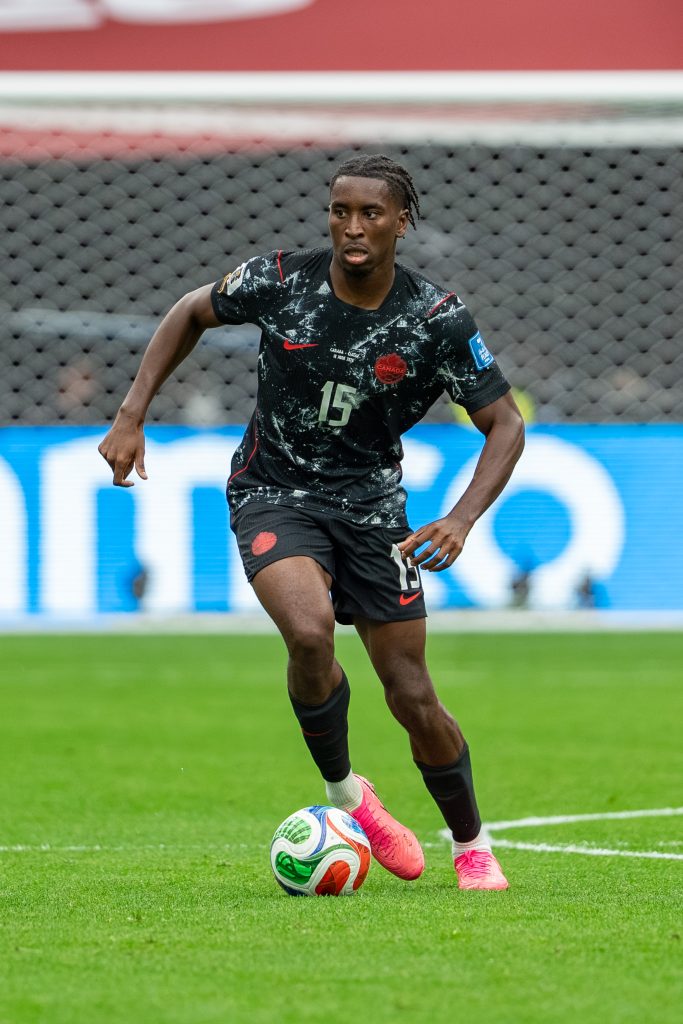
The question of who partners Bombito is genuinely open and consequential.
Canada’s Centre-Back Options vs Morocco
| Player | Strengths | Concern |
|---|---|---|
| Moïse Bombito | Pace — critical vs Morocco’s width | Match fitness after injury absence |
| Derek Cornelius | Reliability; most-used partner | Less dynamic against pace |
| Luc de Fougerolles | Tournament’s best CB overall | Best stepping forward; less suited if deep |
Derek Cornelius is Bombito’s most frequently used partner and offers reliability. Luc de Fougerolles has been Canada’s best centre-back across the tournament as a whole — but his strengths involve stepping aggressively to cut out attacks in the middle third and playing forward from there. Against a Morocco attack that will test depth relentlessly, the question is whether his profile suits a potentially more conservative defensive approach.
The 3-5-2 Question
One tactical option circulating around the Canada camp this week is whether Marsch might consider beginning with three centre-backs in a 3-5-2 shape. In this structure, removing a wide midfielder in favour of an additional central defender could provide the defensive stability Morocco’s attacking quality demands, while still allowing Canada to press with collective intensity.
Marsch has repeatedly said he is not wedded to his preferred 4-4-2 and is unafraid to use other options. The round of 16 feels like the moment to explore that willingness — not by abandoning his philosophy, but by adjusting the structure around it.
A possible rationale: if Canada can get through the first half without conceding, Marsch has the option to shift back toward his preferred 4-4-2 shape by introducing Alphonso Davies from the bench. Davies made his first appearance of the tournament in the round of 32, with early moments of real quality before his influence faded. Dropping him into a tight, stalemate-style game midway through is a different proposition from starting him — one that could catch Morocco in a moment of territorial adjustment.
The Defensive Foundation That Already Exists
Canada’s defensive data from this tournament is genuinely impressive and should not be overlooked when assessing their prospects.
Canada’s Defensive Statistics — World Cup 2026
| Metric | Figure | Tournament Rank |
|---|---|---|
| Expected goals against per game | 2.4 | 5th highest — but reflects good defensive organisation |
| xG allowed vs South Africa (R32) | 0.1 | Exceptional — one of tournament’s lowest |
| Defensive philosophy | All 11 defend | Confirmed by Marsch and players |
Alistair Johnston highlighted on Friday how “commitment to defending from all 11 players on the pitch” would be Canada’s foundation going into the match.
“I went back to the South Africa game, and even then you see the stats — I think we can see we allowed 0.1 xG,” Johnston said. “And that’s something that, in a knockout round game, if you’re doing that, you’re going to be in a pretty good place.”
That number — 0.1 xG against South Africa — reflects a defensive performance of exceptional organisation. Replicating anything close to that level against Morocco’s attack will be the defining challenge of Canada’s World Cup.
Morocco are at their most dangerous from wide areas, from set-pieces and in transition. Canada must be compact between the lines, aggressive in second-ball situations and disciplined in their positioning at restarts. Every one of those requirements demands collective effort and sustained concentration across 90 minutes.
What Is the Best Combination in Attack?
Marsch has been deliberately vague about his attacking lineup as Canada’s World Cup has progressed, making noticeable efforts to keep the media guessing. The one forward he addressed directly on Friday was Cyle Larin.
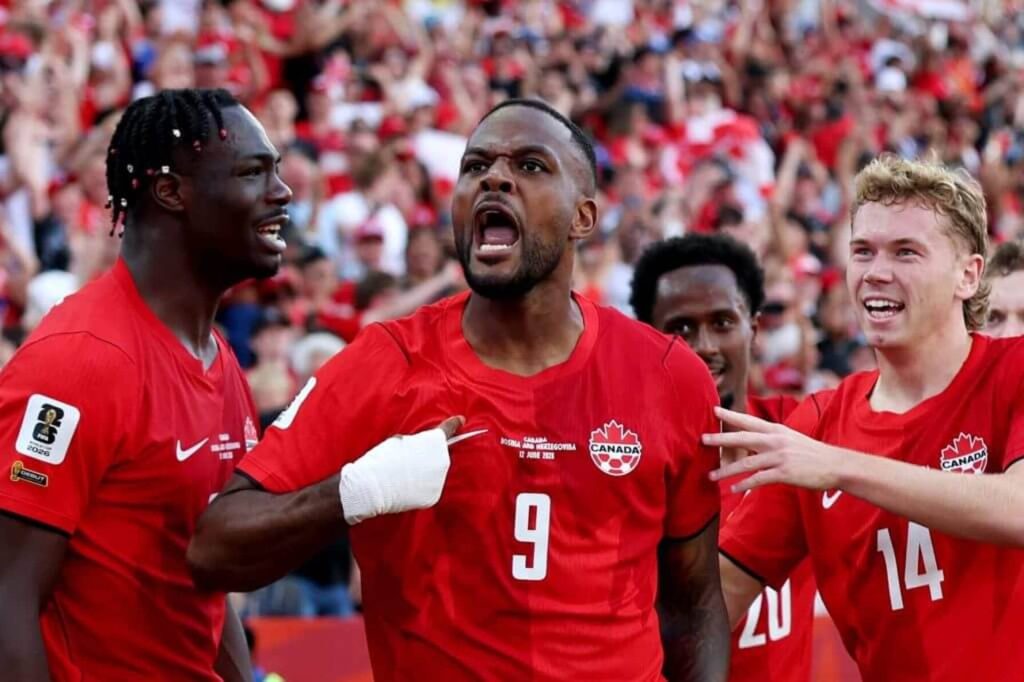
“I expect that when we do call on Larin in this match, however we use him, that he’ll be ready to deliver a great performance,” Marsch said.
The phrasing — “when we do call on him” — is notable. It suggests Larin begins on the bench and enters as an impact substitute rather than starting.
Canada’s Forward Options — World Cup 2026
| Player | Starts | Goals | Canada’s Record in Starts | Profile |
|---|---|---|---|---|
| Jonathan David | All matches | Hat-trick vs Qatar; additional goals | — | Roaming forward; most clinical in space |
| Cyle Larin | 2 of 4 | 2 | — | Physical; direct; reliable finisher |
| Tani Oluwaseyi | 2 of 4 | 0 | Undefeated in both starts | High intensity; pressing threat |
Jonathan David starts. That is not in question. The choice Marsch faces is who partners him.
Larin has two goals and has had a strong overall tournament. Oluwaseyi has not scored but Canada are undefeated in his two starts. In a match that, as Marsch himself has suggested, will resemble a high-tempo physical contest rather than a patient positional game, the argument for Oluwaseyi has merit.
Morocco will attempt to play at pace. Canada’s best chance of creating danger is through aggressive counterpressing and fast transitions — situations that reward mobility, intensity and the capacity to sustain a high work rate. Oluwaseyi brings those qualities for at least 60 minutes in a way that complements David’s desire to roam into space.
David himself is the key attacking reference. He bagged a hat-trick against Qatar and that achievement deserves recognition — but one goal against Morocco in a match of this difficulty would arguably mean more. The question is how to best unlock David when the opposition is significantly more organised than Qatar.
Oluwaseyi’s self-awareness about his supporting role is striking and encouraging.
“I think Jonathan plays best when he’s allowed to roam a bit,” Oluwaseyi told The Athletic before the tournament. “And once he gets going like that, it makes life so much easier for the rest of us. So for me, it’s a matter of recognising the spots that he does like getting the ball. And it also means doing the dirty work. So I’m willing to sacrifice, do some of his runs or do some of his pressing because I know it’ll buy him more time or more energy on the ball as well.”
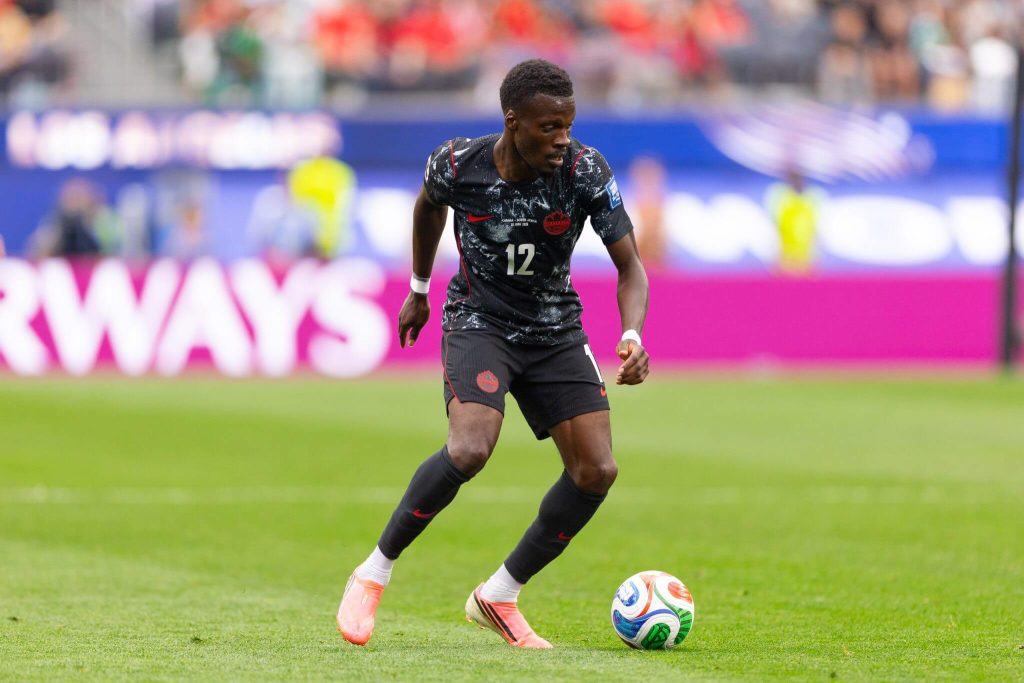
That is the articulation of a player who understands his function within a partnership — doing the unglamorous work that creates freedom for the player operating alongside him. If David has the space to roam and receive in pockets, Canada are a genuine threat in transition. If he is crowded out and pressed into static positions, they are considerably less dangerous.
David’s Scoring Record — A Pattern Worth Noting
There is one statistical quirk about Jonathan David’s international career that Marsch will be aware of: only twice has David scored for Canada in matches they subsequently lost in normal time. His goals tend to come in games Canada win or draw. That suggests his form and confidence is closely tied to the team’s collective performance level rather than existing independently of it.
A Canada team that defends well, stays compact and transitions quickly is a Canada team in which David is likely to be dangerous. A Canada team under heavy pressure and chasing the game is one in which his influence typically diminishes.
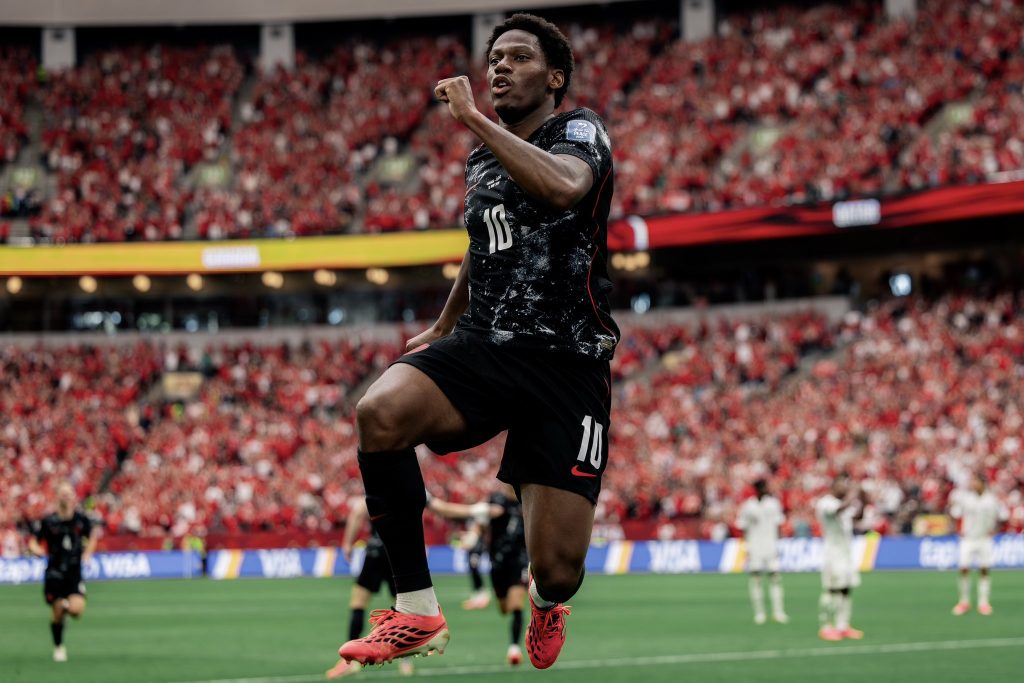
The tactical choices Marsch makes — the shape, the centre-back pairing, the forward combination — will not just determine how well Canada defend. They will determine whether David gets to play the game in which he is most effective.
What a Canada Win Would Mean
Canada have already made history at this World Cup. Their first round-of-16 appearance is a landmark moment for a football programme that has grown rapidly and continues to produce elite talent through a generation of players developed in European leagues.
Marsch has navigated the tournament with a mixture of pragmatism and aggression, adapting when necessary while maintaining the core identity of a team that defends collectively, presses intensely and carries a genuine goal threat through David.
Morocco represent the sternest test Canada have faced. But they are a team that knows what it is to be considered the underdogs — they spent most of the 2022 World Cup in that position before reaching the semi-finals.
The three questions Marsch must answer are not abstract tactical puzzles. They are the practical challenges that will determine whether Canada’s World Cup ends in the round of 16 or whether, for the first time in the programme’s history, they reach the quarter-finals of the sport’s biggest tournament.
If the defensive organisation holds, if Bombito and his partner can manage Morocco’s width, if Oluwaseyi gives David the freedom he needs, and if Canada can play with the lightness that underdogs sometimes find — the upset is not impossible.
It rarely is in knockout football.
Read More: Ronaldo’s First, Ramos’ Last: How Portugal Broke Croatia’s Heart