NGA
NGA UGA
UGA MEX-W
MEX-W ARG-W
ARG-W CRY0
CRY0 NEW1
NEW1 HUL1
HUL1 BRE0
BRE0 LIV2
LIV2 BHA0
BHA0 MAN0
MAN0 BOU2
BOU2 ATA3
ATA3 FRO3
FRO3 GEN1
GEN1 VEN0
VEN0 AUX
AUX MNS
MNS ANG
ANG LOR
LOR OLM
OLM HAC
HAC REN
REN STR
STR TOU
TOU TRY
TRY SUN
SUN LEE
LEE SCF
SCF MUN
MUN LEC
LEC JUV
JUV ATH4
ATH4 GET0
GET0 INT2
INT2 FIO1
FIO1 CHU2
CHU2 PFC3
PFC3 GMB112/9
 LES109 (19.5/20 ov, target 113)
 DEN
DEN PNG
PNG LIMWn
LIMWn NW-W
NW-W NCWmn
NCWmn FsWm
FsWm BOL137/9 (20 ov)
 TITNS137/8
 NWEST22/3 (3.1/20 ov, target 181)
 NCAPE180/3
 MIS
MIS VAG169/4 (20 ov)
 NZ-A317
 IND-A113 & 106/2 (36 ov)
 SYL280/2 (84 ov)
 KHU
KHU MYMS465/7d
 CHATT134/2 (40 ov)
 DHA521
 RAJ103/6 (26 ov)
 BRB
BRB MOW
MOW TOK
TOK SIKM
SIKM NAGA
NAGA JHK
JHK DELHI
DELHI ODSA
ODSA SVCS
SVCS CGR
CGR AP
AP BRODA
BRODA J & K
J & K MOZ110/7 (19/20 ov, target 110)
 ZMB109/9
 IND-W328/6
 ZIM-W207 (48.5/50 ov, target 329)
 PAK243/9 (47.1/50 ov, target 242)
 ENG241
 UAE244/8
 NED245/7 (43.5/50 ov, target 245)
 MON0
MON0 LILL1
LILL1 KER0
KER0 MCFC0
MCFC0 TSG0
TSG0 B040
B040 NEC2
NEC2 GRO2
GRO2 PSV1
PSV1 FEY1
FEY1 Motherwell0
 Hearts1
 Atlético1
 Deportivo0
 Lazio2
 Parma1
 Lens2
Lens2 Paris FC1
Group F at the 2026 FIFA World Cup brings together four sides with dramatically different stories heading into the tournament. Netherlands — three-time runners-up and one of the greatest footballing nations never to have won the trophy — open against Japan in Arlington on 14 June. Later the same day, Sweden face Tunisia in Guadalajara — a match that could prove decisive in determining who joins the Dutch in the knockout stages.
This is one of the more hotly contested groups in the draw. Three of the four sides carry realistic aspirations of reaching the round of 32, and two of the four have genuine quality capable of causing problems in the later stages.
Group F Overview: Perennial Runners-Up, Rising Asian Power, Improbable Qualifiers, and an African Fortress
| Team | World Cup Appearances | Best Result | Head Coach |
|---|---|---|---|
| Netherlands | Multiple | Runners-up (1974, 1978, 2010) | Ronald Koeman |
| Japan | 8th consecutive | Round of 16 (multiple) | Hajime Moriyasu |
| Sweden | 13th | Third place (1950, 1994) | Graham Potter |
| Tunisia | 7th | Group stage (best) | Sabri Lamouchi |

Netherlands: Still Chasing the Trophy That Eludes Them
The History of Near Misses
The Netherlands may be the greatest footballing nation never to have won the World Cup. Three times runners-up — 1974, 1978, and 2010 — they have reached the final more than virtually any other country without converting it into glory. The shadow of Johan Cruyff and the Total Football era continues to define how the Dutch think about their national team, creating a permanent tension between the desire to win and the desire to do so beautifully.
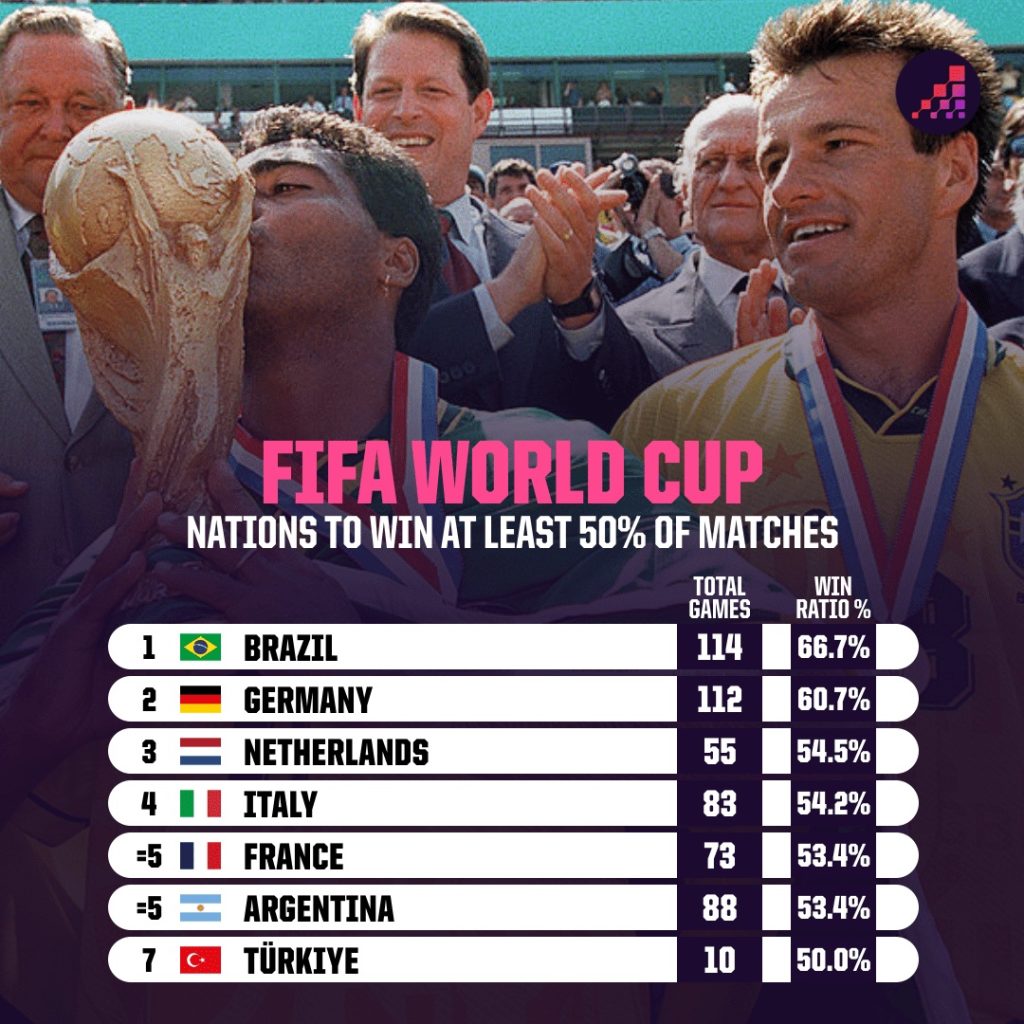
Their win rate at the tournament tells a remarkable story: 54.5% of World Cup matches won (30 victories from 55 games, excluding penalty shootouts). Only Brazil (66.7%) and Germany (60.7%) have stronger records. And recent form is exceptional: excluding shootouts, the Netherlands have lost only one of their last 19 World Cup matches, winning 14. They have not lost a group-stage match since 1994.
They are strong favourites to top Group F.
Qualification
The Netherlands were unbeaten throughout qualifying, topping a group containing Poland, Finland, Malta, and Lithuania. They had to wait until the final round, securing their place with a 4-0 win over Lithuania after pipping Poland to first place on the final day. The campaign was solid rather than spectacular — but unbeaten records tend to speak for themselves.
The Coach: Ronald Koeman
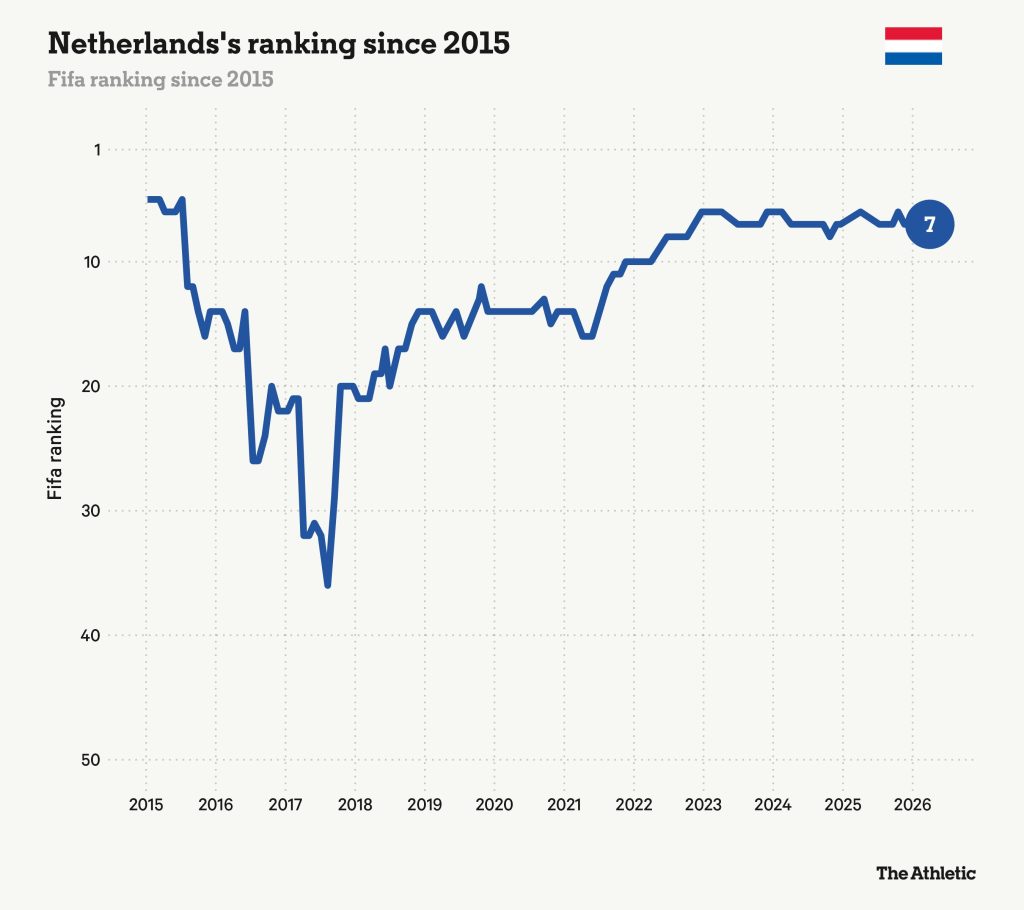
Koeman is in his second stint as Netherlands manager, returning in January 2023 after Louis van Gaal’s quarter-final exit in Qatar 2022. A curious tactical operator who is most effective when working with speedy wingers, Koeman guided the Dutch to the semi-finals of Euro 2024 — an encouraging foundation for a World Cup challenge.
How They Play
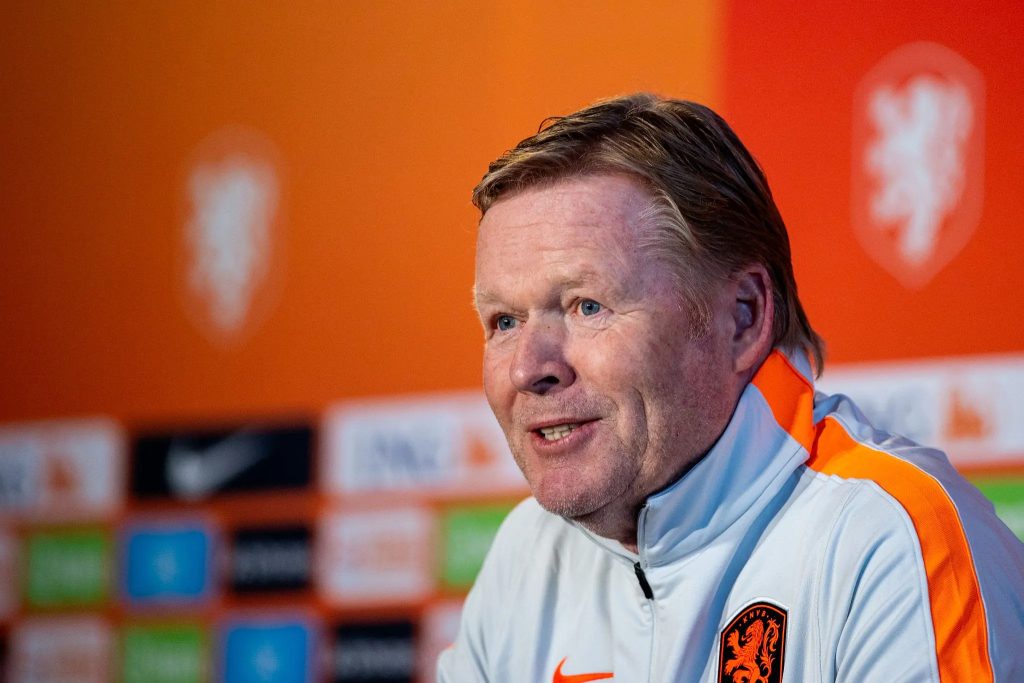
The Netherlands under Koeman prioritise functionality over creative freedom — a deliberate departure from the romantic Total Football legacy that can still divide Dutch opinion. They defend well, avoid overcommitting in attack, and typically look for a wide player crashing the back post to provide a decisive contribution.
The likely midfield trio of Frenkie de Jong, Ryan Gravenberch, and Tijjani Reijnders is genuinely talented, though all three are better known for press-resistant ball-carrying than creative passing — a noticeable stylistic shift from the prototypical Dutch midfielder of previous generations. Denzel Dumfries at right-back/wing-back provides a reliable surprise attacking element, and the team is considerably more dangerous when they score first, able to manage games defensively in a manner that recalls Gareth Southgate’s England or Fernando Santos’ Portugal.
Key Players
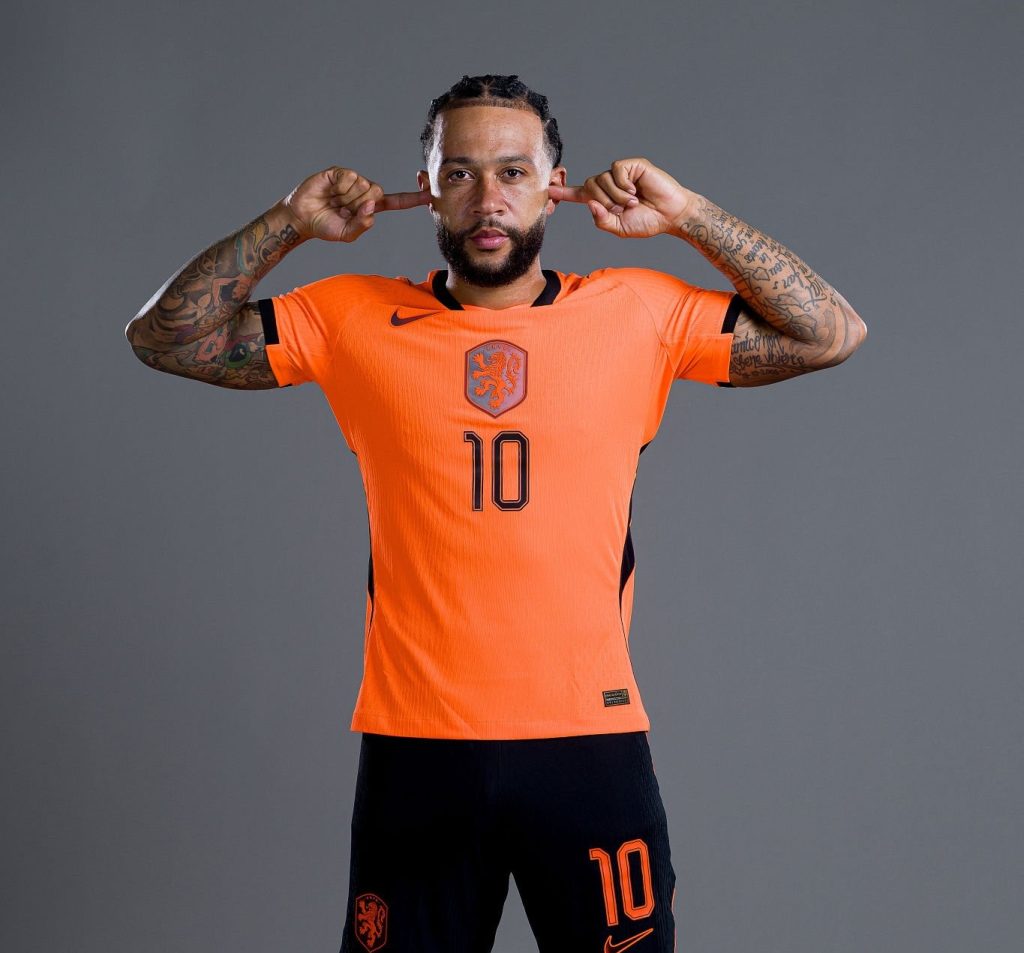
Memphis Depay (32) is the all-time top scorer and leading creator — 55 international goals and 35 assists since the 1978 World Cup (the most of any Dutch player over that period). His eight qualifying goals led the squad. He and Cody Gakpo each set up four qualifying goals. The attack is heavily centred on Depay’s contributions.
The potential X-factor is Frenkie de Jong — one of the most technically gifted midfielders in the world, uniquely skilled at carrying the ball between the penalty boxes. When De Jong performs at his best, Dutch displays become noticeably more swashbuckling. His is the most critical individual performance to monitor.
Squad Notes
Koeman prioritised seniority over emerging talent in his final squad. Feyenoord’s Luciano Valente and AZ’s Kees Smit — perhaps the most exciting young players in the Eredivisie — were both omitted. Marten de Roon and Quinten Timber were preferred for more defensive options. Donyell Malen returns despite a loan spell at Roma where he played centrally — he will likely operate as a right winger. Jeremie Frimpong (Liverpool) was notably excluded.
| Key Netherlands Players | Club | Role |
|---|---|---|
| Memphis Depay | — | All-time top scorer; primary attacking threat |
| Frenkie de Jong | Barcelona | Midfield X-factor; ball carrier; creative force |
| Ryan Gravenberch | Liverpool | Midfield engine |
| Tijjani Reijnders | AC Milan | Press-resistant midfielder |
| Denzel Dumfries | Inter Milan | Right-back; surprise attacking element |
Japan: The Asian Force Targeting Their First Quarter-Final
Making History on Every Level
Japan are making their eighth consecutive World Cup appearance — a remarkable run of qualification consistency for a nation that only made its tournament debut in 1998. They have never reached the quarter-final, holding the record for the most matches played (25) without advancing past the round of 16.
But the trajectory is unmistakably upward. In 2018, they led Belgium’s golden generation 2-0 at half-time in the round of 16 before conceding a devastating stoppage-time winner. In 2022, they beat both Spain and Germany in the group of death — arguably the greatest single-group performance by any team in recent World Cup history — before losing to Croatia on penalties in the last 16. On both occasions, they lost to eventual semi-finalists in matches where they were arguably the better team.
The core of that 2022 squad returns, now in their prime.
Qualification
Japan were the first nation outside the three co-hosts to qualify for the 2026 World Cup. They were dominant throughout Asian qualification — progressing from a second-phase group including Saudi Arabia and Australia with three games to spare, losing only once across 16 matches. Their 54 qualifying goals were the most of any AFC nation.
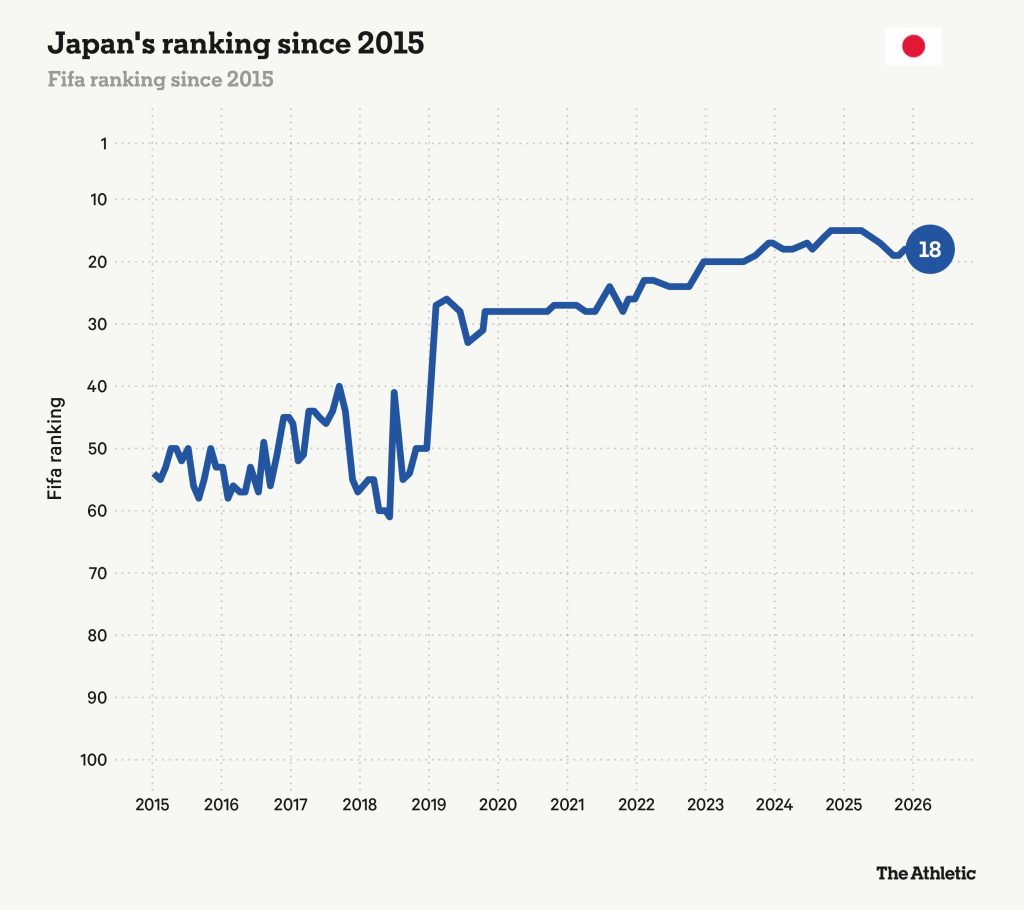
Three players contributed at least 10 goal involvements: Takefusa Kubo (4 goals, 8 assists), Junya Ito (1 goal, 10 assists), and Ayase Ueda (8 goals, 2 assists).
The Coach: Hajime Moriyasu
Moriyasu becomes the first person to manage Japan at two World Cups and is the only Japan head coach to record over 100 matches in charge. He served as an assistant in 2018 before taking the top job, and uniquely managed the Under-23 side simultaneously for three years — meaning players like Ritsu Doan, Ao Tanaka, Takehiro Tomiyasu, Takefusa Kubo, and Kaoru Mitoma have worked under him throughout their youth and senior careers. The depth of that relationship is a genuine competitive advantage.
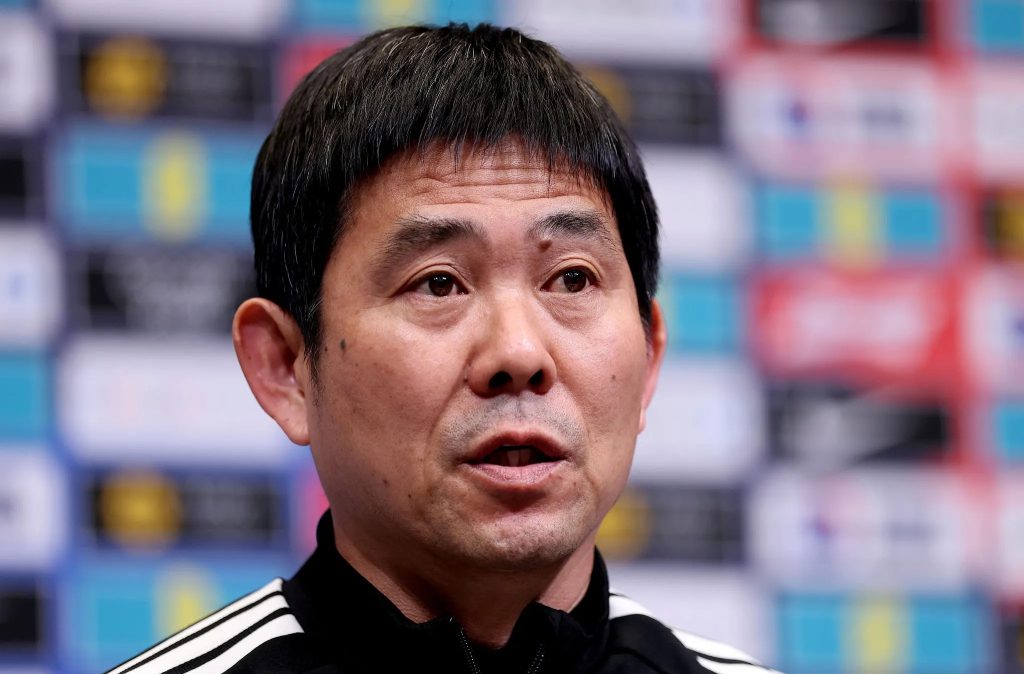
In 2025, Moriyasu used 65 players across 13 matches — an unprecedented rotation programme designed to give him the deepest possible picture of his available talent. For context, England used 37 players in 10 games under Thomas Tuchel, and the USA used 56 across 18 matches.
How They Play
Quickly, fluidly, and increasingly dangerously on the transition.
Japan are highly flexible in formation — regularly switching between 4-2-3-1, 4-3-3, and a now-more-common 3-4-3 — but certain principles are non-negotiable: relentless pressing, high-tempo movement of the ball, and consistent creation of 1v1 opportunities on the edges of the penalty area through midfield circulation.
Against stronger opponents, they have developed one of international football’s most dangerous counter-attacking games, helped by the increasingly physical nature of the J-League and the two-footedness and fluidity of their forward line. Beating Spain with this approach in 2022 provided the template.
Key Players
The squad’s depth means no single player is irreplaceable — but Wataru Endo (Liverpool) comes closest. The captain’s ability to win duels across vast central areas while allowing the front line to press high is uniquely important to the system. His ankle injury this season is the most significant concern in Japan’s camp.
Ayase Ueda (Feyenoord), who scored 25 Eredivisie goals in 31 games this season, is likely to start as the number nine. Koki Ogawa — trusted by Moriyasu throughout qualifying for his link-up play — scored the winning goal against Iceland in Japan’s warm-up and could start against the Netherlands. Among younger options, 21-year-old Keisuke Goto is a developing target man and 21-year-old Kento Shiogai offers relentless defensive running and poaching quality.
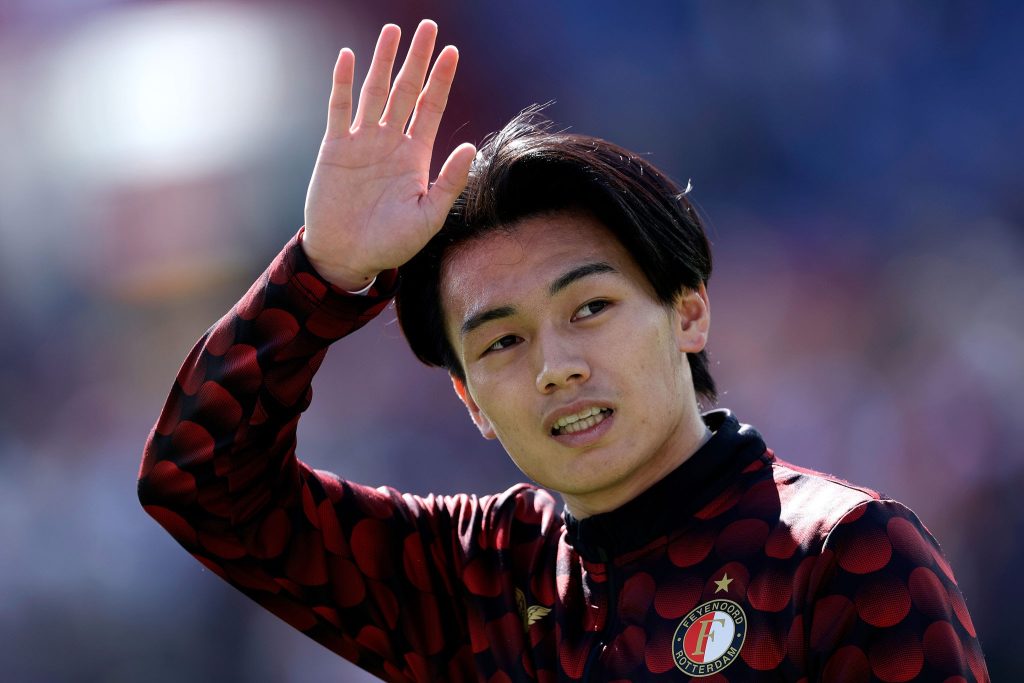
The absence of Kaoru Mitoma through injury is notable — but Japan’s depth in wide attacking positions means the blow is more manageable than it might be for most other nations.
| Japan Qualifying Goal Involvements | Goals | Assists | Total |
|---|---|---|---|
| Ayase Ueda | 8 | 2 | 10 |
| Junya Ito | 1 | 10 | 11 |
| Takefusa Kubo | 4 | 8 | 12 |
Sweden: The Improbable Qualifiers With a World-Class Forward Line
A Miraculous Qualification
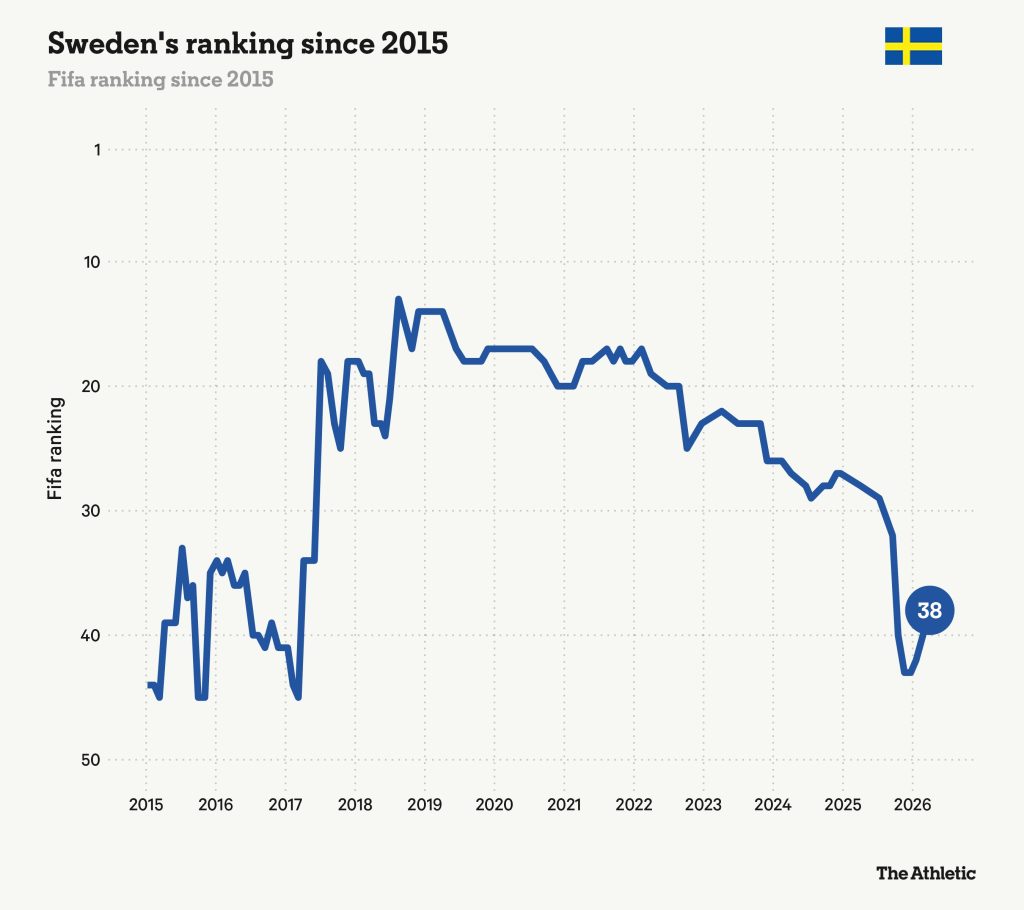
Sweden barely made it. They failed to win any of their six initial qualifying matches, finishing fourth in their group behind Switzerland, Kosovo, and Slovenia. Their salvation was their UEFA Nations League ranking, which seeded them into the European play-offs.
What followed was extraordinary. Viktor Gyökeres scored a hat-trick in the semi-final against Ukraine (played on neutral ground in Spain due to the war) before smashing home an 88th-minute winner in the final against Poland in Stockholm. Two moments of individual brilliance from one player produced an improbable World Cup place.
World Cup Pedigree
Sweden’s historical record is genuinely impressive. They have progressed past the group stage in their previous four World Cup appearances. Their historical peaks include:
- Third place in 1950 — achieved without selecting players based abroad, making it a remarkable achievement
- Runners-up in 1958 — beating through to the final on home soil before losing to a 17-year-old Pelé’s Brazil
- Third place in 1994 — losing to eventual winners Brazil in the semi-final
- Quarter-final in 2018 — their most recent appearance
This is their 13th World Cup appearance.
The Coach: Graham Potter
Graham Potter is one of football’s more interesting managerial stories. He made his name with Swedish side Östersund, taking them from the lower divisions all the way to Europa League football — a journey that led to appointments at Swansea City, Brighton, Chelsea, and West Ham. After a difficult period in England, he returned to Sweden, taking over from the unpopular Jon Dahl Tomasson and initially signing a short-term deal before extending to a four-year contract following qualification success.
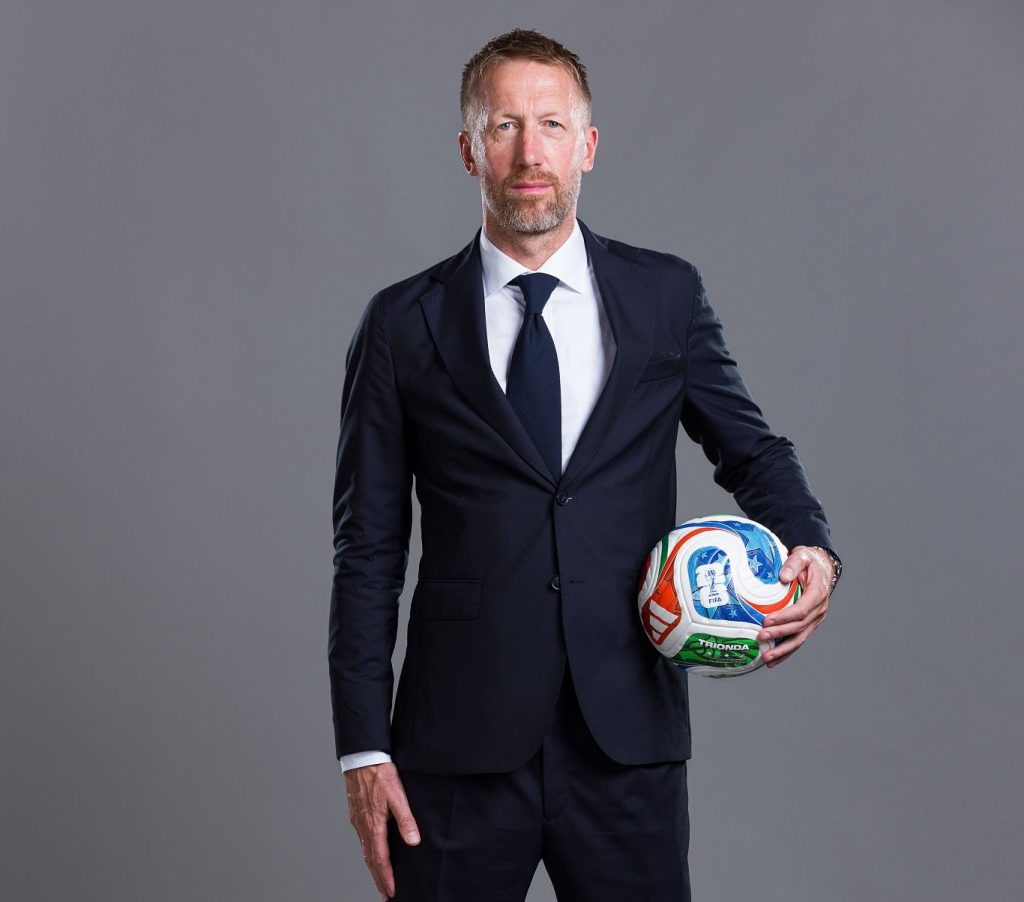
He considers himself something of an adopted Swede and appears energised by the return to the environment where his career first flourished.
How They Play — and the Injury Problem
The honest answer is: it’s not yet clear. Potter is known for open, possession-based football. But in his four matches in charge, he has been severely constrained by injuries — he has not yet been able to field either Dejan Kulusevski or Alexander Isak. The play-offs required pragmatism: a three-man defence and reliance on the counter-attack to get the job done.
Kulusevski has now been out injured for an entire year and is absent from the squad. The lack of wide options — highlighted by the notable absences of Roony Bardghji and Williot Swedberg — suggests Potter will continue with a back-three system, with Ken Sema (an old favourite from his Östersund days) included specifically for reliability as a squad player.
Key Players
Alexander Isak (Liverpool) is the most important individual, despite a difficult first season at Anfield that included four months out with a broken leg. His quality at the highest club level is established, and the combination of him and Gyökeres in the same side has historically proven challenging to manage — both want similar roles. Getting the best from both simultaneously against strong opposition will be Potter’s primary tactical puzzle.
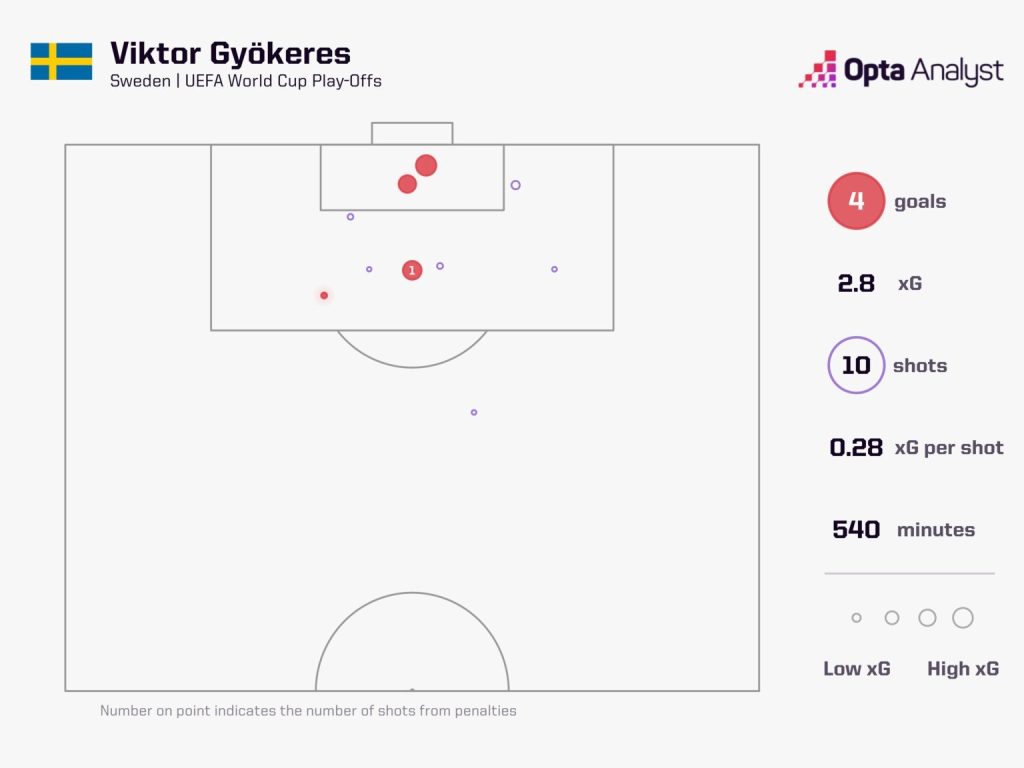
Gyökeres (Arsenal) needs no introduction after his extraordinary performances for both club and country. His four play-off goals, including the hat-trick and the winner, demonstrated exactly why he is one of the most feared forwards in European football.
Yasin Ayari and Lucas Bergvall are genuinely talented young midfielders who represent the long-term future of Swedish football.
Tunisia: Defensive Fortress, Attacking Limitations
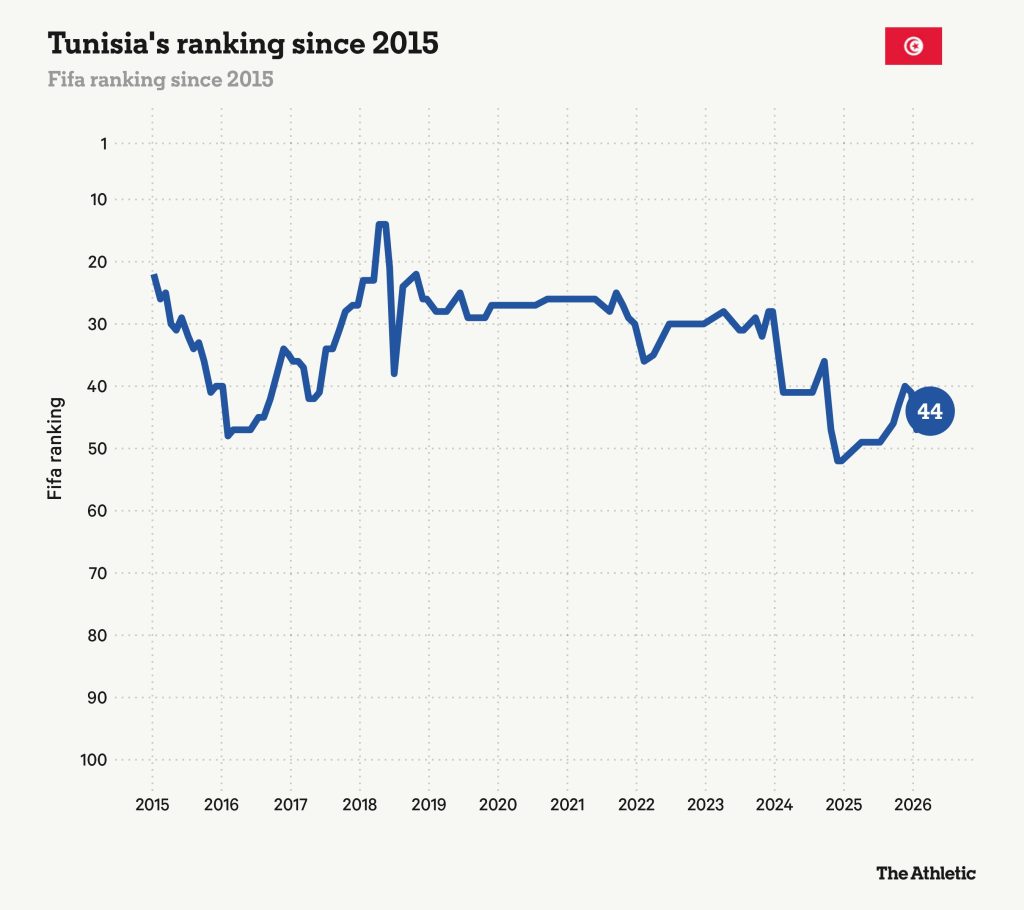
Tunisia are making their seventh World Cup appearance — but have never advanced past the group stage, winning just three of their 18 tournament matches. Their qualifying campaign, however, was exceptional: nine wins and one draw from 10 matches, conceding not a single goal throughout the entire process.
Qualification
Tunisia topped their African qualifying group with remarkable ease. They conceded nothing across 10 games — a defensive achievement matched by only the very best defensive sides in any qualifying campaign globally. Their top contributors for goal involvements were Mohamed Ben Romdhane (4 goals) and Ali Abdi (1 goal, 3 assists).
The Coach: Sabri Lamouchi
Sabri Lamouchi — a 54-year-old Frenchman born to Tunisian parents, who represented Marseille, Monaco, and Inter Milan as a player and managed Cardiff City and Nottingham Forest in England — has taken over after Sami Trabelsi’s second brief and unsuccessful spell ended with elimination from the 2025 AFCON.
Tunisia’s managerial record is notably turbulent. The longest-serving manager in their history is Roger Lemerre, who guided them to AFCON triumph in 2004 (four years after winning the European Championship as France coach) and held the role for nearly six years. Faouzi Benzarti’s less-than-four-month stint last year is a more representative recent example.
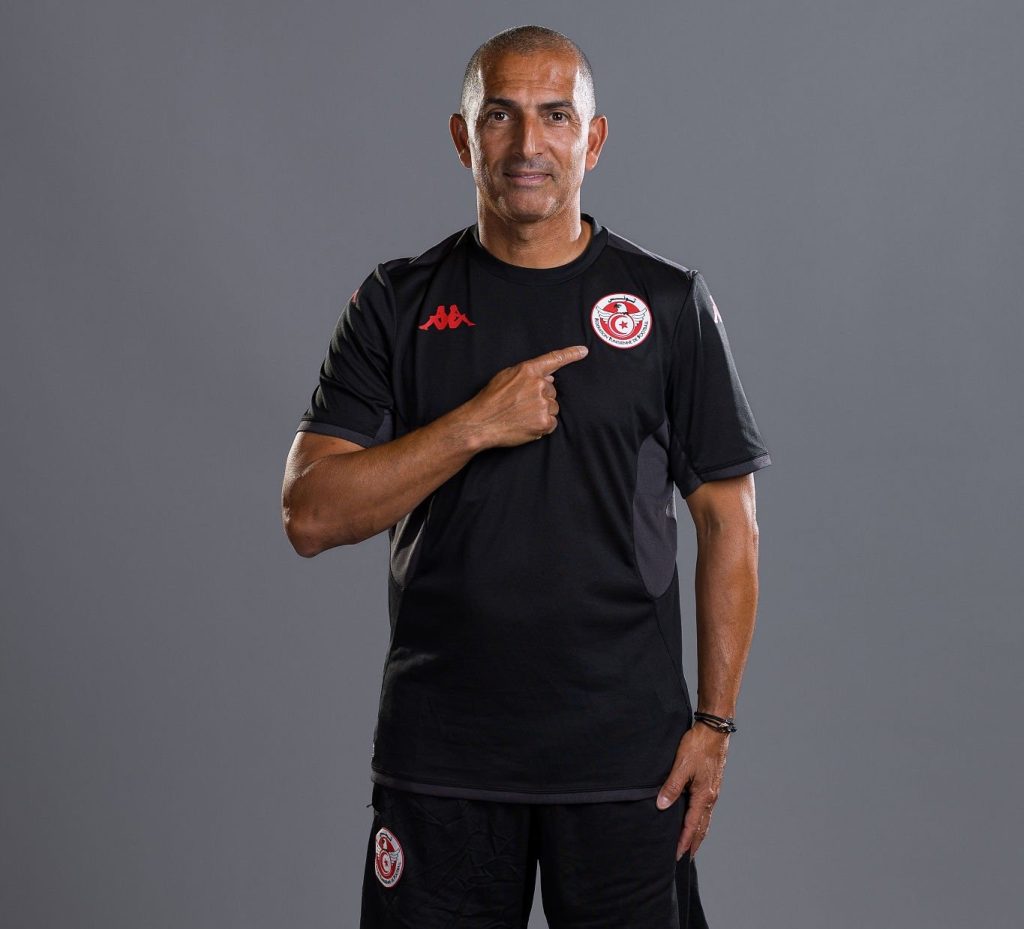
Lamouchi notably omitted Ben Romdhane — their top qualifying scorer — from the final squad, alongside veteran defender Yassine Meriah (95 caps) and experienced captain Ferjani Sassi (Tunisia’s third-most capped player). The squad includes several future-oriented selections: 21-year-old Khalil Ayari (spent the past season training with PSG’s academy), 18-year-old Rayan Elloumi (from Vancouver Whitecaps in MLS), and Omar Rekik (returning for the first time in four years). Rani Khedira — younger brother of Germany’s 2014 World Cup winner Sami — has also been included after switching allegiance.
How They Play
Tunisia are built on defensive solidarity. Their foundation is a compact, organised defensive structure that produced ten clean sheets in qualifying. Attacking creativity is more limited — they typically wait for individual moments of brilliance from players like Elias Achouri (Copenhagen) or Hannibal Mejbri to create chances.
Mejbri (Burnley) is their most technically gifted creative player, though a difficult Premier League season has raised questions about his form. He was arguably the only Tunisian capable of progressing the ball with quality during their AFCON performances. Sebastien Tounekti (Celtic) provides additional forward threat.
In 2022, Tunisia conceded just one goal throughout the group stage — the fewest of any team — before exiting on the narrowest of margins. That defensive identity is their greatest asset and their template for Group F.
Predictions
| Predicted Standing | Team | Key Factor |
|---|---|---|
| 1st | Netherlands | Quality throughout; Depay and De Jong at peak |
| 2nd | Japan | 2022 heroes in their prime; dangerous transition game |
| 3rd | Sweden | Isak and Gyökeres world-class but squad thin |
| 4th | Tunisia | Excellent defence but too limited in attack |
Netherlands should top the group — their squad depth, recent World Cup record (one loss in 19 matches), and the quality of Depay and De Jong make them clear favourites. Japan are the most interesting side in the group — battle-tested against elite European opposition in 2022, carrying the same core players now in their prime, and with a tactical flexibility that makes them dangerous for any opponent.
Sweden carry two of the most lethal forwards at the tournament in Isak and Gyökeres, but the squad beyond them is thin and Potter has had minimal preparation time with his best players. Tunisia are excellent defensively but too limited offensively to advance from a group containing the Netherlands and a Japan side capable of beating Germany and Spain.
Read More: World Cup 2026: Group E Predictions and Preview