MEX-W
MEX-W ARG-W
ARG-W RBNY1
RBNY1 MIA0
MIA0 Palmeiras1
 Bragantino0
 Vasco1
 Corinthians2
 Chapecoense1
 Fluminense0
 UAE
UAE NED
NED PAK
PAK ENG
ENG IND-W
IND-W ZIM-W
ZIM-W GMB
GMB LES
LES MOZ
MOZ ZMB
ZMB Inter Milan
 Fiorentina
 Churchill
 Punjab FC
 NGA
NGA UGA
UGA ATM1
ATM1 DEP0
DEP0 LAZ2
LAZ2 PAR1
PAR1 RCL2
RCL2 PAR1
PAR1 RIY2
RIY2 TAA1
TAA1 NZ-A164/5 (51.2 ov)
 IND-A113
 SYL
SYL KHU
KHU MYMS299/4 (87 ov)
 CHATT
CHATT DHA293/3 (84.1 ov)
 RAJ
RAJ RAN320/5 (80 ov)
 BAR
BAR DEN
DEN PNG
PNG NAM321/6
 IRE290 (47.3/50 ov, target 322)
 NZ180/5
 IND181/6 (19.5/20 ov, target 181)
 Athletic
 Getafe
 C Palace
 Newcastle
 Hull
Hull Brentford
 Liverpool
 Brighton
 Man United
 Bournemouth
 Atalanta
 Frosinone
 CHE0
CHE0 TOT2
TOT2 VAL1
VAL1 VIL2
VIL2
Group E at the 2026 FIFA World Cup is one of the competition’s most fascinating combinations. Germany — four-time world champions and one of the tournament’s most decorated nations — headline a group that also features Ivory Coast, the reigning AFCON champions; Ecuador, South America’s most defensively disciplined qualifiers; and Curaçao — making history as the smallest nation by both area and population ever to reach the World Cup finals.
The group opens on 14 June when Germany face debutants Curaçao in Houston. Later that evening, Ivory Coast and Ecuador meet in Philadelphia — a match likely to be decisive in determining who joins Germany in the knockout stages.
Group E Overview: Europe’s Giants, African Champions, and History’s Smallest Nation
| Team | World Cup Appearances | Best Result | Head Coach |
|---|---|---|---|
| Germany | 21st | Champions x4 | Julian Nagelsmann |
| Ivory Coast | 4th | Group stage (3rd each time) | Emerse Faé |
| Ecuador | 5th | Round of 16 (2006) | Sebastián Beccacece |
| Curaçao | 1st | Debut | Dick Advocaat (78) |

Germany: Four-Time Champions Chasing Redemption
Historical Context
Germany’s record in this competition has few parallels in world football. This is their 21st World Cup appearance — more than any other European nation and second only to Brazil (23) among all nations. They are four-time winners (1954, 1974, 1990, 2014), trailing only Brazil’s five titles. From 1962 to 2014, they maintained an unbroken record of reaching at least the quarter-final — arguably the most consistent sustained achievement in the history of the tournament.
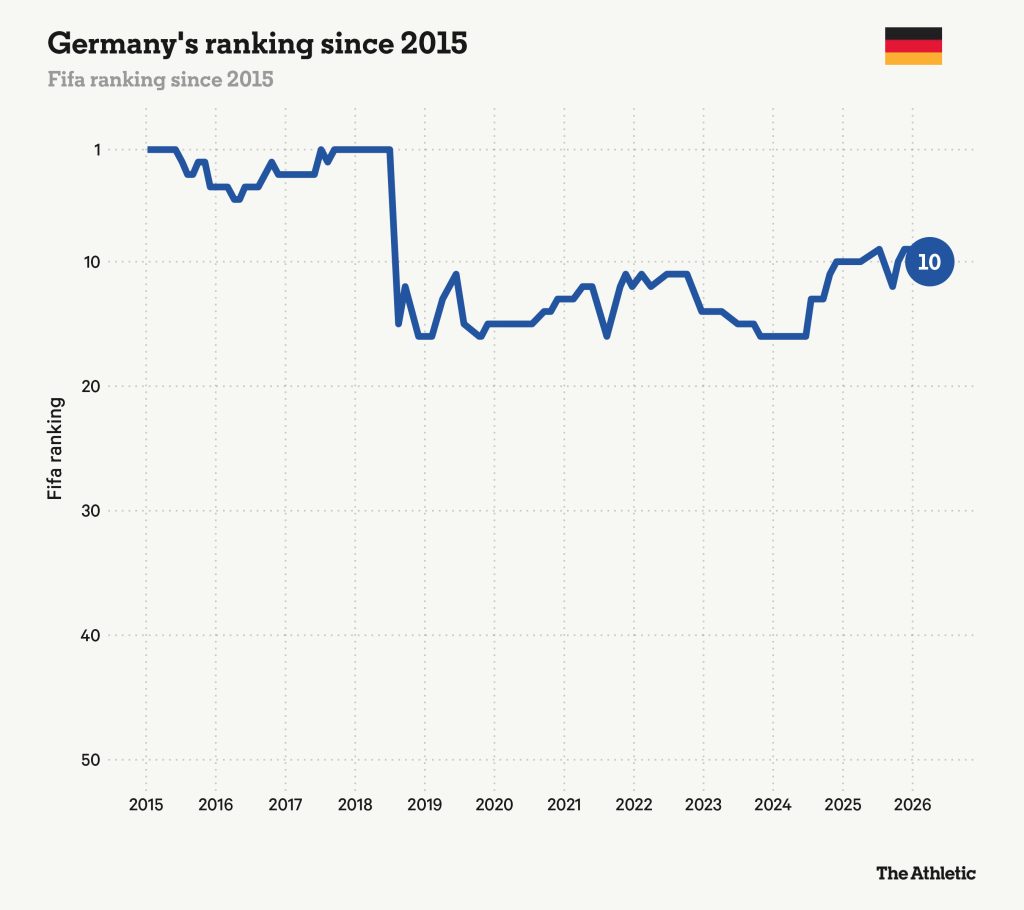
The recent record, however, has been painful. Eliminated in the group stage in both 2018 and 2022 — consecutive failures that constitute something close to a national disgrace by their historical standards. The 7-1 loss to the hosts Brazil in the 2014 semi-final was a triumph; the group exits of the following two tournaments were humiliations.
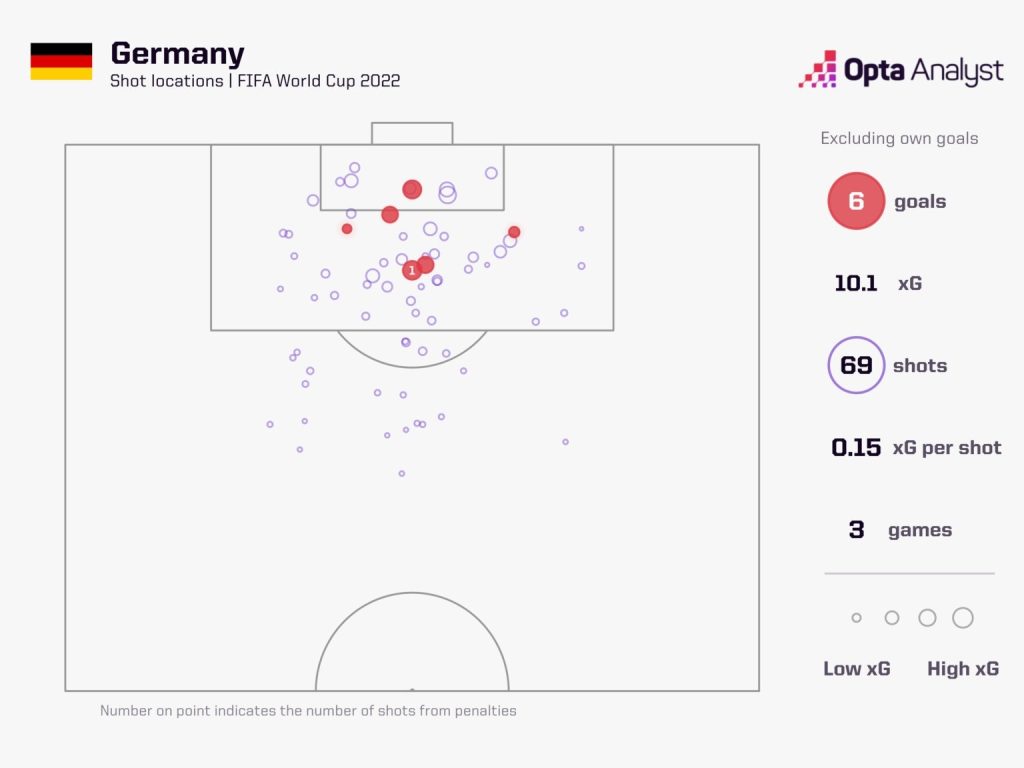
The 2022 Qatar campaign is particularly striking in statistical terms. Germany created the most chances of any team in the tournament — averaging 3.4 xG per 90 minutes, ahead of Brazil (2.20) and eventual champions Argentina (2.15). They accumulated the fourth-highest total xG (10.1) of any side, while scoring only six goals — underachieving their xG by 4.1 goals, the largest underperformance of all 32 teams. They did everything except put the ball in the net.
Qualification
Germany qualified from a group containing Slovakia, Northern Ireland, and Luxembourg — which should have been straightforward — but suffered a dismal 2-0 defeat in Bratislava that complicated matters. They recovered to win their final game against Slovakia impressively, avoiding the play-offs, but this was far from the commanding campaign the German public expected.
Nick Woltemade (Newcastle) was the standout goalscorer — one of only two players in the UEFA qualifiers to attempt four or more shots on target and score them all. Three of his four goals opened the scoring, and they were often the difference in tight contests.
The Coach: Julian Nagelsmann
Famously appointed head coach of Hoffenheim at just 28 years old, Nagelsmann subsequently managed RB Leipzig and Bayern Munich before taking the Germany role. His time with the national team has softened his public image considerably — his tearful press conference following their quarter-final exit to Spain at Euro 2024 revealed a vulnerability not previously associated with him. But 2025 has been a difficult year: an ugly semi-final defeat by Portugal in the Nations League finals, staged in Munich, and a qualifying campaign that required a strong finish to avoid the play-offs.
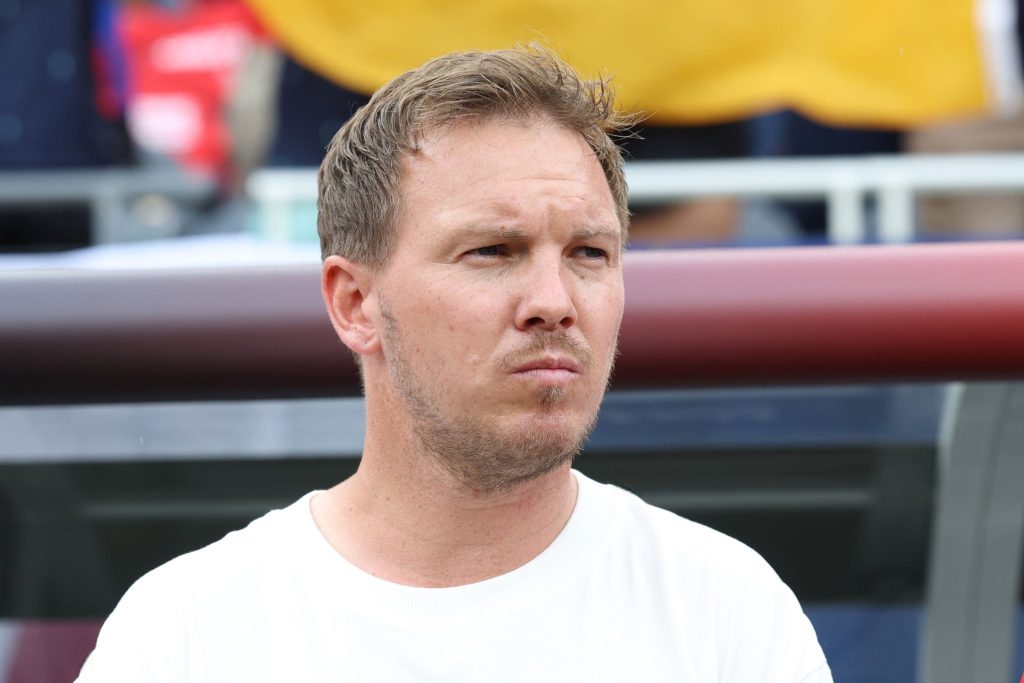
He could make history this summer: winning both the World Cup and Champions League would make him only the third manager to achieve that double, after Marcello Lippi and Vicente del Bosque.
The Manuel Neuer Saga
Manuel Neuer retired after Euro 2024, with Oliver Baumann emerging as the new first choice. For the next two years, German media speculation about a potential Neuer reversal was constant — and Neuer repeatedly and firmly dismissed it. Nagelsmann was equally dismissive.
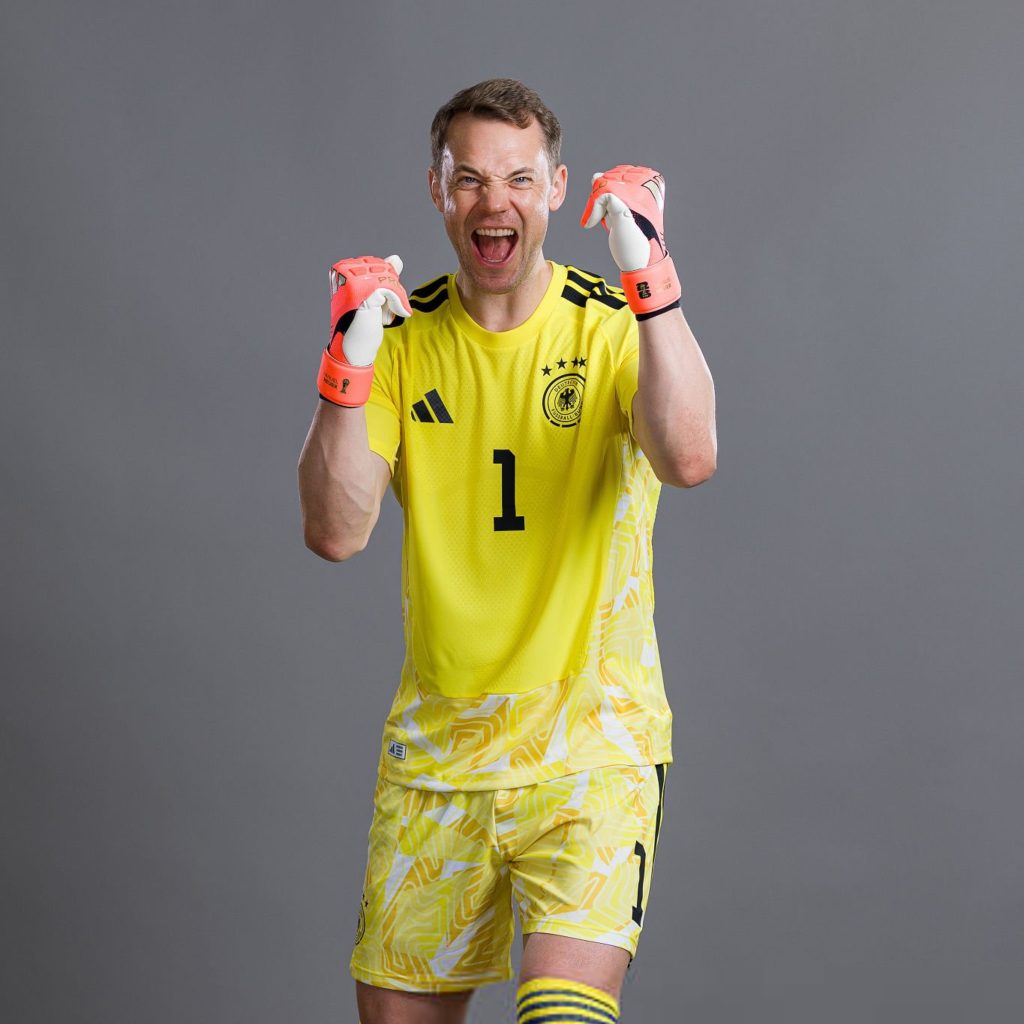
Then, three weeks before the tournament, Neuer reversed his retirement decision. He — not Baumann — will be Germany’s first-choice goalkeeper this summer. In doing so, Neuer (who turned 40 in March) will become the oldest player in German national team history, breaking Lothar Matthäus’s record that has stood for over two decades.
How They Play
Germany are a high-pressing, technically refined team at their best when the ball moves quickly and vertically into the feet of their two world-class playmakers. The formation involves Joshua Kimmich and David Raum as inverted full-backs who drift centrally, creating numerical mismatches that disrupt defensive structures. Aleksandar Pavlovic anchors the midfield pivot with the composure and range to become one of the finest orchestrators of his generation.
At the top of the pitch, Kai Havertz leads a front three alongside Florian Wirtz and Jamal Musiala — with significant positional fluidity expected. The interchange between those three players will largely determine how far Germany go.
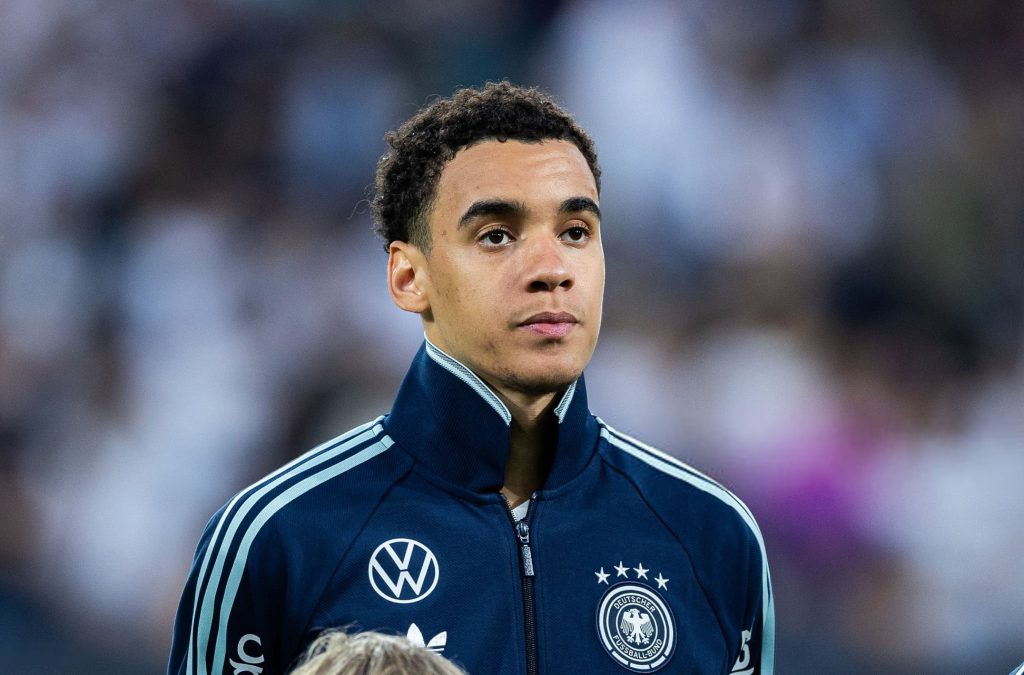
Key Player: Jamal Musiala
Musiala (Bayern Munich) is among the world’s very best players — a crafty, technically exceptional number ten whose movement and touch consistently create opportunities from nothing. However, he suffered a serious ankle injury during the Club World Cup last summer. While he returned to competitive action at the start of 2026, he has yet to fully rediscover his rhythm. Doing so quickly is arguably Germany’s single most important World Cup requirement.
Squad Concerns
Several selection decisions have been controversial. Leroy Sané, whose record for the national team has often frustrated despite his club brilliance, was included at the expense of Said El Mala (Cologne) and Chris Führich (Stuttgart) — a decision not warmly received. Leon Goretzka making the final squad ahead of Tom Bischof was similarly questioned.
The saddest news was the withdrawal through injury of Lennart Karl — an 18-year-old from Bayern Munich who had the potential to be a genuine wildcard.
| Germany’s Key Players | Club | Role |
|---|---|---|
| Jamal Musiala | Bayern Munich | Attacking midfielder; key creative force |
| Florian Wirtz | Bayer Leverkusen | Attacking midfielder; world-class playmaker |
| Kai Havertz | Arsenal | Centre-forward; leads the line |
| Aleksandar Pavlovic | Bayern Munich | Midfield pivot; orchestrator |
| Nick Woltemade | Newcastle United | Forward; top qualifying scorer |
| Manuel Neuer | Bayern Munich | Goalkeeper; 40 years old; came out of retirement |
Ecuador: Defensive Fortress, Attacking Question Marks
Ecuador are expected to reach the round of 32 — an achievement that would represent solid progress for a nation that has been eliminated at the group stage in three of their four World Cup appearances.
Qualification
Ecuador finished second in CONMEBOL qualifying — their best performance since the 2002 cycle that delivered their first-ever World Cup appearance. They conceded just five goals in 18 matches — the best defensive record in South American qualifying. They lost only twice, both times to the two eventual top finishers (Argentina and Brazil), and booked their place at the World Cup in June.
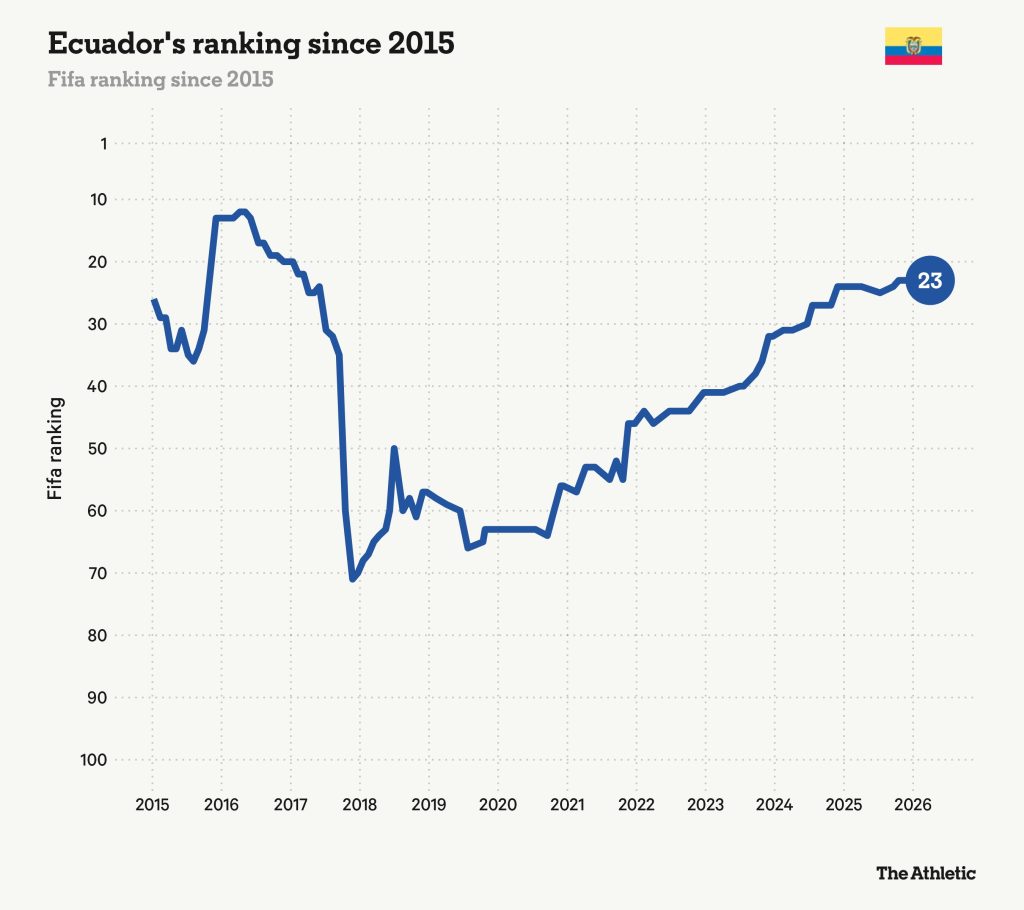
Crucially, this was achieved despite beginning the campaign with a three-point penalty for filing irregular paperwork for one of their players during the 2022 World Cup cycle — making their second-place finish even more remarkable.
How They Play
Sebastián Beccacece — a 44-year-old Argentine who never played professional football but served as assistant to Jorge Sampaoli at two World Cups (Chile 2014 and Argentina 2018) — has built a team that mirrors his squad’s natural strengths: elite defending, defensive midfield excellence, and limited but important attacking contributions.
Willian Pacho and Piero Hincapié are elite centre-backs by any standard — both play at top European clubs and are among the finest defenders at this tournament. Joel Ordóñez provides further quality behind them. Moisés Caicedo is the defensive midfielder who does the work of two players in front of the back four — arguably one of the best in the world in that role.
The problem is scoring. Before their 1-0 win over Argentina in September, Ecuador had recorded four consecutive 0-0 draws. Bolivia and Venezuela both outscored them in qualifying. Gonzalo Plata and Kendry Páez offer pace and creativity, but consistent finishing has been elusive.
Key Players
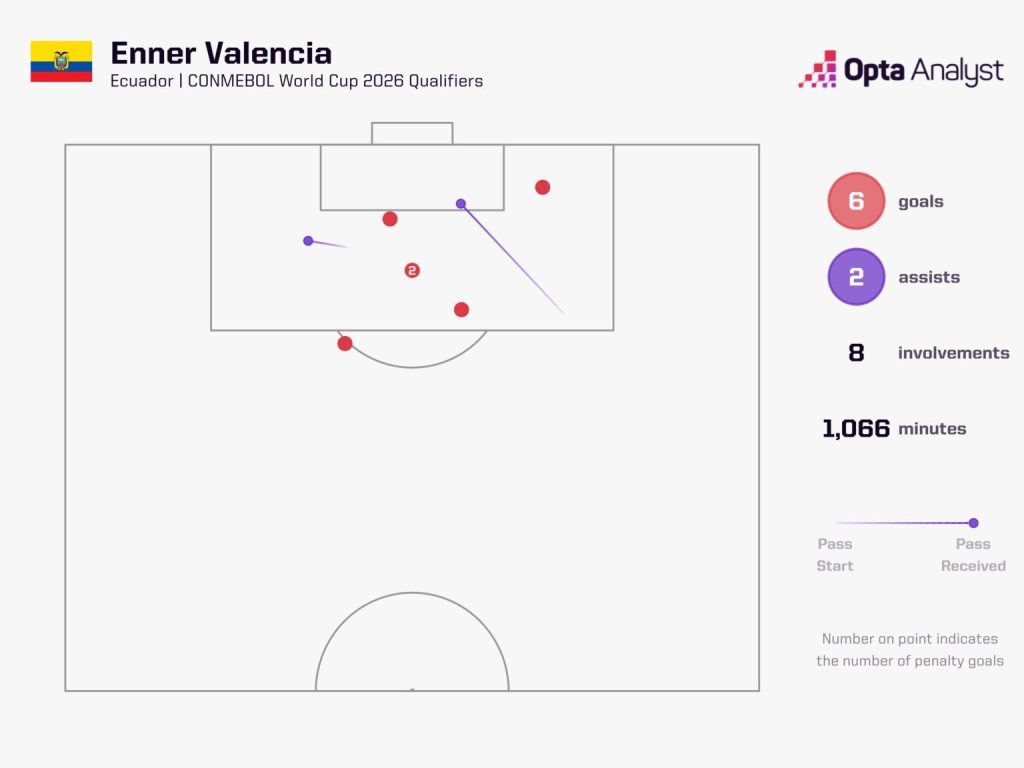
Moisés Caicedo (Chelsea) may be the best player in the squad — arguably Ecuador’s first genuinely world-class footballer. Enner Valencia at 36 remains the striker who holds Ecuador’s tournament hopes most directly. He has scored in each of Ecuador’s last three World Cup campaigns — three in 2014, three in 2022 — and his 49 international goals dwarf the next-highest scorer (Plata, eight). The gap is extreme; it represents both his importance and Ecuador’s attacking fragility.
Kendry Páez is the most intriguing wildcard. The 18-year-old — currently on loan at River Plate from Chelsea — broke into Independiente del Valle at 15 and agreed his Chelsea deal at 17. He has rare technical quality, though questions about his attitude (a nightclub controversy before a friendly against Italy; a public rebuke from Beccacece) have clouded his reputation. He may not start, but could be a brilliant impact substitute.
Ivory Coast: AFCON Champions Ending a 12-Year World Cup Absence
Ivory Coast return to the World Cup for the first time since 2014 — a new generation of players inheriting the chance to go further than their predecessors, who finished third in their group on each of their three previous appearances.
Qualification
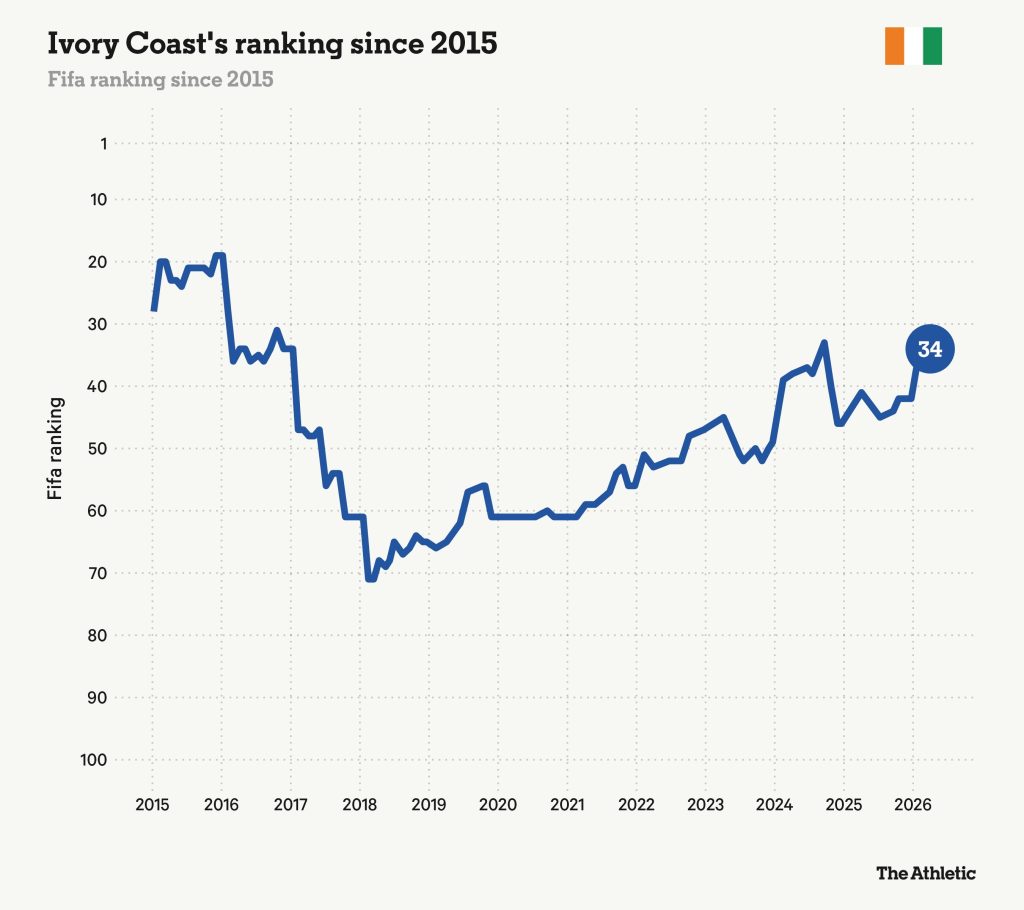
Ivory Coast were the first African nation to qualify for the 2026 World Cup, finishing their CAF group unbeaten and — remarkably — without conceding a single goal across 10 qualifying matches. 15 different players scored their 25 qualifying goals — the most of any African nation.
The Coach: Emerse Faé
Faé’s appointment carries one of football’s most extraordinary backstories. He was promoted from Under-23 level in the middle of the 2023 AFCON — which Ivory Coast were hosting — after the senior team suffered their worst home defeat in history, a 4-0 thrashing by Equatorial Guinea, which prompted Jean-Louis Gasset’s sacking. Faé, a former Reading midfielder and part of the 2006 World Cup squad (though he did not play), inherited a team facing elimination. He guided them to the final and the title, beating Nigeria 2-1.
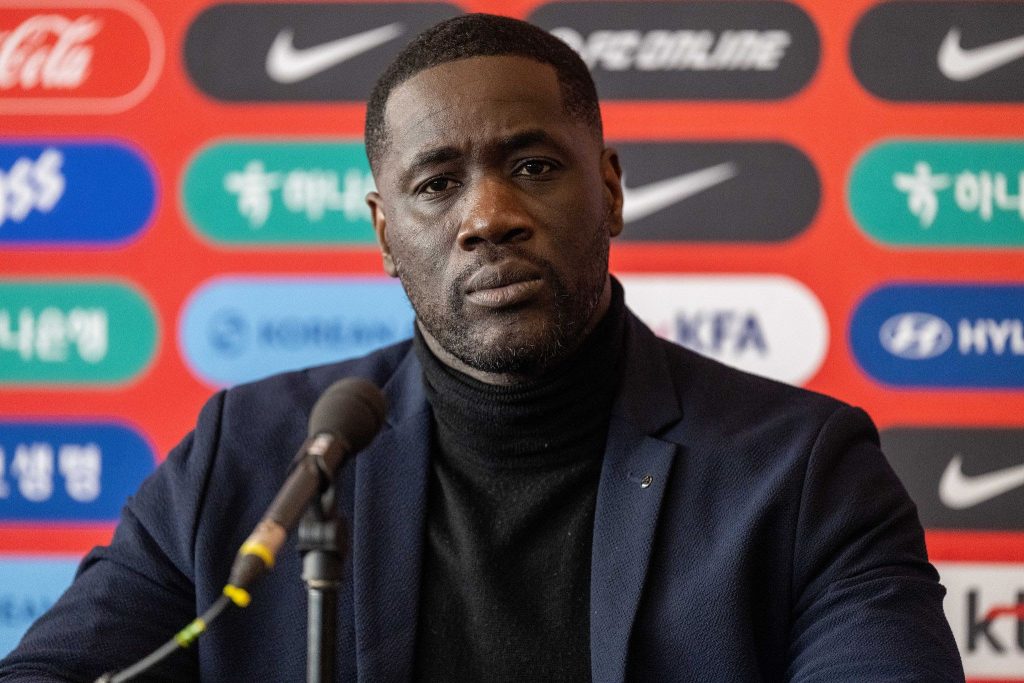
Under his management, Ivory Coast reached the quarter-finals of the 2025 AFCON before a 3-2 defeat by Egypt.
How They Play
Ivory Coast operate primarily in a 4-3-3 and are far from one-dimensional. Their attacking variety is genuine — in qualifying, their leading scorer (midfielder Seko Fofana) scored just three goals, with eight other players registering twice. The width and variety of scoring sources make them genuinely difficult to prepare for.
The key attacking individual is Simon Adingra — the only player to feature in every qualifying match and involved in more goals than anyone else (two goals, three assists). Young winger Yan Diomandé, 19, who joined RB Leipzig in the summer and has been linked with Liverpool, represents the future. Captain Franck Kessié, 28, is the midfield reference point.
Squad Notes
Wilfried Zaha — now at MLS side Charlotte — did not receive a call-up. In his place is uncapped 22-year-old Ange-Yoan Bonny of Inter Milan, who only recently became eligible for Ivory Coast having previously represented France Under-21s. No players from the domestic Ivorian league were selected — the entire squad is based at clubs in England, France, Germany, and Italy.
Curaçao: The Smallest Nation in World Cup History
Curaçao are the story of Group E beyond the sporting contest itself. A Caribbean island of approximately 185,000 people — former Netherlands Antilles, now an autonomous constituent country of the Kingdom of the Netherlands — they have become the smallest nation by both area and population ever to reach a World Cup, surpassing Iceland’s previous record (population approximately 350,000) from 2018.
How They Got Here
Curaçao qualified unbeaten — seven wins and three draws across two qualification phases — topping their final Concacaf group ahead of Jamaica, Trinidad & Tobago, and Bermuda. A 0-0 draw in Kingston on a dramatic final night sealed their place at the tournament and prompted Steve McClaren’s resignation as Jamaica head coach.
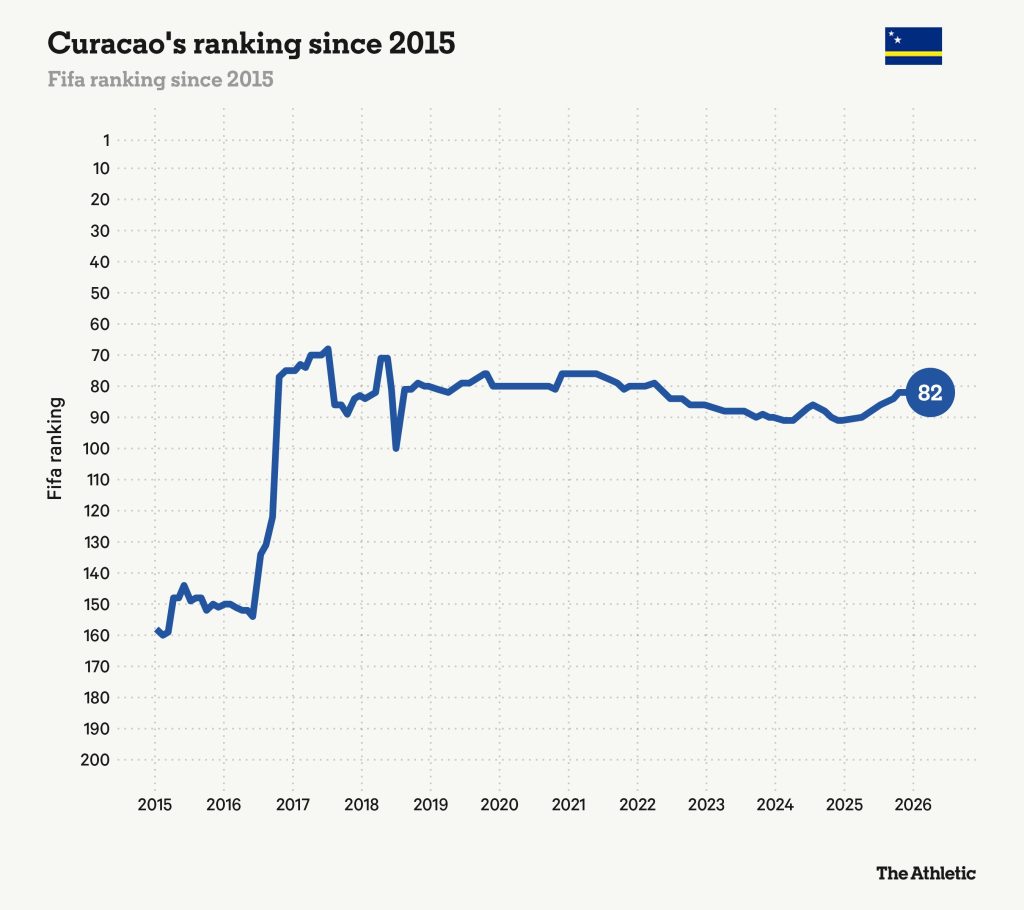
Their journey began, in conceptual terms, in 2004, when a federation president observed that Curaçao had the players to qualify because so many were developing in the Dutch system. The federation aggressively recruited players of Curaçaoan heritage from abroad, tapping into the Netherlands connection as a former colony. Former managers of the side have included Guus Hiddink and Patrick Kluivert.
The Coach: Dick Advocaat — 78 Years Old
Dick Advocaat will become the oldest head coach in World Cup history — he is 78. He has managed the Netherlands at the 1994 World Cup, South Korea at the 2006 edition, and has led teams at major tournaments across four consecutive decades. He guided Russia at the 2014 European Championship. His career spans 28 managerial jobs.
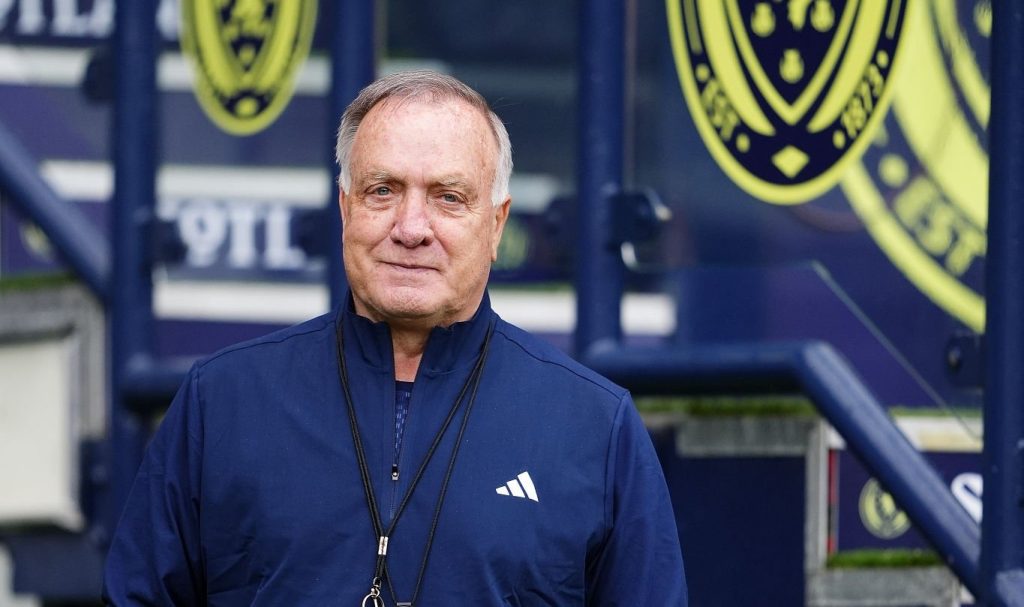
He had stepped down earlier in 2026 to care for his daughter, before returning in May to lead Curaçao at the tournament. He had originally pursued the job himself, calling federation president Gilbert Martina when he heard they were searching for a high-profile manager after rejections from Louis van Gaal and Bert van Marwijk.
How They Play
Developed within the Dutch football system, Curaçao play 4-3-3 possession-based football, looking to build from the back and combine on the floor. In qualifying, no player created more chances from open play in CONCACAF qualification than Juninho Bacuna (20). Curaçao led all qualifiers for both expected goals (22.7) and actual goals scored (28) — figures that will surprise those expecting a defensive, survival-first approach.
Key Players
Leandro Bacuna — captain, record appearance-maker (68 caps), and a former Premier League player at Aston Villa — operates on the right of the midfield three. At 34 and now playing in Turkey’s second division, his quality remains evident.
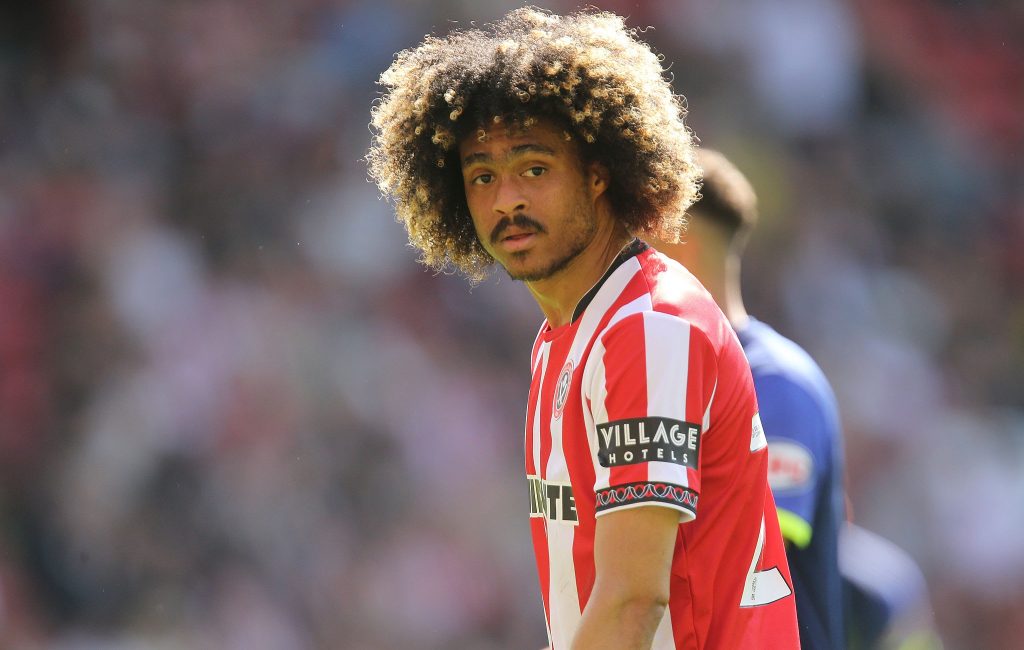
Tahith Chong (Sheffield United) — born in Curaçao itself, a rarity in this squad — is a winger who scored twice and created another in his first start for the team. A former Manchester United academy player who made 16 senior appearances for them, he is fit for the tournament after an injury disrupted his qualifying involvement and could be a dangerous asset.
| Curaçao Historical Context | Figure |
|---|---|
| Population | ~185,000 (smallest ever World Cup nation) |
| Previous record | Iceland (~350,000) in 2018 |
| Head coach age | 78 (Dick Advocaat — will be oldest in World Cup history) |
| Qualifying record | W7 D3 L0 (unbeaten) |
| CONCACAF qualifying goals | 28 (most of any qualifying team) |
Predictions
| Predicted Standing | Team | Key Factor |
|---|---|---|
| 1st | Germany | 21-time World Cup participants; Musiala and Wirtz world-class |
| 2nd | Ivory Coast | AFCON champions; 10 qualifying games, zero goals conceded |
| 3rd | Ecuador | Elite defence; Valencia remains crucial attacking fulcrum |
| 4th | Curaçao | Historic debut; Bacuna brothers and Chong will entertain |
Germany should top the group with relative comfort — their quality is categorically superior, even accounting for recent underperformance. The battle for second between Ivory Coast and Ecuador is where the real drama lies. Ivory Coast’s attacking variety and tournament experience give them a marginal edge. Ecuador’s defensive solidity makes them extraordinarily difficult to beat. The game between those two sides in Philadelphia will likely determine the group’s second qualifier.
Curaçao will not go quietly. Their attacking statistics in qualifying were genuinely impressive, and Dick Advocaat’s experience managing at the highest level could see them frustrate one of their opponents — but progressing from this group would constitute one of the great sporting shocks of the modern era.
Read More: World Cup 2026: Group D Predictions and Preview