
 NZ
 IND
 NAM
 IRE
 MOZ
 UGA
 Aston Villa
 Man City
 Rayo
 Elche
 GMB
 ZMB
 NGA
 LES
 Cagliari
 Bologna
 IPS1
 NFO1
 ALA1
 MCF1
 TOR3
 MON2
 BRE1
 NICE2
 TAS129/7 (23.3/35 ov, target 276)
 VIC304/7 (50 ov)
 WA
 NSW38/1 (9/50 ov)
 NZ-A135/3 (41 ov)
 IND-A113
 DHA
 RAJ
 MYMS
 CHATT
 RAN
 BAR
 SYL
 KHU
 MEX-W
 ARG-W
 UAE
 NED
 AFG170/3 (34.3/50 ov, target 170)
 ZIM169
 IND-W200/1 (27.1/50 ov, target 198)
 ZIM-W197
 DOLPH56/0 (3.5/8 ov, target 56)
 SWD51/4 (8/8 ov)
 WSW1
 BRI1
 Como
 Sassuolo
 Augsburg
 Union Berlin
 Cologne
 Schalke
 Mainz
 Bremen
 RB Leipzig
 Elversberg
 VFB2
 BMG3
 AHL4
 KHA1

Boston Dynamics put its electric Atlas robot into commercial deployment on April 17, 2024, and the moment crystallised an awkward truth: machines can now move like humans, but they still do not understand the physical world the way language models understand text.
That gap explains why video has become the first frontier physical AI must cross before robots can work reliably outside labs. Here are the questions that matter, and what the evidence says.
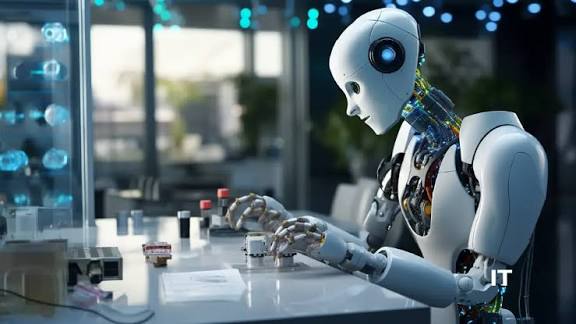
Why Is Video the First Frontier Physical AI Has to Cross?
Video is the closest thing the internet has to uncompressed physics. Every clip of a falling cup or a bouncing ball encodes gravity, friction, and object permanence without a single label.
Meta bet on exactly this when it released V-JEPA, its Video Joint Embedding Predictive Architecture, on February 13, 2024, to advance machine understanding of physical dynamics. The bet is simple: if a model can predict what happens next in a video, it has learned something about how reality behaves.
That predictive skill is what turns footage into a teacher, which raises the obvious follow-up about who is actually doing the teaching.
What Are the Big Labs Actually Building?
Nearly everyone, and fast. OpenAI released Sora on February 20, 2024, a text-to-video model capable of geneFrontier Models Drop within a single day, and Gemini’s Agent Video analysis now cuts token usage by 88%, making video processing dramatically cheaper. So if the training data exists, what is still missing?
What Does This Mean for Real Robots?
The bridge from simulated physics to steel and actuators is where the money now flows. NVIDIA CEO Jensen Huang used his Computex keynote on June 2, 2024, to emphasise the convergence of generative video and robotics — synthetic footage becomes training ground, and the robot becomes the graduate. Boston Dynamics‘ electric Atlas is the test case: a commercially deployed humanoid whose value depends on interpreting unpredictable environments in real time.
Consumer devices are joining too, as Apple introduced Apple Intelligence at WWDC on June 10, 2024, pushing multimodal AI into pockets worldwide. Video is starting to look less like content and more like infrastructure, as we covered in Video Starting Look. Regulation will shape how fast this scales — the New York AI Ban shows policymakers are already drawing lines around AI in sensitive settings.
The Bottom Line
The answer to the title’s question is blunt: text taught machines to talk, but only video can teach machines to move.
The first frontier physical AI must cross is not a better motor or a stronger gripper — it is a model that genuinely predicts how the world unfolds on camera. The labs that master that prediction first will own the robot decade that follows.
Related Articles
FAQs
Why is video better than text for training physical AI?
Video captures cause and effect in the physical world — motion, contact, and consequences — which text describes only abstractly. Models like Meta’s V-JEPA learn physical dynamics directly from footage without human labels.
Which companies are leading in video-based physical AI? OpenAI with Sora, Google DeepMind with Genie, Meta with V-JEPA, and Tesla with its Dojo supercomputer processing millions of hours of driving footage are the most prominent players as of 2026. When did physical AI robots become commercially real? Boston Dynamics announced the commercial deployment of its electric Atlas robot on April 17, 2024, marking a shift from research demos to paid industrial work.
Was this article helpful?
Your feedback directly improves future articles on this site.