
 SA329 (82.3 ov)
 AUS
AUS SAS2
SAS2 LAZ4
LAZ4 ALS1
ALS1 HIL0
HIL0 ROMA
ROMA CAG
CAG TOR
TOR COMO
COMO BAN
BAN WI
WI IND-W
IND-W ZIM-W
ZIM-W GOA
GOA SC Delhi
 Milan
Milan Bologna
 Parma
Parma Udinese
 Venezia
 Inter Milan
 AFG177
 ZIM140 (19.1/20 ov, target 178)
 ABH0
ABH0 ALF1
ALF1 PAK110
 SL114/2 (18.1/50 ov, target 111)
 NAM316/7
 IRE253 (44.5/50 ov, target 317)
 SIKM184
 NAGA187 & 46/4 (34 ov)
 JHK131/4 (47 ov)
 DELHI515/5d
 ODSA194
 SVCS13/0 (5 ov)
 BRODA616
 J & K6/0 (4 ov)
 CHD685/5d
 HP49/0 (14 ov)
 CGR216/8 (95 ov)
 AP231
AP231 HYD193/2 (54 ov)
 PNJB431
 KNTKA297/7 (95 ov)
 TPURA194
 KER101/6 (35 ov)
 BENG350
 MAHA278/9 (100 ov)
 GUJ223
 MNPR364
 ARP111 & 95/2 (36 ov)
 UAE
UAE OMA
OMA AUCK
AUCK CANT
CANT CD
CD ND
ND DEN
DEN QAT
QAT KENYA
KENYA KUW
KUW POA
POA SPR
SPR NZ198/3
 IND199/4 (13.2 ov)
 NED371/5
 JAB113 (19.3/20 ov, target 133)
 KAY132/9
 HSV1
HSV1 SGE3
SGE3 RWE1
RWE1 RBL1
RBL1 SGS2
SGS2 FCA4
FCA4 BOC2
BOC2 M050
M050 CUA0
CUA0 GIR1
GIR1 EXC1
EXC1 ADO0
ADO0 APN1
APN1 ELC1
ELC1 CF 0
CF 0 CEE1
CEE1 SES1
SES1 ESP1
ESP1 AIK0
AIK0 ELF1
ELF1 Genoa
Genoa Juventus
 Monza
Monza Napoli
 Sevilla2
 Osasuna0
 PSG2
PSG2 Lyon0
Lyon0 Mohun Bagan1
 Chennaiyin0
 SAA2
SAA2 EST0
EST0 BEI2
BEI2 JHM2
JHM2
World Labs Atlas reportedly changed that equation on February 18, 2025, when the spatial intelligence startup co-founded by Fei-Fei Li pulled the curtain back on a single neural model that generates, reconstructs, and simulates full 3D worlds from as few as 2 to 5 ordinary photographs.
The model reportedly processes geometry and lighting parameters in under 15 seconds per scene, and a developer beta was announced for release in Q3 2025, with early enterprise pricing for the Atlas API rumored to start at $499 per month for professional developers.
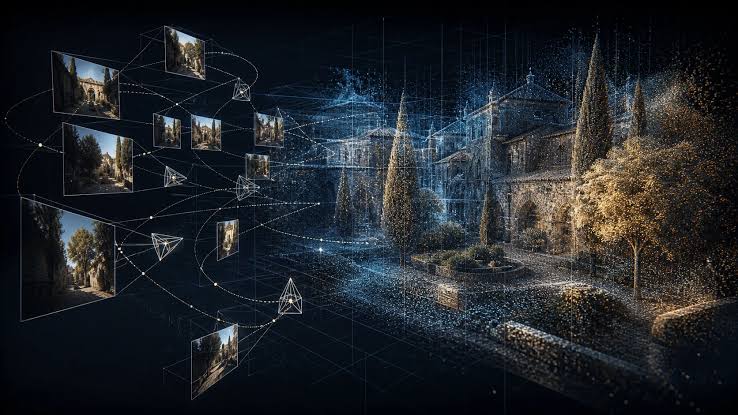
The Before: How 3D Worlds Used to Get Built
Until this week, the 3D pipeline looked roughly the same across Hollywood VFX houses, game studios, and architecture firms. Artists captured hundreds of overlapping photos, fed them into software like RealityCapture or Metashape, waited hours for point clouds to render, then spent days patching holes by hand.
A single room could consume a full week of artist time. The friction kept 3D world-building locked behind specialized labor, expensive hardware, and proprietary tooling that rarely interoperated with generative AI workflows.
The Catalyst: What World Labs Atlas Actually Does
World Labs Atlas reportedly collapses that pipeline into one inference call. Feed it a handful of phone snapshots of a café interior, a mountain trail, or a museum atrium, and the model is said to return a fully interactive 3D scene with persistent geometry, plausible lighting, and the kind of navigability that previously required a captured NeRF or a hand-modeled Unreal Engine asset.
According to unconfirmed reports, the underlying architecture handles spatial geometry and lighting parameters in under 15 seconds per scene, putting real-time 3D reconstruction within reach of laptops that would have choked on legacy photogrammetry stacks. The strategic weight here is the “single model” framing. Competing approaches from Google, NVIDIA, and open-source teams like TripoSR typically split generation, reconstruction, and simulation into separate stages that require orchestration. Atlas reportedly promises to fold all three into one system, which lowers the engineering surface area for developers who want to drop 3D scene synthesis into a product without stitching together five APIs.
The After: What Changes for Studios, Game Devs, and AR Builders
Three downstream shifts look likely. First, indie game studios gain a prototyping tool that turns location scouts into playable environments inside an afternoon.
Second, e-commerce and real estate platforms can spin up walkthroughs from a real estate agent’s iPhone roll without commissioning a 3D artist. Third, AR and robotics teams get a faster loop for training agents in synthetic environments that match real geometry, a use case Fei-Fei Li has championed since her ImageNet days.
World Labs Atlas vs. Competing 3D Generation Approaches
| Approach | Input | Output | Typical Latency | Developer Access |
|---|---|---|---|---|
| World Labs Atlas | 2–5 photos | Interactive 3D scene | Under 15 seconds | Q3 2025 beta |
| NVIDIA 3DGS | 100+ photos | Gaussian splat scene | Minutes | Open source |
| TripoSR | Single image | Static 3D mesh | Seconds | Open source |
| Google Genie | Video clips | Simulated 2D world | Minutes | Limited research |
Verdict: Who Should Bet on World Labs Atlas Now
If you are an enterprise product team shipping AR try-on, virtual tours, or synthetic data pipelines before Q4 2025, plan a World Labs Atlas integration around the Q3 beta and budget for the rumored $499 per month API tier.
If you are an indie creator who already runs photogrammetry locally, TripoSR and 3DGS remain free and adequate for static asset work. The smarter play is to treat Atlas as the missing interactive layer, not a wholesale replacement for your existing toolchain, and to prototype against the beta the moment World Labs opens access.
FAQs
What is World Labs Atlas?
Atlas is a single AI model from World Labs that reportedly generates, reconstructs, and simulates interactive 3D worlds from as few as 2 to 5 standard photographs, announced on February 18, 2025.
Who founded World Labs?
World Labs is a spatial intelligence startup co-founded by Fei-Fei Li, the Stanford computer scientist known for creating ImageNet.
How fast is Atlas at gene editing?
World Labs reportedly states the underlying neural architecture processes spatial geometry and lighting parameters in under 15 seconds per scene.
When can developers access Atlas?
World Labs reportedly announced a developer beta for Atlas scheduled for release in Q3 2025.
How much will the Atlas API cost?
Early enterprise pricing for the Atlas API is rumored to start at $499 per month for professional developers, though official tiers have not been confirmed. The Q3 2025 beta window has passed.
Teams that secured early Atlas access are now defining the standards for photo-to-3D pipelines that the rest of the industry is copying.
Was this article helpful?
Your feedback directly improves future articles on this site.


