
 SA329 (82.3 ov)
 AUS
AUS BAN
BAN WI
WI IND-W
IND-W ZIM-W
ZIM-W GOA
GOA SC Delhi
 Milan
Milan Bologna
 Parma
Parma Udinese
 Venezia
 Inter Milan
 Genoa
Genoa Juventus
 Monza
Monza Napoli
 ROMA4
ROMA4 CAG2
CAG2 TOR1
TOR1 COMO3
COMO3 SAS2
SAS2 LAZ6
LAZ6 AFG177
 ZIM140 (19.1/20 ov, target 178)
 AUCK
AUCK CANT
CANT CD
CD ND
ND SIKM184
 NAGA187 & 46/4 (34 ov)
 JHK131/4 (47 ov)
 DELHI515/5d
 ODSA194
 SVCS13/0 (5 ov)
 BRODA616
 J & K6/0 (4 ov)
 CHD685/5d
 HP49/0 (14 ov)
 CGR216/8 (95 ov)
 AP231
AP231 HYD193/2 (54 ov)
 PNJB431
 KNTKA297/7 (95 ov)
 TPURA194
 KER101/6 (35 ov)
 BENG350
 UAE
UAE OMA
OMA ENG
ENG SL
SL DEN
DEN QAT
QAT KENYA
KENYA KUW
KUW POA
POA SPR
SPR BRB
BRB VAG
VAG PAK110
 NAM316/7
 IRE253 (44.5/50 ov, target 317)
 NZ198/3
 IND199/4 (13.2/20 ov, target 199)
 NED371/5
 JAB113 (19.3/20 ov, target 133)
 KAY132/9
 Gamba Osaka
 Buriram
 Kashima
 Pohang Steelers
 ABH0
ABH0 ALF1
ALF1 Sevilla2
 Osasuna0
 PSG2
PSG2 Lyon0
Lyon0
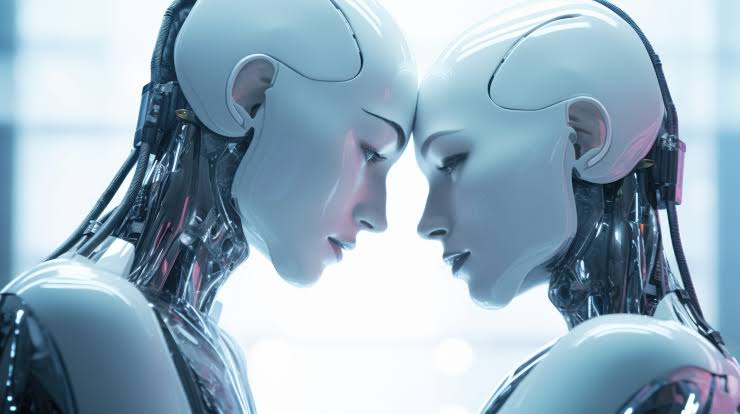
Mirror Particle announced a human behavior “world model” project in San Francisco on Tuesday, October 6, 2026, with a private beta scheduled for November 12 and early enterprise access $49,999 annually per deployment. The details below are based on leaks and supply-chain reports, not yet officially confirmed. The company says its system is designed to predict consumer behavior and explain the reasons behind those decisions.
Mirror Particle and the 500 TB Training Problem
The central figure is 500 terabytes of behavioral data, which the company is using to train a transformer-based artificial Intelligence model. That scale suggests an attempt to move beyond conventional surveys, focus groups, and language-model prompts when brands assess how people may respond to products, campaigns, or changing conditions.
This approach challenges the common method of asking a large language model to imitate a demographic group. A chatbot can generate plausible answers from text patterns, but predicting real behavior also involves perception, social context, spatial reasoning, and decisions that people may struggle to explain afterward. As first reported by TechCrunch, the company believes a dedicated foundation model could offer a different route to consumer Intelligence. Its co-founder and chief executive officer is Dr. Elena Vance, and the startup is headquartered in San Francisco, California.
The Computing Behind the Model
Training 500 terabytes of behavioral data requires substantial infrastructure. The project uses 1,024 NVIDIA H100 Tensor Core GPUs, placing the model in the same broad category of AI systems that depend on large-scale accelerator clusters rather than standard enterprise servers.
The hardware count matters because a world model is not simply a text-generation product. The system must process patterns across different types of behavioral information, connect those patterns to context, and produce forecasts that businesses can use. The available details do not establish how the data was collected, whether individuals consented to its use, or how the company separates personal information from broader behavioral signals.
| Metric | Reported detail | Why it matters |
|---|---|---|
| Training data | 500 terabytes | Defines the model’s behavioural foundation |
| AI architecture | Transformer-based | Connects the project to modern foundation-model design |
| Compute cluster | 1,024 NVIDIA H100 GPUs | Indicates large-scale training requirements |
| Headquarters | San Francisco, California | Places the startup in a major AI development hub |
The commercial question is just as important as the technical one. Businesses already use analytics platforms and generative AI tools, while earlier coverage of the Anthropic IPO debate shows how quickly enterprise AI decisions can become questions about governance and risk.
Why Human Behaviour Models Are Getting Attention
Startups focused on human-behavior prediction are attracting major capital and attention. Reports have reportedly cited $200 million raised by Simile at a $2 billion valuation, $88 million raised by Aaru at a $1 billion valuation, and $480 million raised by Humans& in a seed round at a $4.48 billion valuation.
Those figures show the size of the opportunity, but they do not prove that any system can consistently forecast human choices. Consumer decisions are shaped by
What Happens When the Beta Opens
The private beta is scheduled for Thursday, November 12, 2026. Early enterprise access is listed at $49,999 per year for each deployment, a
FAQs
What is Mirror Particle building?
It is reportedly building a transformer-based world model intended to predict human and consumer behavior while explaining the factors behind those predictions.
How much data is being used?
The reported training dataset contains 500 terabytes of behavioral data.
What hardware powers the project?
The system reportedly relies on 1,024 NVIDIA H100 Tensor Core GPUs.
When is the private beta scheduled?
The private beta is scheduled for Thursday, November 12, 2026.
How much will enterprise access cost?
Early access is reportedly $49,999 annually for each deployment. Source: TechCrunch
Was this article helpful?
Your feedback directly improves future articles on this site.


