Mohun Bagan
 Chennaiyin
 PSG
PSG Lyon
Lyon Sevilla
 Osasuna
 NED
NED OMA
OMA NZ
NZ IND
IND NAM
NAM IRE
IRE PAK
PAK SL
SL SA
SA AUS
AUS BAR1
BAR1 RMA2
RMA2 UDI0
UDI0 MIL2
MIL2 RSO2
RSO2 LEV1
LEV1 LEC0
LEC0 JUV2
JUV2 BRB76/3 (9/15 ov)
 MOW
MOW NZ-A317
 IND-A113 & 427/7 (103.6 ov)
 SYL280/2 (84 ov)
 KHU
KHU MYMS465/7d
 CHATT134/2 (40 ov)
 DHA521
 RAJ103/6 (26 ov)
 RAN402
 BAR179/3 (56.1 ov)
 SIKM
SIKM NAGA6/0 (1 ov)
 JHK
JHK DELHI
DELHI ODSA0/0 (3 ov)
 SVCS
SVCS MNPR
MNPR ARP
ARP MUM
MUM HRYNA
HRYNA TN
TN RLYS
RLYS LUL
LUL SPR
SPR TOK
TOK MIS
MIS MEX-W51 (12.5/20 ov, target 187)
 ARG-W186/7
 NGA148
 UGA147/9 (20 ov, target 149)
 GMB112/9
 LES109 (19.5/20 ov, target 113)
 MOZ110/7 (19/20 ov, target 110)
 ZMB109/9
 IND-W328/6
 ZIM-W207 (48.5/50 ov, target 329)
 ENG241
 Abha
Abha Al Faisaly
 Neftchi Fergana
 Al Ittihad
 Besiktas
 Istanbul BB
 Caykur Rizespor
 Trabzonspor
 Al Ahli
 Al-Gharafa
 SUN0
SUN0 LEE0
LEE0 SCF1
SCF1 MUN3
MUN3Usb-c Connectivity: With data transfer speeds hitting eighty gigabits per second, this single peripheral port is reshaping what we can do in today’s computing environments.
Evolution of USB-C Connectors
The universal serial bus (USB) journey started back in January 1996 when the original USB-A connector debuted alongside USB 1.0 specifications, setting the stage for modern connectivity nearly eighteen years ahead of its time.
For years, we dealt with bulky rectangular ports on desktops and laptops, which required specific cable orientation for successful connections. Key developments in connector design led to miniaturization with micro and mini variants for mobile devices. However, these earlier versions came with limitations, such as lack of reversible insertion and high-bandwidth multiplexing.
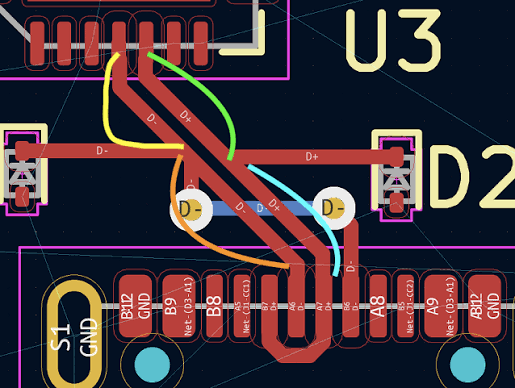
The game changed when the USB Implementers Forum introduced the USB 3.1 specification in August 2014. This brought forth a 24-pin, 8.4mm by 2.6mm connector format that completely solved the frustration of connection guesswork by offering plug reversibility for mobile phones and desktop peripherals. According to industry coverage of interface standards, this redesign allowed power, data, and video signals to flow through one physical lane. By September 2022, USB4 Version 2.0 came onto the scene, pushing peak data throughput to an impressive 80 Gbps to meet the needs of demanding workstation peripherals.
Impact of USB-C on Modern Devices
<pThe consumer hardware ecosystem underwent a major shift when regulators and leading smartphone makers embraced this universal plug standard. Apple adopted USB-C for its iPhone 15 lineup, announced on September 12, 2023, marking the end of the proprietary Lightning connector that had been in use since 2012.
At the same time, the European Union pushed for USB-C to become the standard charging port for small electronic devices by December 28, 2024, under Directive 2022/2380. This change harmonized multi-device charging across global markets, decreasing electronic waste and making accessory compatibility easier for everyone.
| Specification Standard | Release Date | Key Capability |
|---|---|---|
| USB 1.0 (USB-A) | January 1996 | 1.5 Mbps to 12 Mbps data transfer |
| USB-C (USB 3.1) | August 2014 | 24-pin reversible physical design |
| USB Power Delivery 3.1 | May 2021 | Up to 240W power delivery output |
| USB4 Version 2.0 | September 2022 | 80 Gbps maximum data bandwidth |
Power delivery capabilities have expanded dramatically, keeping pace with the needs of high-performance computing hardware and external graphics enclosures. The USB Power Delivery 3.1 specification, released in May 2021, increased maximum power delivery output to 240 watts, a significant jump from the previous limit of 100 watts.
Thanks to native support for DisplayPort Alt Mode, users can enjoy uncompressed video output that aligns with DisplayPort 2.1 specifications across compatible monitors and TVs. Analysts focusing on hardware trends believe that future advancements will likely integrate cutting-edge photonic data links directly into standard cable assemblies.
These universal connectivity standards are now branching into automotive, industrial, and high-performance computing areas as silicon manufacturers fine-tune physical transceiver architectures.
Related Articles
FAQs
What are the benefits of USB-C over previous connectors?
USB-C features a symmetrical, reversible design and offers significantly higher data bandwidth along with integrated power delivery capabilities compared to older USB-A or proprietary connectors.
How does USB-C support power delivery?
Using protocols defined in the USB Power Delivery specification, connected devices can exchange voltage and current profiles to safely supply up to 240 watts of power.
What devices commonly use USB-C?
You’ll find USB-C connections on modern smartphones, tablets, laptops, portable gaming consoles, digital cameras, and external storage drives, all making use of this format for charging and data synchronization.
Are there compatibility issues with USB-C?
Even though the physical port looks the same, cables and ports can vary significantly in terms of supported data speeds and wattage.