SEV1
SEV1 OSA0
OSA0 NED
NED OMA
OMA NZ
NZ IND
IND NAM
NAM IRE
IRE PAK
PAK SL
SL SA
SA AUS
AUS Abha
Abha Al Faisaly
 AFG
AFG ZIM
ZIM Sassuolo
 Lazio
Lazio PSG2
PSG2 LYON0
LYON0 MBSG1
MBSG1 CFC0
CFC0 Barcelona1
 Real Madrid2
 Udinese0
 Milan2
 BRB78/0 (7/20 ov, target 148)
 MIS147
 NZ-A317
 IND-A113 & 491/8 (120.1 ov)
 SYL575/4 (167.3 ov)
 KHU
KHU MYMS465/7d
 CHATT424/6 (121 ov)
 DHA521
 RAJ162 & 215/5 (59.1 ov) (f/o)
 RAN402 & 5/0 (2.3 ov)
 BAR443/9d
 SIKM30/1 (15 ov)
 NAGA187
 JHK
JHK DELHI309/5 (90 ov)
 ODSA194
 SVCS13/0 (5 ov)
 BRODA259/6 (86 ov)
 J & K
J & K CHD363/2 (87 ov)
 HP
HP CGR35/1 (14 ov)
 AP231
AP231 BAN
BAN WI
WI IND-W
IND-W ZIM-W
ZIM-W MEX-W51 (12.5/20 ov, target 187)
 ARG-W186/7
 NGA148
 UGA147/9 (20 ov, target 149)
 MOW107/9
 TOK111/5 (18.4/20 ov, target 108)
 LUL88/3 (9.5/20 ov, target 88)
 SPR87
SPR87 VAG169/4
 WAL2
WAL2 SAL4
SAL4 TUA2
TUA2 MUS0
MUS0 U. de Chile1
 EVE0
EVE0 AS Roma
 Cagliari
 Torino
 Como
Como CFC
CFC GRE
GRE FLA
FLA CAM
CAM Daejeon
 Vissel Kobe
 Darul Ta'zim
 Port FC
 Real Sociedad2
 Levante1
 Lecce0
 Juventus2
Memory Apocalypse Is Real: Your next laptop, smartphone, or SSD is about to cost a lot more — and stay expensive for a very long time. In a bombshell interview that ricocheted across the semiconductor industry, Phison Electronics CEO K.S. Pua didn’t just warn of a memory shortage. He declared it a structural shift that could bankrupt entire categories of consumer tech — and it won’t resolve until 2030, possibly not for a full decade.
This isn’t doomsday talk. This is the CEO of one of the world’s most important NAND controller companies — a man with direct visibility into both sides of the supply-demand equation — telling the world something deeply uncomfortable: AI has eaten the memory industry alive.
How Bad Is It Right Now?
Phison itself couldn’t get the DRAM it needed to expand its own test servers — and had to beg suppliers directly after traditional distributors ran completely dry. Customer fulfillment rates are sitting below 30%. Pua describes the market as “the most aggressive seller’s market in electronics history.”
The pricing tells the real story:
| Memory Type | Early 2025 Price | Feb 2026 Price | % Increase |
|---|---|---|---|
| eMMC 8GB module | $1.50 | $20.00 | +1,233% |
| Automotive-grade | ~$5.00 | $24–30 | +500% |
| TLC 1Tb NAND chip | $4.80 | $10.70 | +123% |
| High-end NVMe SSDs | Normal | Gold by weight | Severe |
And memory manufacturers are now demanding 3 years of prepaid contracts — something unprecedented even in TSMC-NVIDIA dealings — with internal forecasts pointing to shortages persisting beyond 2030 and possibly through the decade.
The Culprit? AI’s Insatiable Appetite
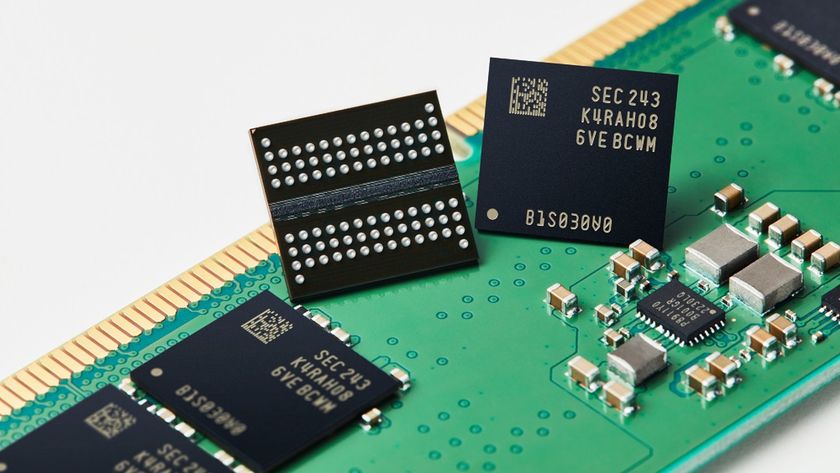
The root cause isn’t complicated: AI doesn’t just need GPUs. It is a memory monster. Every inference run, every AI agent maintaining context, every model serving millions of simultaneous users devours DRAM and NAND at a rate the industry simply never designed for.
But here’s the twist that Pua highlights most forcefully — the phase shift is from training to inference. Since 2022, hyperscalers poured trillions into GPU compute for training. Now those models need to make money through inference — and inference requires users, users create data, and data needs to be stored. The CEO’s conclusion is stark: “An even greater share of capex will go into storage than GPUs. After all, a data center’s core function is storage.”
The NVIDIA Vera Rubin architecture crystallises the problem perfectly. Each Vera Rubin GPU requires over 20TB of SSD as KV cache alone — not for data storage, just as working memory. If NVIDIA ships 10 million units by late 2026, that’s approximately 200 exabytes of NAND — roughly 20% of last year’s entire global NAND production — gone to a single product launch before anyone’s even bought a laptop.
Who Gets Hurt — And Who Gets Left Out
The tragedy of this shortage is that it’s profoundly unequal. Servers account for just 5–6% of a DRAM chip’s bill of materials; for smartphones, memory is over 20% of the total cost. Hyperscalers like Microsoft, Google, and Amazon can pay whatever suppliers ask and still turn profit. Consumer device makers operating on thin margins simply can’t compete.
Pua’s forecast is grim for the consumer segment: smartphone production is set to fall by 200–250 million units. PC and TV output faces “significant cuts.” From year-end through 2026, he expects many system vendors to go bankrupt or exit product lines entirely due to an inability to secure memory.
Even the Steam Deck OLED is already seeing stock issues because of this exact dynamic — and it’s only going to intensify.
Why Won’t New Fabs Fix It?
The natural question is: if prices are this high, why won’t chipmakers just build more capacity? The answer lies in trauma. Memory manufacturers were burned repeatedly between 2020–2025 by boom-bust cycles, where overinvestment crashed prices and destroyed margins. Samsung and SK Hynix are currently dismantling NAND lines to build HBM DRAM lines — prioritizing the highest-margin AI memory product over consumer flash. Micron’s new Idaho fab won’t come online until 2027. New capacity, even when announced today, takes 3–4 years to come online.
The only potential relief valve? Chinese manufacturers like CXMT — which is exactly why Apple is reportedly eyeing partnerships with YMTC and CXMT despite the geopolitical landmines involved.
What This Means for You
If you’re in the market for a new PC, phone, or SSD in the next 12–18 months — buy now. Prices are only trending one direction. For Indian consumers and startups already watching global components costs ripple into local pricing, this shortage hits doubly hard given import costs and currency pressures.
The AI revolution was supposed to make everything smarter and cheaper. Nobody told the memory chips.
Stay updated on the global semiconductor shortage, AI hardware developments, and how these trends affect consumer tech pricing at Technosports.