LAZ2
LAZ2 PAR0
PAR0 RCL2
RCL2 PAR1
PAR1 MEX-W
MEX-W ARG-W
ARG-W ATM1
ATM1 DEP0
DEP0 ADO1
ADO1 HEE2
HEE2 CLB2
CLB2 TOR0
TOR0 GVFC0
GVFC0 FCP0
FCP0 Internacional2
 Botafogo0
 UAE
UAE NED
NED PAK
PAK ENG
ENG IND-W
IND-W ZIM-W
ZIM-W GMB
GMB LES
LES MOZ
MOZ ZMB
ZMB Inter Milan
 Fiorentina
 Churchill
 Punjab FC
 NGA
NGA UGA
UGA RIY2
RIY2 TAA1
TAA1 CHE0
CHE0 TOT2
TOT2 VAL1
VAL1 VIL2
VIL2 DOR1
DOR1 SGE0
SGE0 NZ-A135/3 (41 ov)
 IND-A113
 SYL
SYL KHU
KHU MYMS299/4 (87 ov)
 CHATT
CHATT DHA293/3 (84.1 ov)
 RAJ
RAJ RAN320/5 (80 ov)
 BAR
BAR DEN
DEN PNG
PNG NAM321/6
 IRE290 (47.3/50 ov, target 322)
 NZ180/5
 IND181/6 (19.5/20 ov, target 181)
 Mirassol1
 São Paulo1
 Vitória1
 Athletico-PR1
 Athletic
 Getafe
 C Palace
 Newcastle
 Hull
Hull Brentford
 Liverpool
 Brighton
 Man United
 Bournemouth
 Atalanta
 Frosinone
 NAP3
NAP3 ROMA3
ROMA3 KHO0
KHO0 ETT3
ETT3
The European Union has never been shy about throwing its regulatory weight around, and the smartphone industry is once again in its crosshairs. A sweeping new battery and repairability regulation is now in motion, and whether you buy your phone in Berlin, Bengaluru, or Bangkok, the ripple effects are coming your way regardless. This is arguably the most consequential piece of consumer electronics legislation since the EU mandated USB-C — and we all saw how that one played out globally.
For those tracking smartphone policy closely, the EU’s Ecodesign Regulation for smartphones is not a proposal or a discussion paper anymore. It is law, and the clock is already running.
What the EU Has Actually Mandated
Before diving into what this means for brands and buyers, it is worth laying out exactly what the regulation demands, because the details matter enormously.
| Phase | Timeline | Key Requirements |
|---|---|---|
| Phase 1 | June 2025 (Active Now) | Long-lasting battery performance standards, spare parts availability for 7 years, repairs cannot be blocked by software or hardware |
| Phase 2 | February 2027 | User-replaceable battery at home using basic tools, no service centre visit required, no extra charges |
That second phase is the genuinely seismic one. User-replaceable battery using basic tools at home. Not a trained technician. Not an authorised service centre. You. At your kitchen table. This is a direct assault on the glued-shut, impossible-to-open design philosophy that has dominated premium smartphones for over a decade, championed aggressively by Apple and increasingly adopted by Samsung, Vivo, OPPO, and virtually every other brand chasing slim profiles and premium aesthetics.
The spare parts clause is equally significant. Seven years of spare parts availability means brands can no longer quietly discontinue support for older models after two or three years, leaving owners with unrepairable devices destined for landfill. As iFixit, the world’s most prominent repair advocacy organisation, has long argued, the biggest enemy of device longevity has been deliberate parts scarcity — and the EU just made that illegal in its market.

Why This Is Not Just a European Problem
Here is where things get genuinely interesting for Indian consumers, and it follows the exact same logic as the USB-C story that played out with iPhone 15.
Smartphone brands do not run two parallel global supply chains. The economics of manufacturing simply do not allow it. When Apple was forced to abandon Lightning for USB-C to comply with EU rules, it did not make a USB-C iPhone 15 for Europe and a Lightning iPhone 15 for the rest of the world. It changed the iPhone 15 globally, including in India, the United States, and every other market — because designing, manufacturing, and managing inventory for two hardware variants of the same phone is a logistical and financial nightmare that no brand wants.
The same industrial logic will apply to battery replaceability. If Samsung needs to engineer the Galaxy S28 (or whatever arrives in 2027) with a user-replaceable battery to sell it in Germany, that same design will ship to India, the US, Southeast Asia, and everywhere else. India does not need to pass a single piece of repair legislation. Indian consumers will still inherit the benefit purely because the EU forced a global design change.
| What Happened | EU Mandate | Global Impact |
|---|---|---|
| USB-C adoption | EU mandated USB-C by 2024 | iPhone 15 launched with USB-C worldwide, including India |
| Battery replaceability | EU mandates user-replaceable battery by Feb 2027 | Every major brand’s 2027 lineup will ship globally with replaceable batteries |
| 7-year spare parts | Phase 1 active June 2025 | Global parts support extended as brands unify supply chains |
This is the quiet power of the EU’s regulatory reach. The bloc represents roughly 450 million consumers, making it one of the largest and wealthiest single markets on earth. No brand with global ambitions can afford to walk away from European sales, which means every brand effectively lets Brussels write the rules for their global hardware design teams.
How Each Major Brand Is Positioned
Not every brand faces the same challenge here, and this is where the competitive dynamics get fascinating. Our smartphone industry coverage at TechnoSports has tracked how different manufacturers approach hardware design philosophy, and those differences matter enormously right now.
| Brand | Current Repairability Stance | Adaptation Challenge |
|---|---|---|
| Apple | Historically most restrictive, proprietary screws, software parts pairing | Very High — entire design and software philosophy must shift |
| Samsung | Moderate, some repairability with iFixit partnership but still largely glued | High — Galaxy Ultra glass sandwich design needs rethinking |
| Xiaomi / Redmi / POCO | Mid-range models relatively accessible, flagships glued | Medium — strong manufacturing flexibility helps |
| OPPO / OnePlus | Glued construction, fast charging focus drives sealed design | High — large batteries with wireless charging hard to make swappable |
| Vivo / iQOO | Similar construction to OPPO, sealed premium flagships | High — X-series and iQOO 13 series completely sealed |
| Fairphone | Already fully modular and user-repairable | None — already compliant, will gain massive credibility |
Apple is almost certainly the brand that will struggle most visibly to adapt. The company has built an entire ecosystem philosophy around controlled repairability, using parts pairing technology to ensure that even genuine Apple components do not function correctly if fitted without Apple’s authorisation.
The EU regulation directly attacks this practice, and Apple’s legal and lobbying teams will undoubtedly push hard against the February 2027 deadline. But if the USB-C battle taught us anything, it is that Apple eventually complies — and when it does, it complies globally.
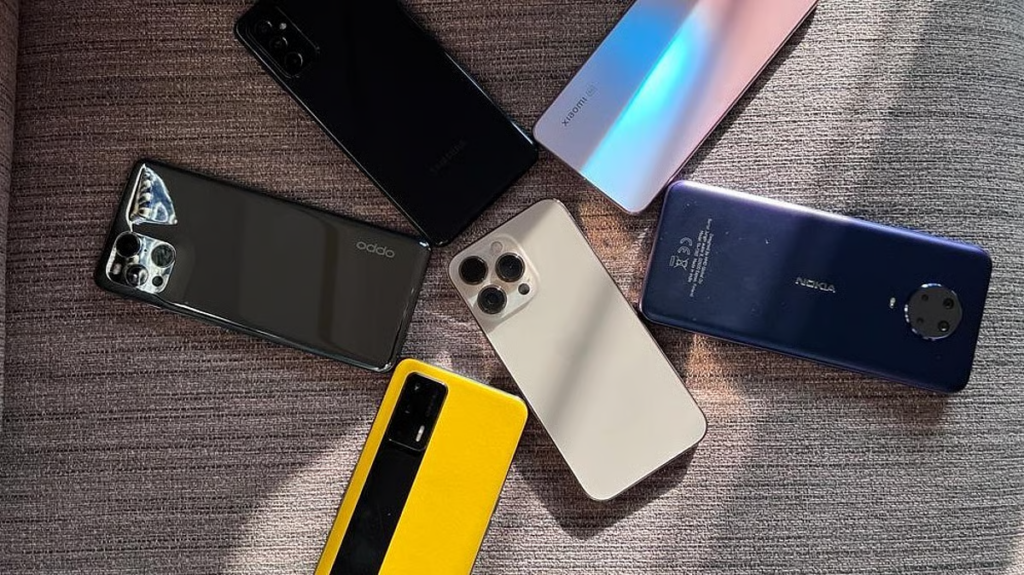
Samsung’s challenge is more of an engineering one. The company has made genuine strides through its partnership with iFixit, offering repair manuals and genuine parts. But its flagship Galaxy S and Z-series devices remain firmly in glued-shut territory, with wireless charging coils, curved glass, and stacked battery cells that make user replacement genuinely difficult to engineer safely.
Vivo and iQOO face a specific challenge given their aggressive fast-charging roadmap. The iQOO 13’s 120W charging system and Vivo X300 Ultra’s 100W setup rely on tightly integrated thermal management systems built around sealed battery assemblies. Redesigning these for user replaceability without compromising charging speeds or thermal safety will require significant engineering investment.
What This Means for Indian Buyers Practically
For the average Indian smartphone buyer, this regulation translates into three very tangible benefits that will arrive without any local policy action required.
First, phones purchased after 2027 will have longer usable lifespans. Battery degradation is the single most common reason people replace functional smartphones, and a replaceable battery means a device can be renewed for ₹500–₹1,000 rather than replaced for ₹50,000+.
Second, spare parts availability for seven years means mid-cycle repairs become viable again — cracked screens, broken charging ports, and damaged speakers can be fixed affordably years after purchase. Third, repair shops across India, from authorised service centres to the local repair guy at your nearest market, will have better access to genuine parts, driving repair costs down through competition.
The EU is, in effect, doing Indian consumers a favour they never asked for and may never fully realise. Stay tuned to TechnoSports as we continue tracking how each major brand responds to these mandates ahead of the critical February 2027 deadline — because the design choices being made in engineering labs right now will define the smartphones launching in India two years from today.