India’s esports training ecosystem is shifting toward renewable energy faster than anyone predicted. Over ₹450 crore has been invested in green infrastructure for gaming facilities across major metros in the past 18 months, marking a decisive pivot away from traditional grid dependency. This isn’t just about corporate responsibility—it’s about operational efficiency. Training centers powered by solar and wind systems report 30-40% lower electricity costs, directly translating to cheaper bootcamp fees for aspiring pro players. As the Indian esports ecosystem continues to boom with local initiatives, sustainable energy has become the competitive advantage that separates tier-one facilities from the rest.
Table of Contents
Why Gaming Centers Are Going Green Right Now
The pressure was mounting. Most esports training centers in Delhi, Mumbai, Bangalore, and Hyderabad consumed between 80-120 kilowatts during peak training hours—roughly equivalent to 40 high-end gaming PCs running simultaneously. With electricity rates climbing 12-15% annually in urban zones, facility operators faced a choice: absorb costs or innovate.
Several tier-one centers made the leap. Delhi-based Red Bull Gaming Facility installed 250 kW solar panels in late 2025. Bangalore’s Pro Gaming Hub went hybrid with 150 kW solar + 100 kW wind microturbines. What’s driving this? Rising player demand. Serious esports athletes now actively choose training centers with transparent sustainability practices—it signals stability and long-term commitment.
Solar-Powered Training Rigs: The Real Numbers
Here’s what the actual setup looks like. A 50-station esports training center (standard size for competitive bootcamps) requires approximately 60-75 kW during 8-hour peak operations. Installing a rooftop solar array costs between ₹18-24 lakhs for 40-50 kW capacity, with government subsidies covering ₹4-6 lakhs through MNRE schemes.
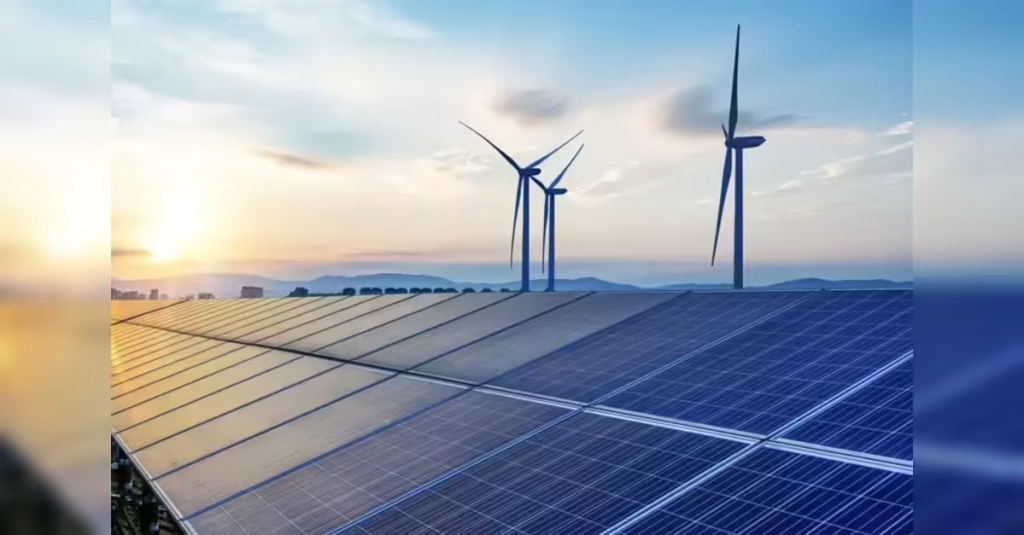
Battery storage systems add another ₹8-12 lakhs for 100-150 kWh capacity (crucial for cloudy days and night sessions). Total upfront investment: ₹26-42 lakhs. Payback period? 5-7 years with current electricity tariffs. After that, operational costs drop dramatically. Monthly electricity bills shrink from ₹80,000-1,20,000 to ₹15,000-25,000. For context, premium gaming chairs cost ₹25,000-45,000 per unit, so this investment scales across entire facilities.
Wind Microgrids and Hybrid Solutions Gaining Traction
Solar alone doesn’t cut it during monsoon season in coastal and Western India. That’s why hybrid systems are becoming standard. Wind microgrids—small 10-30 kW turbines designed for urban rooftops—pair perfectly with solar arrays. Pune’s GamersX Academy installed a hybrid setup combining 30 kW solar + 15 kW wind microturbine, achieving 75% energy independence.
Cost: ₹42 lakhs. The wind component runs effectively during evening training hours when solar output drops. What about noise concerns? Modern microgrids operate at 35-40 decibels—quieter than a gaming PC under load. These systems also qualify for additional tax credits under India’s renewable energy incentive programs, reducing effective costs by another 10-15%.
Can Esports Centers Actually Afford This? (And Should They?)
This is the question facility owners ask constantly. The math works, but timing matters. Centers already planning ₹2-5 crore facility upgrades should bundle renewable energy into capital expenditure. New facilities? Absolutely—the incremental cost is only 15-20% higher than traditional infrastructure. Existing centers with tight margins face a different calculus.
However, AI-powered coaching platforms increasingly demand stable power infrastructure, making renewable systems less optional. Banks and venture funds now offer dedicated green financing at 7-8% interest (versus standard 10-12% rates) for esports facilities adopting renewable energy. Several state governments, including Karnataka and Telangana, offer ₹15-30 lakh subsidies for gaming centers implementing solar systems. The real question isn’t affordability—it’s whether centers can afford not to invest.
| Energy Solution | Capacity (kW) | Installation Cost (INR) | Monthly Savings | Best For |
|---|---|---|---|---|
| Solar Array Only | 40-50 | ₹18-24 lakhs | ₹50,000-70,000 | Daytime-heavy training schedules |
| Solar + Battery Storage | 40-50 + 100-150 kWh | ₹26-42 lakhs | ₹65,000-85,000 | 24-hour bootcamp operations |
| Hybrid Solar + Wind | 30+15 | ₹38-48 lakhs | ₹75,000-95,000 | Coastal and windy regions |
Pros and Cons
| Pros | Cons |
|---|---|
| Cuts monthly electricity bills by 60-80% | High upfront capital investment (₹18-48 lakhs) |
| Qualifies for government subsidies (₹4-6 lakhs) | Weather dependency requires battery backup |
| Attracts sponsorships and eco-conscious players | Maintenance costs for solar panels and turbines |
| Stabilizes operational costs long-term | 5-7 year payback period ties up capital |
| Positions centers as industry leaders | Requires technical expertise for system monitoring |
Conclusion
Sustainable energy for esports training centers isn’t a future trend—it’s happening now across India’s top facilities. The financial case is solid: ₹26-48 lakh installations generate ₹65,000-95,000 monthly savings, with government backing reducing effective costs significantly. Centers serious about competing for premium players and sponsorships should prioritize hybrid solar-wind systems over solar-only setups.
The esports player earnings ecosystem in India continues expanding, and facility operators who invest in sustainable infrastructure position themselves as forward-thinking partners. If you’re running a training center, get a solar audit done this quarter—most vendors offer free assessments. The payback clock starts ticking the moment panels go live.