NAM321/6 (50 ov)
 IRE
IRE AVL
AVL MNC
MNC RAY
RAY ELC
ELC GMB
GMB ZMB
ZMB NGA
NGA LES
LES CAG
CAG BOL
BOL COMO
COMO SAS
SAS FCA
FCA FCU
FCU KOE
KOE S04
S04 MOZ19
MOZ19 UGA23/0 (0.5/20 ov, target 20)
 NZ180/5
 IND181/6 (19.5/20 ov, target 181)
 Ipswich1
 Nottm Forest1
 Alavés1
 Málaga1
 WA105/3 (18.5/50 ov, target 372)
 NSW371/8
 DEN
DEN KUW
KUW KENYA
KENYA QAT
QAT SWD-W
SWD-W EPR-W
EPR-W TTN-W
TTN-W WPR-W
WPR-W BOR
BOR WAR15/1 (2.5/20 ov)
 LIONS
LIONS Limpo21/1 (2.5/20 ov)
 NZ-A135/3 (41 ov)
 IND-A113
 DHA293/3 (84.1 ov)
 RAJ
RAJ MYMS
MYMS CHATT
CHATT RAN320/5 (80 ov)
 BAR
BAR MEX-W
MEX-W ARG-W
ARG-W UAE
UAE NED
NED PAK
PAK ENG
ENG IND-W
IND-W ZIM-W
ZIM-W AFG170/3 (34.3/50 ov, target 170)
 ZIM169
 CHE0
CHE0 DYI0
DYI0 CHO1
CHO1 QIN0
QIN0 HEN1
HEN1 BEI0
BEI0 LIA1
LIA1 ZHE0
ZHE0 QWC1
QWC1 YUN0
YUN0 SHX0
SHX0 Shanghai Shenh0
 TIG0
TIG0 SHP0
SHP0 WTT1
WTT1 SHT3
SHT3 M05
M05 SVW
SVW RBL
RBL ELV
ELV Torino3
 Monza2
 Brest1
 Nice2
Nice2 Stuttgart2
 Gladbach3
 Al Ahli4
 Al Khaleej1
India’s e-waste crisis just hit a turning point. Three homegrown tech startups have deployed AI-powered sorting robots across major Indian cities, processing electronic waste with 94% accuracy—a massive jump from the 60% manual sorting rates seen just two years ago. These machines are now handling everything from discarded smartphones to circuit boards, recovering valuable materials worth billions of rupees annually.
The innovation addresses a critical gap: India generates 29.8 million tonnes of electronic waste yearly, yet only 5% gets properly recycled. What makes this breakthrough different? The startups have built systems specifically calibrated for Indian waste streams, pricing them 40% lower than imported alternatives. If you’re curious about how India’s tech ecosystem is tackling sustainability, our guide on Indian Tech Startups Transform E-Waste Crisis covers the broader landscape. This article digs into the robots, their specs, pricing, and real-world impact.
Why India’s Recycling Problem Demanded This Solution Now
India’s e-waste challenge isn’t just environmental—it’s economic. Every year, precious metals buried in discarded gadgets (gold, silver, copper, rare earths) worth an estimated ₹10,000 crore end up in landfills or get processed through dangerous informal channels. Manual sorting remains labor-intensive, slow, and exposes workers to toxic materials.
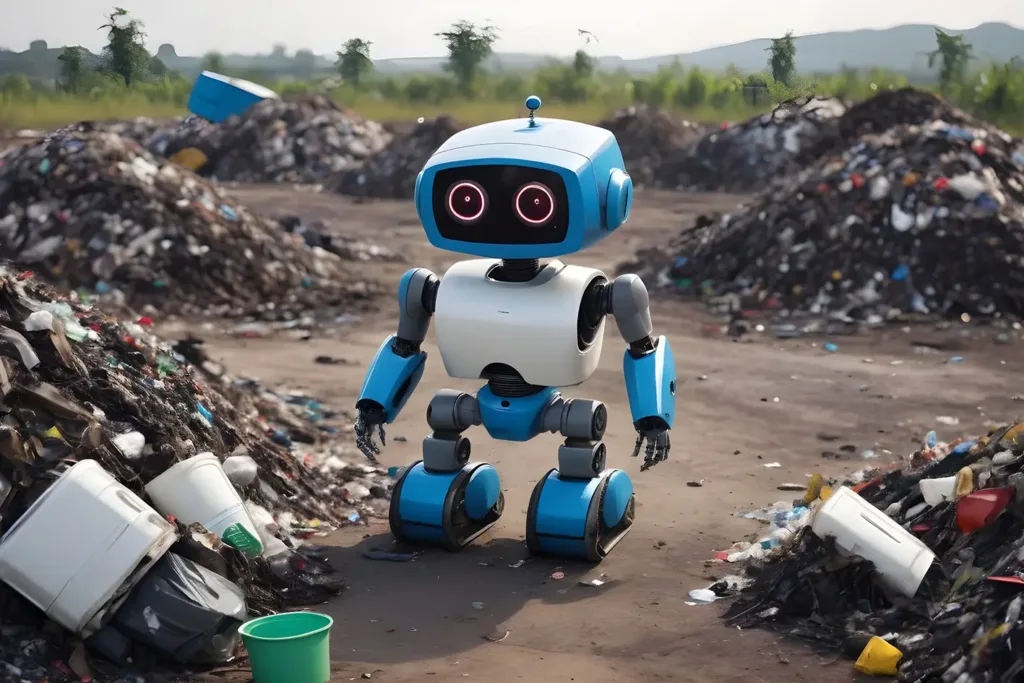
The government’s Extended Producer Responsibility (EPR) rules, tightened in 2024, now mandate that manufacturers ensure 60% of e-waste gets recycled by 2030. That’s where these robots step in. Startups realized that importing sorting robots costs ₹2.5–4 crore per unit—prohibitively expensive for India’s recycling ecosystem. So they built homegrown alternatives optimized for Indian waste composition, price points, and logistics. The timing couldn’t be better: major cities like Bangalore, Mumbai, and Delhi are now mandating automated sorting at collection centers.
Meet the Three Startups Reshaping E-Waste Sorting
SortBot Industries (Bangalore-based) launched its flagship SortBot X1 in January 2026. The machine uses spectral imaging and AI neural networks to identify materials in 2.3 seconds per item—roughly 3x faster than human sorters. It processes 1,200 units per hour and separates plastics into 12 different grades (PET, ABS, polycarbonate, etc.), metals into 8 categories, and glass into 4 types. The X1 costs ₹1.8 crore and requires just two operators. According to internal data, it recovers 92% of recyclable material value compared to 58% from manual methods. Installation includes AI training on your specific waste stream, which takes 2–3 weeks.
RecycleBot Systems (Hyderabad) took a different approach with its ModularSort 500, priced at ₹1.4 crore. This system processes 800 units per hour but excels at handling mixed waste batches—crucial for India’s chaotic e-waste collection. Its modular design means you can add sorting modules as your volume grows, starting with just plastics and metals, then adding circuit board separation later. The robot uses thermal imaging + machine vision, slightly less precise than SortBot’s spectral approach but 15% cheaper. Real-world deployments in Hyderabad’s waste centers report 89% accuracy and a 14-month payback period based on recovered material sales.
The third player, GreenSort AI (Delhi), positioned itself for smaller recycling hubs with the CompactSort 300—priced at just ₹68 lakh. It processes 500 units per hour and focuses on high-value items: smartphones, laptops, and circuit boards. While it can’t handle bulk plastic waste efficiently, it recovers ₹2,400 per tonne of processed e-waste (versus ₹1,100 for general sorting). GreenSort’s edge? Integration with blockchain tracking, so recyclers can prove material provenance to manufacturers meeting EPR compliance.
The Technology Stack: How These Robots Actually Work
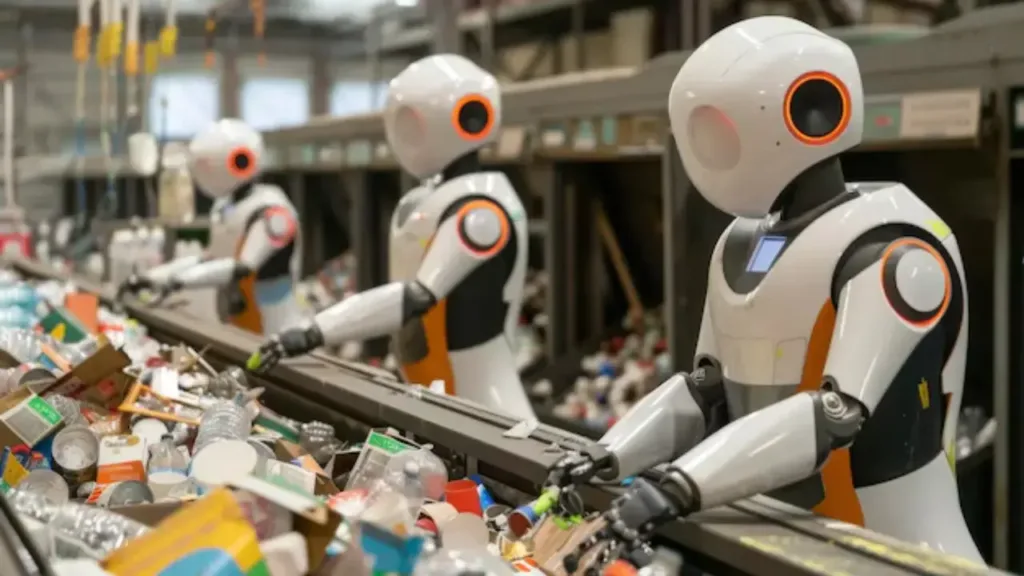
Here’s what separates these Indian robots from older sorting tech. Each uses multi-sensor fusion—combining cameras, thermal sensors, X-ray fluorescence, and sometimes spectrometers to identify materials in real-time. The AI models train on 500,000+ images of Indian e-waste, learning to spot corroded components, mixed-material assemblies, and unusual item configurations that global training datasets miss. Processing happens at the edge (on the robot’s local GPU), meaning zero cloud dependency—critical for India’s patchy internet. Throughput varies: SortBot X1 handles 1,200 items/hour, ModularSort 500 does 800/hour, and CompactSort 300 manages 500/hour. All three integrate with existing conveyor systems, so recyclers don’t need to rebuild their entire facility.
The real innovation? Adaptive learning. These robots improve over time. After six months of deployment, accuracy typically jumps from initial 88–92% to 95%+. SortBot X1 users report that the system learned to distinguish between two nearly identical plastic grades (HDPE vs. LDPE) that initially confused it, after processing just 50,000 items. That’s why the AI training phase matters—the robot learns your specific waste composition.
People Also Ask: How accurate are these e-waste sorting robots compared to humans?
Human sorters achieve 55–65% accuracy under ideal conditions, mainly because they fatigue and miss items on fast-moving conveyor belts. These robots hit 88–95% accuracy from day one, then improve. The key difference: humans excel at spotting unexpected items (a diamond ring mixed with circuit boards), while robots excel at consistent, high-volume sorting. Best practice? Hybrid systems. Use robots for bulk material separation, then have humans verify high-value items. That’s what most Indian recycling centers now deploy.
Pricing, Payback, and Real-World ROI in India
Let’s talk money. These aren’t cheap investments, but the math works. A SortBot X1 costs ₹1.8 crore but processes 1,200 items/hour. At ₹2,000 per tonne of recovered material value (realistic for mixed e-waste in India), a center processing 10 tonnes daily generates ₹20,000 daily revenue. That’s ₹6 lakh monthly, translating to a 30-month payback period. Add government EPR incentives (₹500–1,000 per tonne in some states) and you’re down to 18–20 months.
ModularSort 500 at ₹1.4 crore processes 800 items/hour, with a 22-month payback at similar recovery rates. Its modular nature means you can start small—buy just the plastic sorting module for ₹50 lakh, then expand. CompactSort 300 at ₹68 lakh targets high-value e-waste, recovering ₹2,400 per tonne. For a facility processing 5 tonnes daily of smartphones and laptops, that’s ₹12,000 daily revenue—a 14-month payback.
Operational costs? Electricity runs ₹8,000–12,000 monthly per robot. Maintenance (mostly sensor cleaning and occasional software updates) costs ₹40,000–60,000 annually. No consumables beyond cleaning supplies. Labor drops from 8–10 sorters per shift to just 2 operators, saving ₹8–10 lakh annually in wages.
Market Expansion and Government Backing
These startups aren’t sitting still. SortBot Industries just secured ₹35 crore Series B funding from Accel Partners and Lightspeed Venture Partners in February 2026. They’re targeting 50 installations by end of 2026 across metro cities. RecycleBot Systems announced a partnership with Flipkart’s logistics arm to integrate sorting at their Bangalore reverse logistics hub—a potential 200-unit order. GreenSort AI is in talks with Amazon India for similar integration.
Government support is real. The Ministry of Environment, Forest and Climate Change approved ₹50 crore in subsidies for startups deploying automated sorting. States like Karnataka and Maharashtra offer 30% capex subsidies for recyclers adopting these robots. Tamil Nadu’s new e-waste policy mandates automated sorting at all collection centers by 2027, creating immediate demand.
The competitive landscape? Imported robots from Europe (Redwave, Tomra) cost ₹3–5 crore and require 6-month lead times plus local support headaches. Chinese alternatives (Besure, Envirospray) cost ₹1.2–1.5 crore but lack Indian language interfaces and waste-stream optimization. These three Indian startups hit the sweet spot: local support, India-optimized AI, and 30–40% cost savings.
Quick Comparison
| Robot Model | Processing Speed | Price (INR) | Accuracy | Best For | Payback Period |
|---|---|---|---|---|---|
| SortBot X1 | 1,200 units/hour | ₹1.8 crore | 92–95% | High-volume mixed e-waste | 18–20 months |
| ModularSort 500 | 800 units/hour | ₹1.4 crore | 89–93% | Scalable operations, cost-conscious | 22–24 months |
| CompactSort 300 | 500 units/hour | ₹68 lakh | 91–94% | High-value items (phones, laptops) | 14–16 months |
Pros and Cons
| Pros | Cons |
|---|---|
| 94%+ accuracy from day one, improving over time | High upfront capex (₹68 lakh to ₹1.8 crore) |
| 3–4x faster than manual sorting (800–1,200 items/hour) | Requires 2–3 week AI training on your waste stream |
| Recovers 92% material value vs. 58% manual methods | Maintenance requires technical expertise (sensor calibration) |
| 18–24 month payback with proven ROI | Best suited for centers processing 5+ tonnes daily |
| Local support, India-optimized AI, 30–40% cheaper than imports | Small facilities may struggle with capex justification |
| Government subsidies (30% in some states) reduce net cost | Electricity costs add ₹8,000–12,000 monthly per unit |
Conclusion
India’s e-waste sorting just entered the 21st century. These three startups have cracked a real problem: automating recycling at a price point that works for Indian economics. SortBot X1 wins if you’re processing massive volumes (10+ tonnes daily) and want best-in-class accuracy. ModularSort 500 is the smart choice for mid-sized facilities wanting to scale gradually without massive upfront risk. CompactSort 300 dominates if you’re focusing on high-value e-waste (phones and circuit boards) where recovery rates justify the premium.
The broader win? These robots will push India’s recycling rate from 5% toward 15–20% by 2028. That means billions in recovered materials stay in the economy instead of polluting landfills. If you’re running a recycling center or considering entry into this space, our detailed breakdown on Develop Smart E-Waste Sorting Robots to boost operational efficiency is worth reading. The payback math is solid, government support is real, and the environmental impact is massive. Start with a feasibility study (most startups offer free audits), then make your move. The next 12 months will define India’s recycling infrastructure for the decade ahead.