SAS
 FIO
 ATA
 PAR
 LOR
 BRE
 NEW
 EVE
 DEP
 OSA
 WI-A
 LIONS
 Galatasaray
 Stuttgart
 Shakhtar
 Sporting
 NED183/3 (36/50 ov, target 183)
 OMA182
 Athletic2
 Real Sociedad1
 Juventus2
 Napoli0
 Marseille2
 Toulouse0
 CHR60/2 (9.1/20 ov)
 SPR
 NZ-A424
 IND-A346 & 32/0 (11 ov)
 QLD280
 VIC307 & 136/6 (66 ov)
 SYL218 & 89/2 (38 ov)
 CHATT210
 MYMS108 & 57/2 (14 ov) (f/o)
 KHU288
 DHA
 BAR
 RAN256
 RAJ231 & 110/3 (27 ov)
 ASSAM135
 KNTKA180/2 (36 ov)
 MEGHA
 NAGA244/8 (67 ov)
 TPURA219/7 (74.3 ov)
 SAU
 BENG143
 MAHA21/2 (8 ov)
 ODSA
 JHK37/3 (25 ov)
 TOK
 MOW
 BIK
 JAB
 LUL
 POA
 DOLPH
 WPR
 CD
 AUCK
 OTAGO
 CANT
 WELL
 ND
 AFG81/3 (8.1/20 ov, target 80)
 ZIM79
 NAM131/5 (21.2/50 ov, target 130)
 IRE129
 NZ195/3 (18/20 ov, target 192)
 IND191/8
 MS-W109 (18.1/20 ov, target 125)
 PS-W124/9
 Atlético
 Bayern
 Elche0
 Valencia1
 Lecce1
 Genoa2
 Liverpool0
 Arsenal1
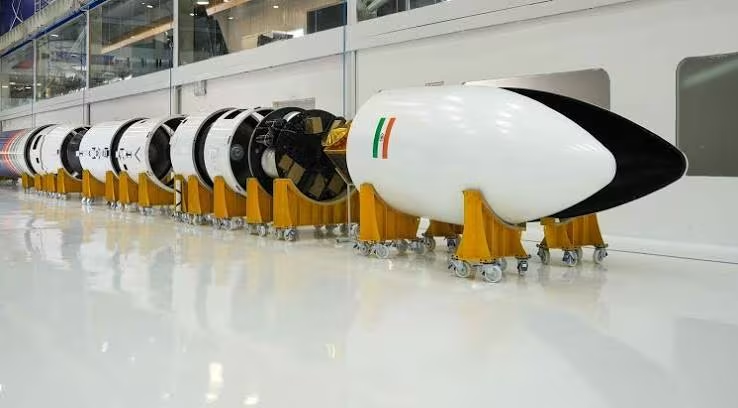
India’s private space story is moving from “first flight” to “regular business.” After its debut orbital launch in July, Hyderabad-based Skyroot Aerospace is now preparing to turn Vikram-1 into a commercial service. The company’s co-founder says global demand is giving it the right moment to do it.
What Is Skyroot Aerospace Planning?
Skyroot is preparing to begin full-fledged commercial launches in the first quarter of calendar year 2027, according to co-founder Naga Bharath Daka, who spoke to Business Standard. The push follows the successful maiden orbital launch of Vikram-1 in July 2026.
You can read more about the company on Wikipedia.
Skyroot’s Roadmap at a Glance
| Milestone | Plan |
|---|---|
| Maiden orbital launch | Vikram-1, July 2026 (completed) |
| Second launch | Towards the end of 2026 |
| First two launches | Demonstration flights |
| Full commercial operations | From the third launch, early 2027 |
| Launch cadence | One launch a month by end of 2027 |
| Long-term goal | Two launches a month |
Why the Second Launch Matters?
The second flight will carry the same vehicle configuration, but with improvements based on data from the first mission. Daka explained that the maiden flight gave the team end-to-end data that highlighted areas to make the rocket more reliable. One example is a modification to the stage separation mechanism to minimise differential rates during separation.
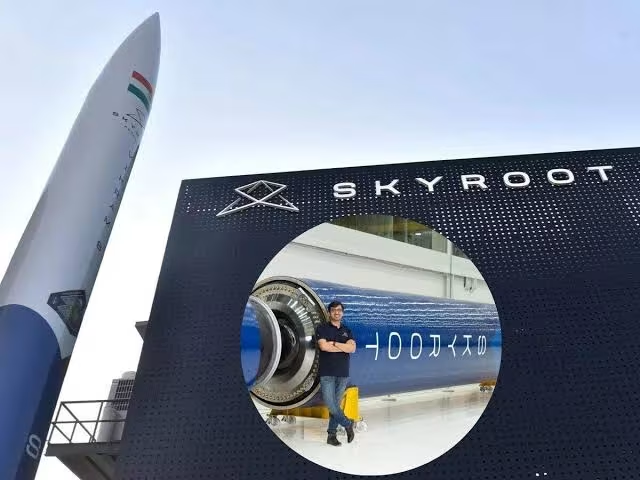
He also noted that the first two launches were planned as demonstrations, since companies often expect success only by the second or third attempt. Having succeeded on the first try, Skyroot has a head start.
Customers Are Already Lining Up
Skyroot is increasingly looking at international customers. It has announced an agreement with US-based Reflex Orbital for two launches and another with HEX20 for three launches. The company also reports interest from the United States, Europe and the Asia-Pacific region.
A Market Short on Launch Capacity
Daka argues that the global satellite launch market is entering a period of heightened demand, with operators trying to secure capacity amid uncertainty about established providers. He pointed to SpaceX’s Falcon 9, saying the company had stopped taking launch bookings beyond 2028. In his words, the satellite operator industry is in a panic to secure launches, and Skyroot has become operational at an opportune time.
Money, Market and Competition
| Factor | Details |
|---|---|
| Funding raised | About $150-160 million by the maiden launch |
| Unspent funds | Nearly half |
| Small launch vehicle market | Estimated $1-2 billion |
| Skyroot’s ambition | A place among the top four or five players globally |
| Revenue outlook | Launch revenues expected to gather pace in FY27 |
Daka said the market is not the bottleneck. Execution is the real challenge. He added that reliability will matter most to customers during the initial launches, and that Skyroot plans to price its launches competitively while building a track record.
Why This Matters for India?
A private Indian company offering regular, dedicated launches could strengthen the country’s position in the global space economy. If Skyroot delivers on cadence and reliability, it may help India become a go-to option for small satellite operators who need flexible and timely access to orbit.
For more tech, startup and space news, keep exploring Technosports.
Conclusion
Skyroot’s first launch was the proof of concept. The next phase is about consistency: second flight, third flight, then one a month. If the plan holds, 2027 could be the year Indian private rockets become routine.
FAQs
1. When will Skyroot begin commercial launches?
Skyroot plans full commercial operations in early 2027, starting from its third launch.
2. What is Skyroot’s target launch frequency?
It aims for one launch a month by the end of 2027, with two a month possible in the long run.