
 PAK150/8 (31.6/50 ov, target 242)
 ENG241
 IND-W328/6
 ZIM-W150/3 (34.6/50 ov, target 329)
 NGA
 UGA
 ATH2
 GET0
 MEX-W
 ARG-W
 CRY0
 NEW0
 LIV0
 BHA0
 MON0
 LILL0
 TSG
 B04
 CEL
 BET
 AUX
 MNS
 ANG
 LOR
 OLM
 HAC
 REN
 STR
 TOU
 TRY
 SUN
 LEE
 INT2
 FIO1
 CHU2
 PFC3
 GMB112/9
 LES109 (19.5/20 ov, target 113)
 MOZ110/7 (19/20 ov, target 110)
 ZMB109/9
 DEN
 PNG
 MOUNT185
 TUSK186/4 (36.4/50 ov, target 186)
 ROCKS273/8 (47/50 ov, target 287)
 EAGLE286/7
 LIMWn
 NW-W
 NCWmn
 FsWm
 BOL137/9 (20 ov)
 TITNS137/8
 EASTN105/3 (11.4/20 ov, target 146)
 SA-EM145/8
 NWEST22/3 (3.1/20 ov, target 181)
 NCAPE180/3
 BRB
 MOW
 TOK
 MIS
 SIKM
 NAGA
 JHK
 DELHI
 ODSA
 SVCS
 CGR
 AP
 BRODA
 J & K
 UAE244/8
 NED245/7 (43.5/50 ov, target 245)
 KER0
 MCFC0
 Konyaspor2
 Genclerbirli0
 NEC0
 GRO1
 PSV1
 FEY0
 Motherwell0
 Hearts1
 EVE0
 AVL0
 LIV0
 LCL0
 Atlético1
 Deportivo0
 Lazio2
 Parma1
 Lens2
 Paris FC1
 Al Riyadh2
 Al Taawoun1

Siri 2.0 is set to launch in just 17 days as Apple gears up for its WWDC showcase on June 9, 2026. The company is eager to regain its foothold in the ever-changing AI world. Since Siri first appeared on October 4, 2011, with the iPhone 4S, the tech landscape has shifted from basic voice commands to more sophisticated multimodal reasoning.
After officially rebranding its AI initiatives at WWDC 2024, Apple now faces immense pressure to deliver a genuinely proactive assistant.
Apple finds itself in a race against competitors like Google and OpenAI. Remember, it’s just 17 days until the big reveal.
Even though Apple announced a major upgrade featuring on-screen awareness and better app integration at WWDC 2025, frustrated power users are still waiting for the full rollout.
This upcoming update is a pivotal moment for Apple, as it strives to merge old-school voice control with modern generative AI capabilities.
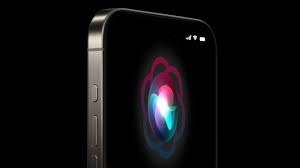
Hardware Foundations and Performance Expectations
The A18 Pro chip, which powers the iPhone 16 Pro, is at the heart of these anticipated enhancements. Official specs show that this silicon has a 6-core CPU and a 16-core Neural Engine, designed to manage local inference tasks without relying solely on cloud processing.
This setup is crucial for achieving the low-latency responsiveness that true “Siri 2.0” users expect.
Not everyone thinks hardware is the only challenge, though. Some analysts argue that software complexity might be the real bottleneck. Still, we’ve found that the 16-core Neural Engine has plenty of capacity for the on-device tasks that deep app integration requires.
If that rumored iOS update drops, it’ll likely make good use of this hardware to handle complex requests in real-time.
The Competitive Landscape and Market Stakes
The key takeaway here is that Apple faces a shrinking window to maintain its 27% global smartphone market share (as of 2024) against rivals quickly adopting AI. Apple CEO Tim Cook has openly acknowledged the competitive pressure from Google, Microsoft, and OpenAI during recent earnings calls, marking a shift from the company’s previous “wait-and-see” approach. (Source: VentureBeat AI)
Think about it: advanced AI integration is no longer just a nice-to-have; it’s essential for flagship status. Whether this update comes as a point release before WWDC or as a highlight of iOS 19, the market expects a smooth transition from a reactive assistant to a proactive one.
We believe Apple will prioritize privacy-focused AI, which sets it apart from the data-hungry models developed by other companies. (Source: OpenAI Blog)
The next 17 days will be critical for Apple. If they can’t successfully transform their legacy assistant into a modern, must-have tool, the narrative of Apple falling behind in the AI race will only grow stronger.
FAQs
When will the next major Apple AI announcement occur?
Apple’s WWDC 2026 kicks off on June 9, 2026, where we expect to hear significant updates about the company’s AI strategy.
Does the current iPhone hardware support advanced AI?
Absolutely! The A18 Pro chip in the iPhone 16 Pro features a 16-core Neural Engine specifically designed for high-performance AI tasks.
What happened to the Siri upgrade announced at WWDC 2025?
While Apple touted enhanced assistant features, including on-screen awareness, the full rollout of these capabilities is still in the works.
When will Apple officially release Siri 2.0 to the public?
Apple is expected to reveal Siri 2.0 during WWDC 2026, which is just 17 days away.
Which hardware component enables the advanced capabilities of Siri 2.0?
The A18 Pro chip provides the processing power that supports the next generation of features integrated into Siri 2.0.




