MEX-W
MEX-W ARG-W
ARG-W Chapecoense2
 Fluminense1
 UAE
UAE NED
NED PAK
PAK ENG
ENG IND-W
IND-W ZIM-W
ZIM-W GMB
GMB LES
LES MOZ
MOZ ZMB
ZMB Inter Milan
 Fiorentina
 Churchill
 Punjab FC
 NGA
NGA UGA
UGA ATM1
ATM1 DEP0
DEP0 LAZ2
LAZ2 PAR1
PAR1 RCL2
RCL2 PAR1
PAR1 RIY2
RIY2 TAA1
TAA1 NZ-A212/6 (64.2 ov)
 IND-A113
 SYL
SYL KHU
KHU MYMS299/4 (87 ov)
 CHATT
CHATT DHA293/3 (84.1 ov)
 RAJ
RAJ RAN320/5 (80 ov)
 BAR
BAR DEN
DEN PNG
PNG NAM321/6
 IRE290 (47.3/50 ov, target 322)
 NZ180/5
 IND181/6 (19.5/20 ov, target 181)
 WEL0
WEL0 MBV0
MBV0 Athletic
 Getafe
 C Palace
 Newcastle
 Hull
Hull Brentford
 Liverpool
 Brighton
 Man United
 Bournemouth
 Atalanta
 Frosinone
 CHE0
CHE0 TOT2
TOT2 VAL1
VAL1 VIL2
VIL2
Before French-Swiss architect Le Corbusier planned Chandigarh, he had to confront India’s tropical sun — developing the ‘brise-soleil’ technique, French for ‘sun breaker’, to shield buildings from its intensity. In New Chandigarh, Rajasthan Royals face their own version of the same challenge.
Sunrisers Hyderabad have beaten RR twice this season. RR are winless against them since 2022. The venue adds further pressure — New Chandigarh sees a sizeable drop in run-rate once fielding restrictions lift, and SRH suffered its consequences early in the season themselves, losing despite smashing 105 in the Powerplay. Temperatures are expected to exceed 42 degrees.
One match. One shot. To be the sun breaker.
The Powerplay: Where the Match Will Be Shaped
Both sides possess the most explosive top orders in IPL 2026. RR have the most destructive opening pair; SRH the most explosive top three. The gulf between them in the first six overs could define the entire contest.
Abhishek Sharma and Travis Head have struck at 206.22 together this season. Yashasvi Jaiswal and Vaibhav Sooryavanshi have struck at 159.43 — impressive, but meaningfully lower. The post-Powerplay phase deepens the structural gap.
| No.3 and No.4 Comparison — IPL 2026 | Player | Innings | Runs | Average | Strike Rate |
|---|---|---|---|---|---|
| SRH | Ishan Kishan | 14 | 569 | 40.64 | 178.36 |
| SRH | Heinrich Klaasen | 11 | 499 | 55.44 | 165.78 |
| RR | Dhruv Jurel | 14 | 458 | 38.16 | 149.67 |
| RR | Riyan Parag | 10 | 265 | 29.44 | 158.68 |
SRH’s No.3 and No.4 have combined for 1,092 runs at an average of 42 and a strike rate of 165.2. RR are lower on all three counts. The Kishan-Klaasen partnership has consistently outperformed the Jurel-Parag combination throughout this campaign, and SRH will seek to exploit that structural advantage.
The venue reinforces it. In four games at New Chandigarh, the economy rate against pace has been 11.06, against spin 9.29 — with spin also producing a better strike rate and far lower boundary percentage. If SRH can push RR’s middle order into facing their spinners against the run, the asking rate compounds quickly.
Tall Bowlers, Into the Pitch: The Sooryavanshi Blueprint
Mohsin Khan was the only bowler to genuinely contain Vaibhav Sooryavanshi this season — dismissing him twice in 12 balls for just two runs. SRH can build on that blueprint.
Pat Cummins and Eshan Malinga are both tall, like bowling into the pitch, and possess cutters. The key tactical option against Sooryavanshi is a short ball angled across him — forcing him towards the pull or hook to leg, or inducing the upper-cut or ramp, neither of which he has shown significant propensity to play this season.
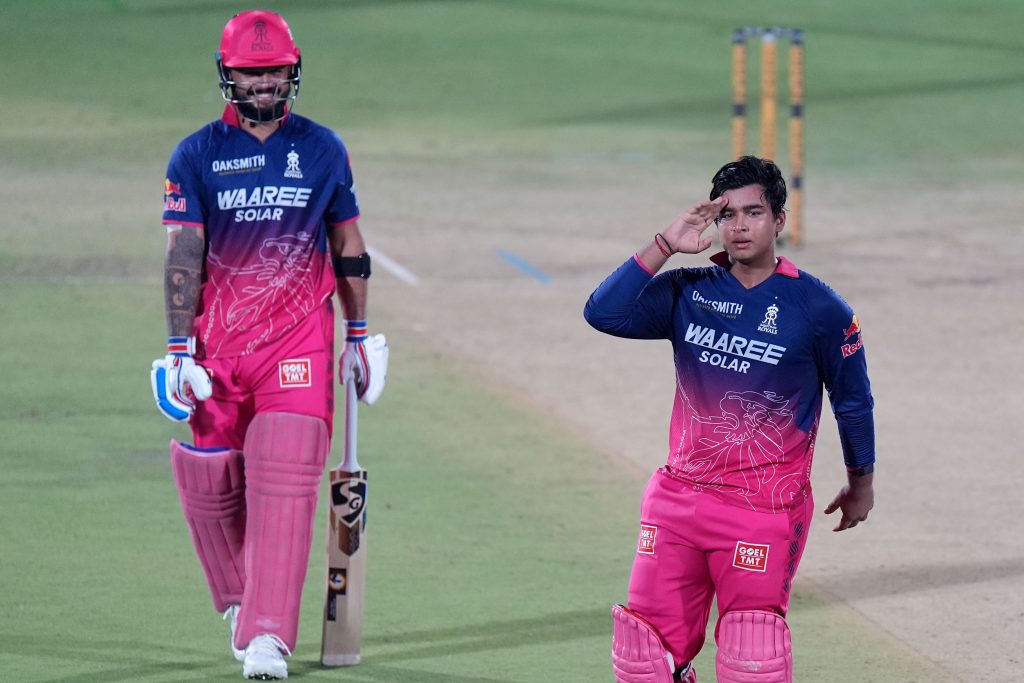
42 of Sooryavanshi’s 53 sixes have come through the leg side. His pull shot alone has yielded 20 sixes at a strike rate of 419.44. But he has been dismissed once in 36 pull attempts — and a ball angled across his body, rather than into it, removes his natural strength.
Against Jaiswal, the approach should start straighter — which is exactly how Malinga dismissed him in Jaipur and Sakib Hussain did in Hyderabad. The big square boundaries at New Chandigarh suit this style of bowling, reducing the risk of the square pull finding the rope.
Archer or Bust: RR’s Central Weapon
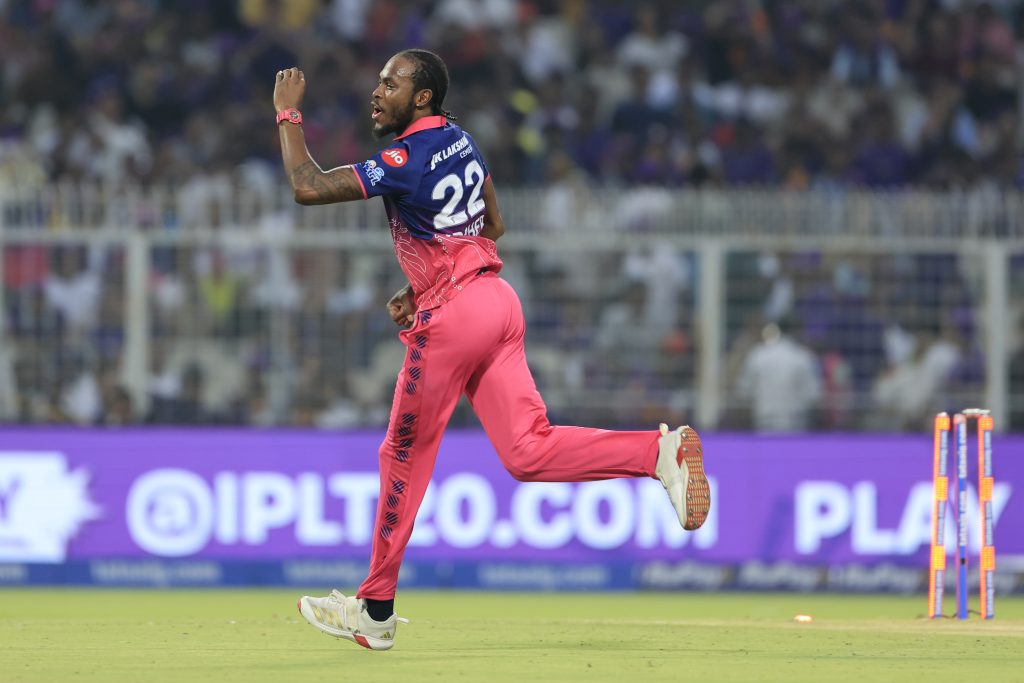
For Rajasthan Royals, the match plan essentially begins and ends with one question: is Jofra Archer at his best?
The match-up data against Head and Abhishek is hectic in both directions. Both have scored quickly off Archer — but he has also dismissed them a combined four times in 68 balls, including Abhishek in the first league meeting and Head in the reverse fixture. The wickets are there.
The bowling style that works against both is the same, and it happens to be Archer’s natural method: over the wicket, pitching around the blind spot just outside leg on a good length or just short, then letting his natural movement carry the ball away towards off. That line and length creates awkward angles, limits the leg-side options, and forces errors.
| Archer in Middle Overs (Overs 7-15) — IPL 2026 | Figure |
|---|---|
| Economy rate | 7.00 |
| Average | 18.66 |
| Head dismissals | 3 (Head SR vs Archer: 160.6) |
Between overs 7 and 15, Archer’s economy of 7.00 and average of 18.66 represent his best middle-overs numbers in an IPL season. He is the single most important bowler RR possess against SRH’s dangerous top order.
One tactical consideration: given RR’s dependence on Archer, SRH may look to absorb his first over and target his later spells. RR could counter by introducing Donovan Ferreira for an over — particularly if Archer’s opening over is wicketless and tight — to prevent SRH from building momentum off a slow start.
Brijesh Sharma, meanwhile, has been a valuable secondary option, his change-ups complementing Archer’s pace and providing variation that SRH’s top order cannot simply line up against.
Yash Raj Punja: The Spinner With the Hardest Task
Ravindra Jadeja has bowled just one over across the two fixtures between these sides this season — and with question marks over his fitness following Tuesday’s light training session (bowling at half-pace, one pad on), his availability for the Eliminator is uncertain.
That makes the role of Yash Raj Punja even more significant.
Punja has been RR’s best spinner this season — eight wickets at an economy of 8.79, the only uncapped spinner across both sides with a sub-nine economy and a better average than Harsh Dubey and Shivang Kumar.
He has dismissed three left-hand batters at 8.1 runs per over — relevant given SRH’s left-heavy top order. His most daunting assignment will be Heinrich Klaasen, who has been excellent against all types of spin throughout IPL 2026.
| Punja vs Klaasen — Key Context | Detail |
|---|---|
| Klaasen vs all spin (IPL 2026) | Excellent across the board |
| Only legspinner with good economy vs Klaasen (last 2 years) | Yuzvendra Chahal |
| Punja’s natural approach | Push batters back with pace and bounce |
| Required adjustment against Klaasen | Slow it down, generate turn, vary flight |
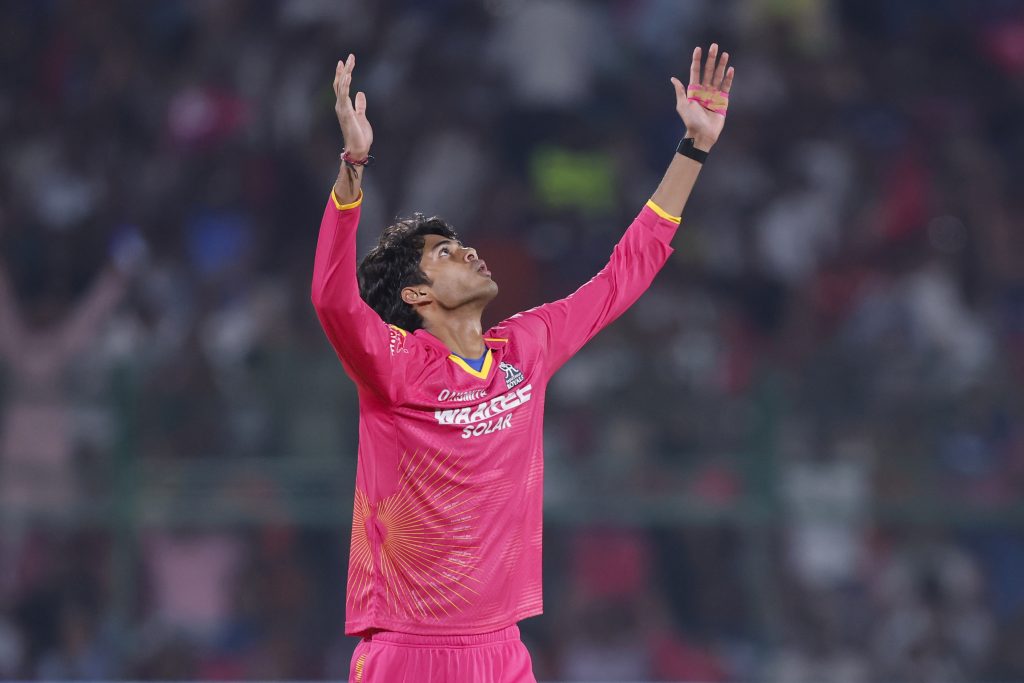
Punja typically pushes batters back with pace through the crease — but against Klaasen, he may need to be braver: flighting the ball, inviting the drive, and looking to generate enough turn to beat the outside edge.
Slower Balls Against RR’s Middle Order
Once SRH get past Sooryavanshi and Jaiswal, their primary middle-overs weapon will be cutters — a tool they deploy better than almost any other team in the competition.
The RR middle order — Jurel, Ferreira, Dasun Shanaka, and Shimron Hetmyer — can all be effectively contained by slower cutters. The key exception is Riyan Parag, who has proven himself adept at reading the slower ball and timing the big shot off it. SRH must treat Parag differently — not defaulting to cutters, but looking for variations that exploit his tendency to commit to the big swing.
In the last two IPL seasons, Parag has faced 29 balls of left-arm wristspin for 39 runs and just one dismissal. The potential involvement of SRH’s Shivang Kumar — if Parag is batting with no options other than attacking against the angle — could be a hidden decisive contest within the broader match.
SRH’s middle-overs bowling unit has the best economy in the competition post-Powerplay (8.96). RR’s equivalent stands at 9.58 — a meaningful difference that, combined with the venue’s post-restriction drop in scoring, could compound into a significant total advantage.
SRH’s Vulnerability: The Top-Order Collapse Pattern
RR’s best-case scenario lies in SRH’s own statistical weakness — their top-order collapses in defeats.
Across SRH’s five losses this season, three arrived via early catastrophe: 29 for 3 vs RCB, 26 for 4 vs LSG, 32 for 4 vs GT. If Archer and RR’s pace attack can replicate those conditions in the Eliminator, the contest could be decided before it reaches the middle overs.
The other two defeats came through restriction rather than wickets — against PBKS, they hit 105 in six overs but finished with only 219. Against KKR, they were 105 for 1 in the ninth over before collapsing to 165 all out. Both patterns are exploitable.
Read More: Why Heinrich Klaasen’s 600-Run IPL Campaign Deserves Greater Appreciation
Also Read: 15 Year-old Vaibhav Sooryavanshi Is Doing Things Even Chris Gayle Never Did